By Lawrence Zongo
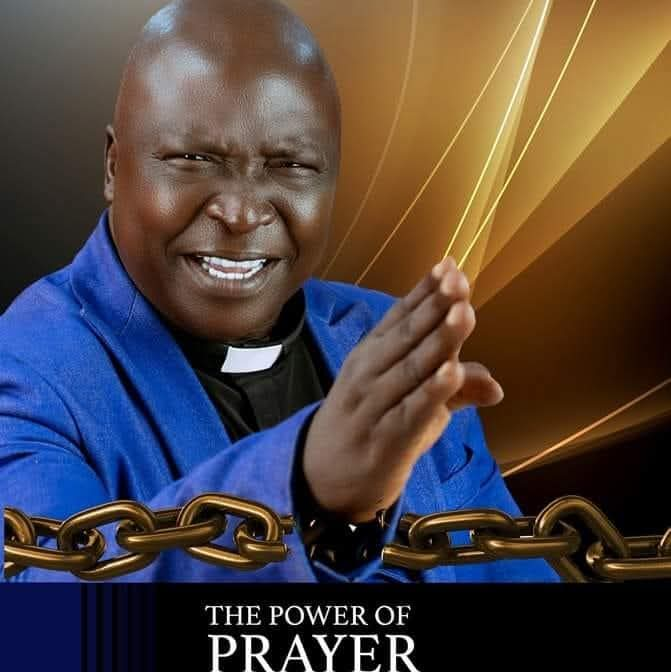
Reverend Ezekiel Dachomo, a respected clergyman with the Church of Christ in Nations (COCIN), has issued a passionate appeal to the United States government and the international community to intervene and stop what he describes as an ongoing genocide against Christians in Nigeria’s Middle Belt region. His call comes in the aftermath of a fresh wave of coordinated attacks by armed Fulani militias on October 14, 2025, in Barkin Ladi Local Government Area (LGA) of Plateau State, leaving at least 13 people dead, several injured, and dozens displaced.

Speaking to TruthNigeria during the mass burial of victims held in Rachas village, Reverend Dachomo expressed deep frustration over the continuous slaughter of Christians across Plateau State and other northern regions, accusing the Nigerian authorities of complicity and denial. “If telling the truth will cost me my life, then I have chosen to die telling it,” he declared, his voice trembling with both grief and conviction. “There is a genocide going on in Nigeria, and the world must hear about it. Christians are being hunted, killed, and displaced because of their faith, yet the government remains silent or even protects the perpetrators.”
Coordinated Night Attacks
The recent attacks, carried out almost simultaneously in the Christian villages of Rawuru, Tatu, and Lawuru in Barkin Ladi, began around nightfall. Eyewitnesses recounted that armed Fulani militias stormed a mission center in Rawuru during evening prayers, opening fire on worshippers. Two members of the congregation were killed instantly, while several others fled into nearby bushes. The attackers then proceeded to Tatu, where they executed another ten Christians and looted livestock, before moving to Lawuru, killing two more and burning down homes and farmlands. Over 38 cows were stolen, and large swaths of cultivated land were destroyed.

Local residents said that threats had been issued days before the assault and reported to security forces. Despite these warnings, no preventive measures were taken. “We informed the authorities that our communities were under threat,” said one church elder in Rawuru. “But no one came to our aid. Now we are burying our loved ones.”
A Pattern of Targeted Violence
The violence in Barkin Ladi is part of a broader pattern of attacks targeting Christian farming communities across Plateau, Benue, Kaduna, and Taraba states—areas collectively known as the Middle Belt. These attacks, often carried out by armed Fulani extremists, have resulted in thousands of deaths and mass displacement over the past decade. The perpetrators, according to security experts and local leaders, operate with apparent impunity, often escaping justice even when their identities are known to authorities.

“The Nigerian government continues to deny that Christians are being systematically targeted,” Reverend Dachomo lamented. “But ask anyone here—were any Muslims killed in these attacks? None. The victims are all Christians, yet those in power pretend it’s a farmer-herder conflict. It’s not. It’s ethnic cleansing.”
Accusations of Military Complicity
In a shocking twist, Reverend Dachomo himself was reportedly accused by soldiers from the Nigerian Army’s Sector 4, Barkin Ladi, of instigating unrest shortly before the attacks occurred. “They accused me of knowing about the attack before it happened, just because I raised an alarm about threats to my community,” he explained. “This is how the system silences truth-tellers. Instead of protecting us, they label us as the problem.”
He added that the army’s failure to respond to distress calls during the attacks has reinforced the perception among local residents that the military is biased and compromised. “We are tired of burying our people while those who are meant to protect us look the other way,” he said. “How can we trust a system that accuses victims instead of protecting them?”
Calls for Local Security and International Intervention
At the mass burial, attended by local leaders and grieving families, the Executive Chairman of Barkin Ladi LGA, Hon. Stephen Gyang Pwajok, condemned the killings and described the attacks as an attempt to displace indigenous Christian communities from their ancestral lands. “These are unprovoked assaults,” Pwajok said. “Our people are being systematically wiped out. This cannot continue.”
Da Paul Tadi-Tok, the District Head of Heipang, called for the revival of Operation Rainbow—a Plateau State community-based security initiative aimed at rapid response to rural violence. “Our local defense mechanisms remain the most effective means of protecting our people,” he stated. “We cannot wait endlessly for security agencies that arrive after the destruction is done.”
Brigadier General Shippi Gakji Goshwe (Rtd.), Security Adviser to the Plateau State Governor, confirmed that new recruits were undergoing training under Operation Rainbow to strengthen rural surveillance and response capacities. However, community members remain skeptical, citing years of unfulfilled promises and continued bloodshed.
“We Must Speak Before It’s Too Late”
Reverend Dachomo, known for his outspoken defense of persecuted Christians, said he and his colleague, investigative journalist Masara Kim, have become targets for exposing the atrocities. “We are now marked men,” he admitted. “But I will not be silent. The God who healed me from cancer in India will also save me from the cancer of terrorism destroying Nigeria.”
He warned that the silence of global powers is emboldening the perpetrators. “I am calling on the U.S. President, Donald Trump, to intervene, just as he is standing with Israel in its conflict with Hamas,” Dachomo appealed. “The genocide against Christians in Nigeria must stop. The international community cannot continue to look away.”
Rising Humanitarian Crisis
The ongoing violence has forced thousands to flee their homes. Displaced families now crowd temporary camps and church compounds with little access to food, medical care, or shelter. Local churches and humanitarian groups are struggling to meet the growing needs, calling for international aid and justice mechanisms to investigate and prosecute perpetrators.
According to TruthNigeria’s findings, hundreds of similar attacks have been recorded across Plateau, Benue, and Kaduna States over the past 12 months alone, with most of the victims being Christians. Despite these grim realities, federal authorities continue to frame the crisis as “clashes” between herders and farmers, a narrative that survivors and faith leaders reject as misleading and dangerous.
A Cry for Justice and Hope
As the sun set over Rachas village, the wailing of mothers and children filled the air. Wooden coffins lay side by side—thirteen lives lost in one night. Reverend Dachomo stood among the mourners, his eyes red with tears but his voice steady with faith. “We are not giving up,” he said softly. “Our blood cries for justice, and one day, justice will come. But until then, we ask the world to see us, to hear us, and to help us.”
The repeated killings of Christians in Nigeria’s Middle Belt are no longer isolated tragedies; they represent a calculated campaign of terror aimed at erasing Christian identity and presence from ancestral lands. Without decisive international intervention—particularly from the United States and its allies—the bloodshed will only deepen, and entire communities may vanish from the map.
Reverend Ezekiel Dachomo’s plea is more than a cry for help; it is a warning to the conscience of the world. “If we don’t speak now,” he said, “there may be no one left to speak tomorrow.”


Post Comment