By Sarah Bulus PLASU IT Student
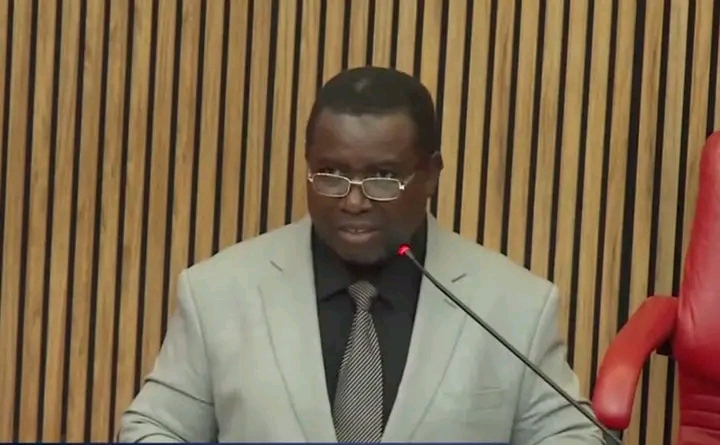
As the 2027 general elections is fast approaching, Nigeria’s political landscape is once again abuzz with debate over the leadership of the Independent National Electoral Commission (INEC). The recent appointment of Professor Joash Ojo Amupitan as the new INEC Chairman has sparked a mix of optimism, skepticism, and cautious hope across the country. The key question remains: Do Nigerians have confidence in Amupitan’s ability to deliver credible, transparent elections?
Professor Amupitan, a Senior Advocate of Nigeria (SAN) and former Dean of Law at the University of Jos, is widely respected for his deep knowledge of constitutional and electoral law. His appointment, however, comes at a delicate time when public trust in the electoral body remains strained following the controversies that trailed the 2023 general elections.
Between Hope and Skepticism
A good number of Nigerians believe Amupitan’s strong academic and professional background makes him well-suited to lead INEC into a new era of electoral credibility. They cite his reputation for integrity and his legal expertise as valuable assets in steering reforms that could strengthen Nigeria’s democracy.
During a visit to Angwan Rukuba in Jos the Plateau State Capital, Mr. Sunday Bunu shared his view on the new INEC boss:
“For me, the new INEC Chairman is okay, but if he can work on the card reader problem I will be happy,” he said.
Another resident, Mrs. Esther Daniel, expressed her hopes more cautiously:
“I hope all the wahala that we have been experiencing will not repeat itself again,” she said.
Yet, not everyone is convinced. Some citizens remain skeptical, arguing that competence alone may not be enough in an environment where political interference, logistical failures, and institutional inertia have often undermined electoral integrity. They point to the mixed legacies of past INEC chairmen from Professor Attahiru Jega’s widely praised 2015 transition to Professor Mahmood Yakubu’s tenure, which witnessed both technological innovation and public distrust.
A Call for Bold Electoral Reforms
For many Nigerians, Amupitan’s true test will be lie in his willingness to champion bold reforms. They want to see a comprehensive review of the Electoral Act, transparent party primaries, and stronger enforcement of campaign finance regulations. Beyond legislation, citizens are calling for a culture of accountability within INEC itself,one that ensures results reflect the people’s votes rather than political pressure.
Technology and Transparency
The use of technology has become central to Nigeria’s elections. After the controversies surrounding the INEC Result Viewing (IReV) portal in 2023, Nigerians expect Amupitan to restore confidence in electoral technology. They want him to ensure that innovations like the BVAS (Bimodal Voter Accreditation System) and online result transmission are not only functional but also immune to manipulation.
“Technology alone cannot save our elections,” says Dr. Grace Eze, a political analyst based in Abuja. “It must be backed by integrity, transparency, and a genuine commitment to accountability.”
Independence and Political Pressure
Perhaps the biggest concern remains INEC’s independence. Many Nigerians worry that the electoral body has often been caught in the web of political influence. Critics have questioned Amupitan’s perceived closeness to the current administration, warning that such ties could undermine his neutrality.
On the other hand, civil society groups such as the Transition Monitoring Group (TMG) and Yiaga Africa have welcomed his appointment, describing him as a reform-minded scholar who understands the legal framework of elections. For them, the real task ahead is not just leadership but the ability to withstand political pressure and act firmly in defense of democratic values.
A Nation Watching
From civil society to the grassroots, Nigerians are watching closely. They expect Amupitan to demonstrate transparency in INEC’s internal operations, improve voter education, and tackle issues like vote-buying and electoral violence. Citizens also want him to rebuild public confidence in the commission, confidence that has eroded over years of disputed elections and delayed justice.
As 2027 draws nearer, the expectations are high and the stakes even higher. INEC’s credibility is not merely an institutional concern,it is the very foundation upon which Nigeria’s democracy stands.
A Test of Integrity and Vision
Professor Amupitan’s appointment offers both an opportunity and a challenge. He inherits an institution in need of reform, a citizenry hungry for trust, and a democracy that demands protection. The coming months will reveal whether he can rise above politics to become the reformer many Nigerians hope for or whether history will repeat itself.
In the end, the credibility of Nigeria’s next election will not depend solely on technology or policy rather it will depend on leadership, integrity, and the courage to stand for the people’s mandate. Nigerians are waiting to see if Professor Amupitan can truly deliver a vote of confidence.




Post Comment