By Miracle Adebayo
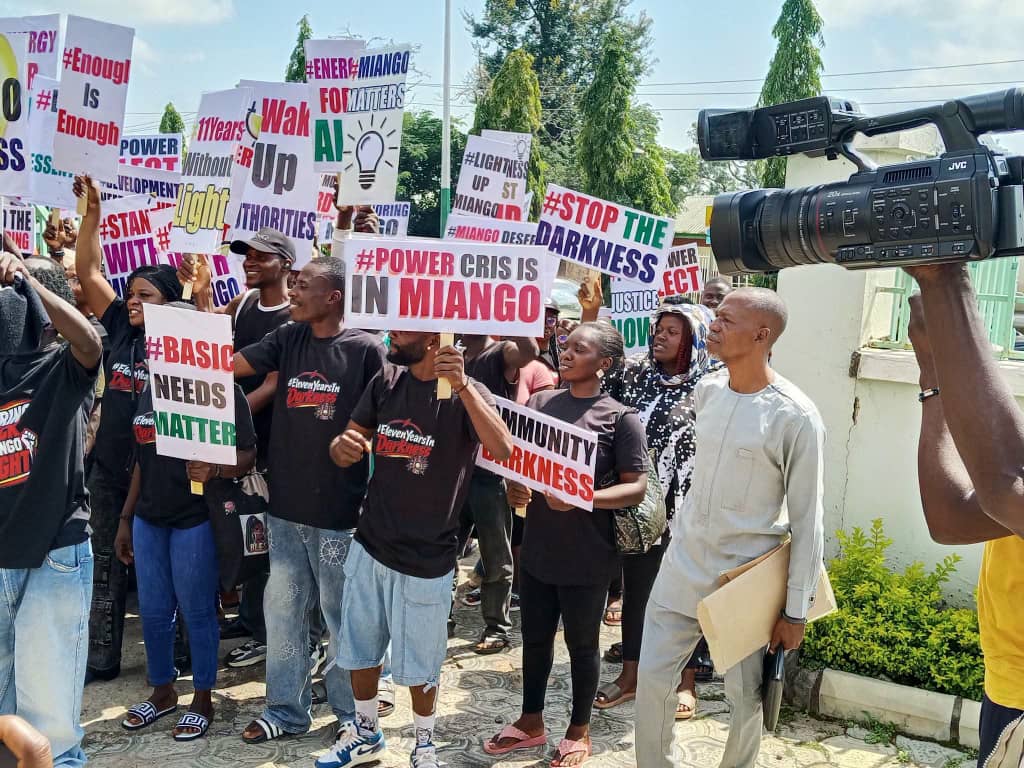
The controversy surrounding the prolonged electricity blackout in Miango, Bassa Local Government Area of Plateau State, has taken a new turn following a response by members of the former Miango Community Electricity Committee, who disputed several claims made by
Concerned Irigwe Youths over the community’s 11-year power crisis.
The committee, which operated from 2015 to 2020 before being registered as the Miango Community Energy Project Enterprise, said it shared the community’s frustration over the prolonged absence of reliable electricity but rejected allegations concerning its handling of funds
and its role in the crisis.
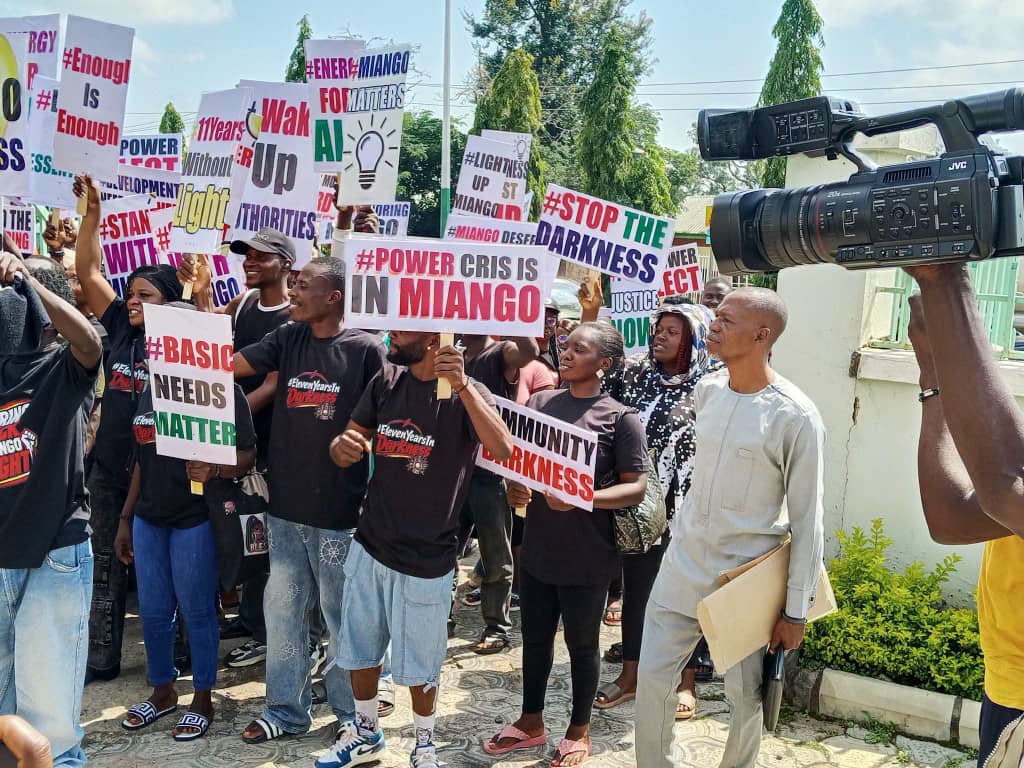
The response followed a September 1, 2026, press conference by Concerned Irigwe Youths at the Plateau State Council of the Nigeria Union of Journalists in Jos, where the group demanded the restoration of electricity to Miango and called for an investigation into the financial dealings
surrounding the community’s electricity supply.
The youths had alleged that Miango was disconnected from electricity supply in 2015 following an outstanding debt and questioned the circumstances surrounding the collection and management of electricity payments through the Miango Community Energy Project Enterprise.
They also called for greater transparency over funds collected from residents and donations made towards resolving the crisis.
In its rejoinder, however, the former electricity committee said the account of an uninterrupted 11-year blackout did not accurately reflect the community’s documented history.
According to the committee, Miango was not without electricity throughout the entire period, although supply was disrupted and irregular for years. It said records showed that the community received electricity for approximately six years within the period referenced in the
youths’ statement.
The committee said it was inaugurated at a stakeholders’ meeting on September 19, 2015, and remained in operation until July 2020, when it presented what it described as its final comprehensive financial report to a general meeting attended by community representatives, the traditional council, youths, clergy and individual electricity consumers.
It said the report was adopted at the meeting and that annual financial reports had previously been issued for 2016, 2017, 2018 and 2019.
The former committee also defended the registration of the Miango Community Energy Project Enterprise, saying the decision was taken to ensure that funds collected from electricity consumers were kept in a corporate account rather than a personal account.
It said the arrangement was also intended to allow the community to conduct transactions with the Jos Electricity Distribution Company through bank cheques instead of cash.
On the disputed metering arrangement, the committee said the use of a single bulk meter was not imposed by it.
It said the arrangement was agreed upon by the Jos Electricity Distribution Company, the Nigerian Electricity Supply Company and representatives of the Miango community at a meeting on June 14, 2018, where the community representatives opted for bulk metering.
According to the committee, its chairman and secretary subsequently confirmed the
community’s acceptance of the arrangement in writing to JEDC on August 27, 2018.
The committee also disputed accounts surrounding the community’s electricity debt, saying the amount had undergone several reconciliations.
It said JEDC initially placed the outstanding post-privatisation debt at N278 million in December 2016, but following intervention by the Nigerian Electricity Regulatory Commission, a December 2017 resolution reduced the figure to N51.4 million.
The committee said a further 10 per cent discount reduced the amount to about N41 million,while subsequent reconciliation brought the figure to N38 million by the time of the June 2018 bulk-metering agreement.
It said the community accepted the N38 million figure and agreed to repay it over seven years through monthly payments of N452,000.
The former committee maintained that it regularly serviced the agreed obligation, saying bank records and cheque documents showed monthly payments to JEDC between 2018 and 2020, alongside additional lump-sum payments.
According to the response, payments made to JEDC had reached N29.576 million by May 2020.
However, the committee said a separate dispute emerged over the electricity bills generated under the bulk-metering arrangement.
It alleged that JEDC’s bills increased significantly despite the same customer base and restricted supply period, citing a bill of N1.54 million in September 2018 and another of N8.52 million in November 2019.
The committee said it formally raised concerns over the billing pattern with JEDC in January 2020, arguing that the amounts did not correspond with the community’s actual electricity
consumption.
It further acknowledged that the community had accumulated additional debt under the arrangement, but said the matter had already been formally raised with the Plateau State Ministry of Water Resources and Energy.
The committee said that in a September 14, 2020 letter to the ministry’s ad-hoc committee, it acknowledged an indebtedness of N203.68 million to JEDC from June 2018 and appealed for a
waiver, including a proposed technical-loss deduction.
On its own financial records, the committee said it collected N40.57 million between October 2016 and July 2020 and spent N39.05 million during the period.
It said the expenditure covered payments to JEDC, transformer repairs, field staff commissions,legal fees, trips to Jos and Abuja for meetings with regulatory and electricity authorities, public relations, office equipment, registration expenses, infrastructure maintenance and bank
charges.
The committee said the records showed a balance of N1.52 million and maintained that detailed financial statements had been presented to and adopted by the community.
It further said the committee was dissolved following a stakeholders’ meeting in January 2021,with the Bassa Local Government Traditional Council announcing the dissolution on February 1,
2021.
Despite the defence, the former committee said it was not opposed to an independent
examination of its records.
Instead, it called for a broader investigation covering every individual, committee and organisation that had collected or managed funds intended for restoring electricity to Miango
since 2015.
The committee said such an investigation should include the activities of the Irigwe
Development Association in relation to electricity funds, as well as donations allegedly received through the traditional institution or other committees.
It also raised questions over a May 21, 2021 letter issued by the Miango Concerned Consumers of Energy Committee, which it said operated under the Office of the Brra Nggwe Rigwe and directed contributions for electricity extension into an account bearing an individual’s name.
The former committee said it believed the matter should receive the same independent scrutiny it was requesting for its own records.
The members further called on Plateau State Governor Caleb Mutfwang to constitute a broader investigative committee with powers to examine the records of all persons and organisations
that had collected funds from Miango residents or donors in connection with electricity supply since 2015.
It further said that where wrongdoing is established, anti-graft agencies, including the Economic and Financial Crimes Commission (EFCC) and the Independent Corrupt Practices and Other Related Offences Commission (ICPC), should be involved.
The dispute comes as Miango residents continue to demand an end to the prolonged power
crisis.
During a March 2026 electricity infrastructure intervention in Plateau, Governor Mutfwang had assured residents of Miango and Rukuba that negotiations with JEDC had been concluded
towards restoring electricity to communities affected by prolonged outages. The governor also described access to electricity as a right and linked reliable power supply to economic
development, business growth and improved quality of life.
However, the September protests and subsequent exchange between the Concerned Irigwe Youths and the former electricity committee indicate that the power crisis extends beyond the
immediate question of reconnection.
At its core is a dispute over how the community’s electricity debt accumulated, how payments were collected and managed, the role of JEDC and community-based bodies, and who should
ultimately be held responsible for the prolonged failure to restore regular electricity.
While the former committee maintains that its financial records can withstand independent scrutiny, the Concerned Irigwe Youths have demanded answers over funds collected and the circumstances that left the community without reliable electricity for years.
For residents who have continued to bear the economic and social consequences of the blackout, the competing accounts now make an independent examination of the records increasingly central to resolving the dispute and determining what is required to finally restore
electricity to Miango.


Post Comment