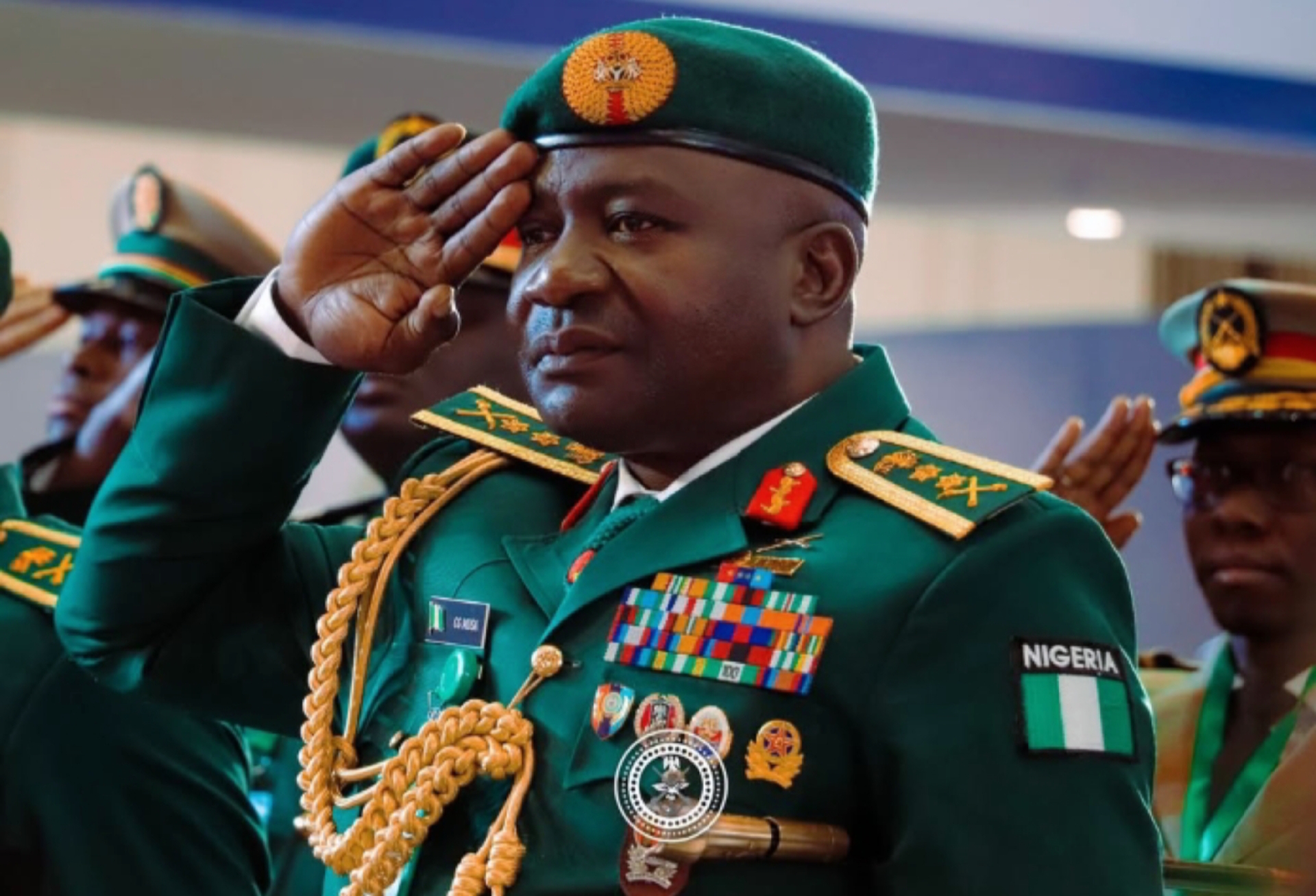
The Minister of Defence Retired General Christopher Musa Gwabin says residents of Southern Kaduna are still carrying the scars of killings recorded during the administration of former Kaduna State Governor, Nasir El-Rufai.
Musa made this known during an interview on Channels Television on Thursday, September 3, 2026, while comparing the former governor’s administration with that of incumbent Governor Uba Sani.
According to the minister, Kaduna State has witnessed a significant shift under Sani, whom he credited with making efforts to heal divisions between communities in Southern and Northern Kaduna.
Musa said Sani’s approach represented a departure from what he described as the divisive policies of the previous administration, stressing that the governor was gradually rebuilding trust among communities across the state.
“When the incumbent Kaduna State governor, Uba Sani, came, he showed a huge difference. We know how it was when El-Rufai was there. El-Rufai did a lot of toxic things in Kaduna State, divided the state.”
He added that the situation had previously become so polarised that movement between parts of Northern and Southern Kaduna was affected by deep-seated tensions.
According to Musa, Sani had succeeded in easing some of those tensions, although he acknowledged that the governor had not completely resolved the divisions.
“It is not 100 per cent, but he is making genuine efforts at uniting the state,” he said.
The minister’s comments come against the backdrop of years of deadly communal violence, bandit attacks, killings, destruction of property and displacement across Kaduna State, particularly in Southern Kaduna.
Southern Kaduna has experienced recurring violence involving different communities, with successive attacks leaving families bereaved and communities struggling to recover from years of insecurity.
Asked whether people in Southern Kaduna remained unhappy with El-Rufai over events recorded during his eight-year tenure, Musa said the sentiment went beyond ordinary dissatisfaction.
He alleged that some residents believed the former governor had deliberately contributed to the killing of their people, although he did not provide specific evidence during the interview to substantiate the allegation.
“If there is anything worse than unhappy, it would be it. We can never be happy with someone who has deliberately planned for the killing of our people,” Musa said.
He further alleged that El-Rufai had, in previous statements, claimed involvement in actions involving bandits.
Musa, however, did not provide specific details or documentation during the interview to support his claims that the former governor deliberately planned killings or paid bandits.
El-Rufai governed Kaduna State from 2015 to 2023, a period marked by serious security challenges, including communal conflicts, banditry, kidnappings and deadly attacks in several parts of the state.
When asked whether residents of Southern Kaduna now regarded El-Rufai as an enemy, Musa rejected the characterisation, saying the disposition of the people would not encourage such an approach.
However, he acknowledged that the scale of deaths recorded during the former administration had left deep emotional wounds.
“Of course, we feel pain if you look at the number of deaths recorded there. He didn’t give opportunities; we couldn’t do a lot of things. But now you see that breath of fresh air,” he said.
The Defence Minister also criticised what he described as El-Rufai’s handling of personal disagreements, alleging that the former governor sometimes used government machinery against people with whom he had personal disputes.
“El-Rufai, when he has personal issues with his friends, next thing, he sends bulldozers to pull down their houses. He has done it,” Musa alleged.
He added: “He did a lot of things that I am sure he isn’t proud of.”
Musa’s remarks have renewed attention on the political and security legacy of the El-Rufai administration, particularly its handling of communal violence, insecurity, urban demolitions and relations between communities across Kaduna State.
The minister also praised Sani for what he described as efforts to rebuild relationships between communities and reduce longstanding tensions between Northern and Southern Kaduna.
While admitting that significant challenges remain, Musa maintained that the current administration was creating what he called a “breath of fresh air” in the state.
Kaduna continues to face security challenges, including attacks and kidnappings in some communities, even as federal and state authorities pursue military, policing and community-based measures to improve security.
Musa, a former Chief of Defence Staff, has repeatedly advocated stronger cooperation between security agencies, governments and local communities in confronting Nigeria’s security challenges.
His latest comments underscore the growing emphasis on reconciliation and rebuilding trust alongside conventional security operations in communities affected by years of violence.


Post Comment