By The Nigeria Times
When Cynthia Yusuf sat behind a sewing machine for the first time, her hands trembled—not from fear, but from hope.
“I lost everything,” she said quietly, adjusting the fabric beneath the needle. “But this skill gives me something to stand on.”
At 24, Cynthia has lived through losses that would overwhelm many adults twice her age. In 2017, violent attacks wiped out 29 members of her community in Plateau State. Years later, on September 22, 2024, her husband—a farmer and hunter—was killed during another attack. Earlier that same year, her widowed mother was also killed. Suddenly, Cynthia found herself a widow, a single mother of two children, and the sole provider in a region marked by terrorism, poverty, and grief.
Formal education had already slipped beyond her reach. Survival became her daily prayer.
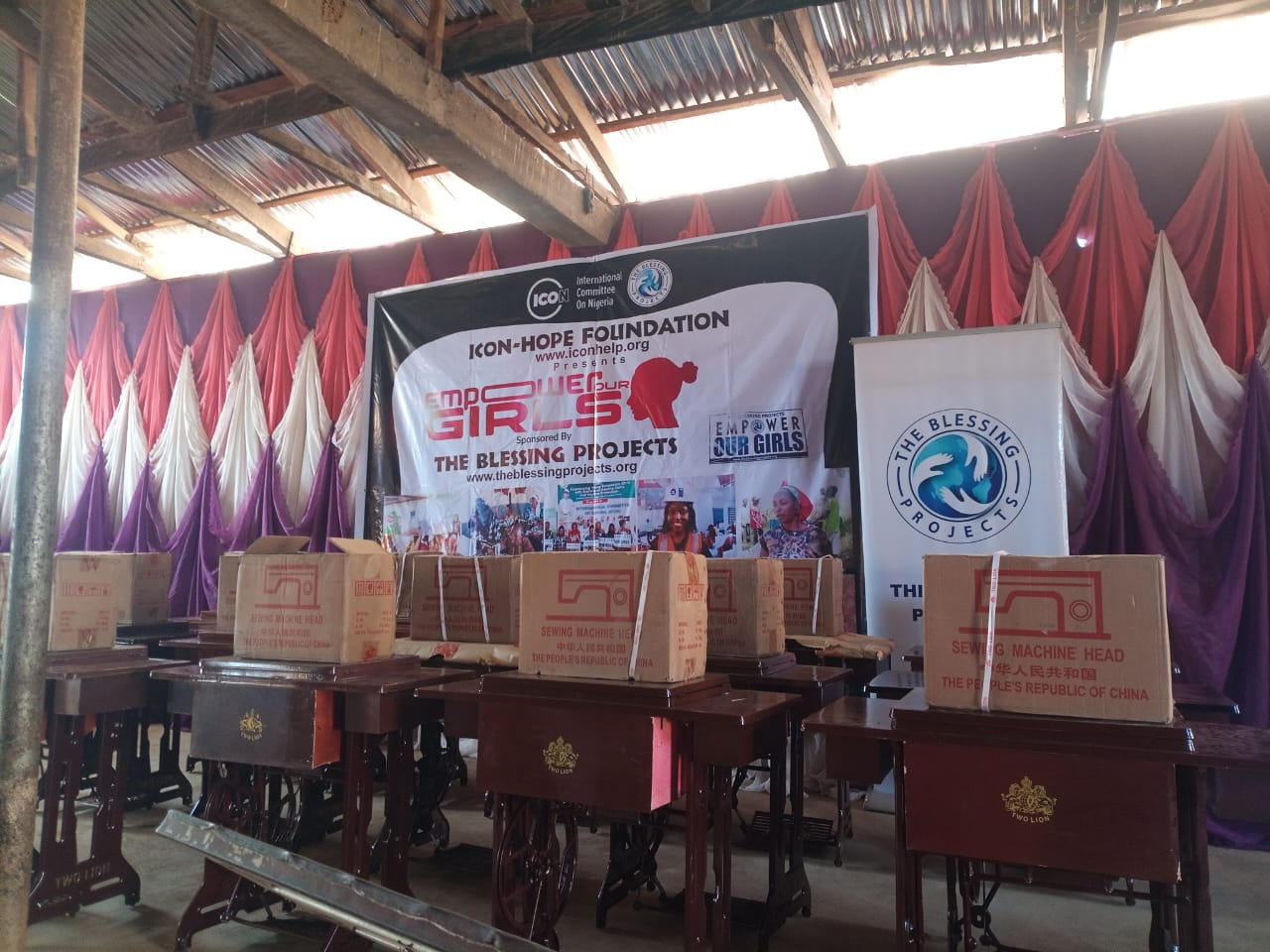
Today, Cynthia is one of 15 young women completing a 12-month tailoring and fashion design training supported by The Blessing Projects. What began as a humanitarian intervention has become something far deeper—a pathway from loss to livelihood, from vulnerability to dignity, and from silence to self-confidence.
For Cynthia and many others like her, empowerment is no longer a promise spoken at conferences or written in policy documents. It is now stitched into their hands.
Turning vulnerability into Vision
Across Nigeria’s rural communities, especially in conflict-affected areas like Plateau State, girls face a harsh intersection of poverty, displacement, and violence. Attacks on Christian farming communities have disrupted livelihoods, destroyed homes, and pushed many families into extreme hardship. Girls are often the first to drop out of school and the last to receive support.

Government empowerment programmes are frequently announced with optimism, but for many vulnerable girls, the help never arrives. Limited reach, politicisation, and poor implementation mean that those most in need are often left behind.
It is within this gap that The Blessing Projects, working in partnership with ICON–Hope Foundation, has chosen to act. Rather than waiting for top-down solutions, the initiative delivers direct, community-based empowerment rooted in accountability and compassion.
The approach is simple but intentional: identify the most vulnerable girls, equip them with practical skills, and walk with them until they can stand independently.
Empowerment, in this model, is not based on connections, religion, ethnicity, or political loyalty. It is based on need.
“Empowering girls is not charity; it is a right,” said Lawrence Zongo, a human rights defender and Team Lead of the Empower Our Girls initiative. “When you skill a girl, you don’t just change her life—you protect the future of her family and her community.”
Skills that protect and sustain
The Empower Our Girls tailoring programme is designed as more than vocational training. It is a protective intervention in communities where girls are at high risk of early marriage, exploitation, and abuse.
Over a 12-month intensive course, the participants receive training in professional garment making, fashion design, basic entrepreneurship, and character development. The programme emphasises discipline, responsibility, and self-worth alongside technical skills.
At the end of the training, each graduate receives a sewing machine that meets international garment-making standards, enabling her to begin earning an income immediately.
For Elizabeth John, a 19-year-old from Tahu Village in Miango, Bassa Local Government Area, the programme arrived at a moment of deep uncertainty.
“My father was killed when I was 14,” she said. “Since then, my mother has struggled to care for nine children through farming. Some days, we don’t have enough food. I wanted something that would help me stand on my own and support my family.”
Elizabeth now dreams of opening a small tailoring shop within her community. With the income, she hopes to help her younger siblings stay in school and ease the burden on her mother.
Mary Joseph, also 19, from Zodu Village in the Kwall District of Bassa LGA, carries a different but equally painful story. Armed attackers destroyed her family’s farmland and burned their home, leaving her orphaned and dependent on an aunt for survival. Despite the trauma, Mary completed her secondary education but faced an uncertain future.
“I want to be self-reliant,” she said. “This training will help me earn a living, continue my education, and one day go to university. I also want to help other girls who are suffering as I did.”
Stories like Elizabeth’s and Mary’s reflect a shared reality: when girls are given skills, they gain more than income. They gain protection, confidence, and a voice.
Beyond sewing: a broader impact
While the tailoring programme has drawn attention for its visible transformation, it represents only one part of The Blessing Projects’ wider commitment to empowering vulnerable women and girls across rural Nigeria.
In 2025 alone, the organisation supported:
– 100 women with poultry farming initiatives, enabling them to generate a steady income and improve household nutrition
– 134 women who cultivated more than 150 hectares of farmland, helping to feed over 2,000 children
– 100 women who received one-year scholarships at the National Teachers Institute, expanding access to education
– 15 vulnerable girls who completed a full year of professional tailoring training
Behind each statistic is a story of resilience: a mother who can now pay school fees, a widow who can feed her children, a young woman who no longer sees herself as a burden.
“These are not just numbers,” Zongo said. “They are lives reclaimed, futures restored, and dignity returned.”
A model rooted in fairness and unity
One of the defining strengths of the programme is its transparent and inclusive selection process. The beneficiaries—Christians and Muslims alike—were chosen based on vulnerability and commitment, without favouritism or sentiment.
According to Rose Eli Samuel, the lead facilitator of the tailoring institute, this deliberate approach fosters trust and unity within the community.
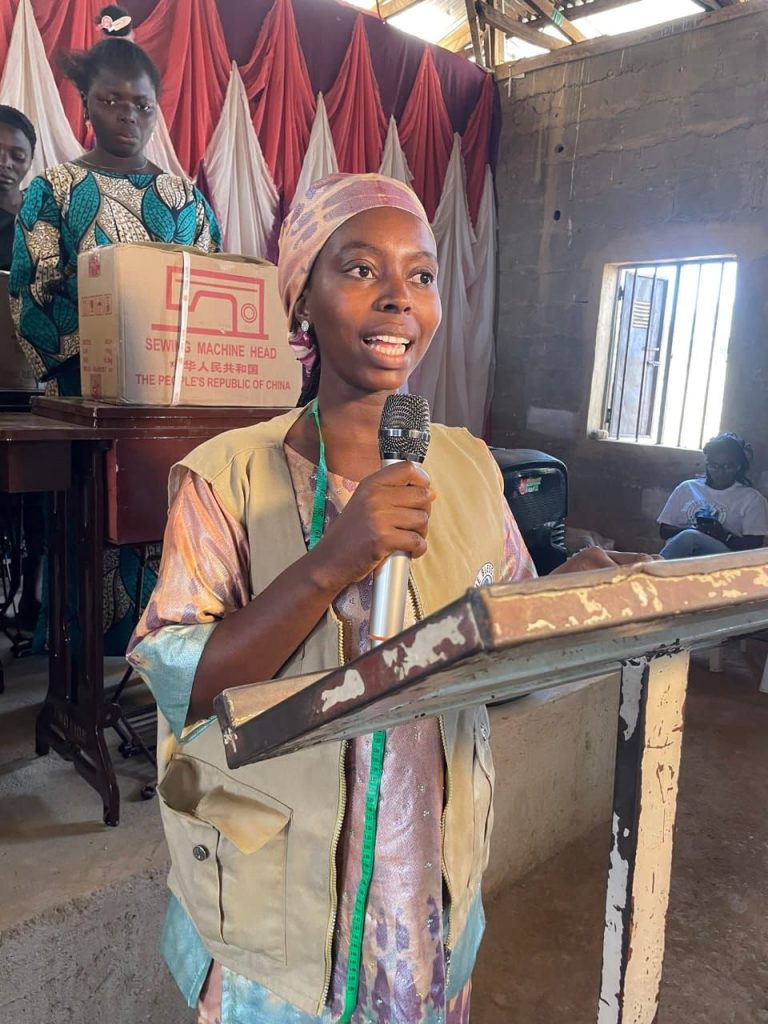
“They were found worthy in both character and proficiency,” she said during the graduation ceremony. “This programme shows that when opportunity is given without bias, excellence follows.”
The journey was not without challenges. Unstable power supply, health issues, and limited resources tested both facilitators and students. Yet the programme endured, driven by a shared belief that these girls deserved a chance to succeed.
“Perseverance and faith carried us through,” Samuel said. “Today, we are seeing the fruits of that commitment.”
A call to act, not delay
For The Blessing Projects, empowerment is not a one-time event or a seasonal gesture. It is a long-term commitment to justice, dignity, and sustainable change.
The organisation continues to call on legislative and executive authorities to move beyond announcements and intentionally fund and partner with credible humanitarian platforms that have proven impact at the grassroots.
“When empowerment is delayed, vulnerability deepens,” Zongo said. “Compassion delayed is opportunity denied.”
As the graduands step forward—sewing machines in hand, confidence in their eyes—they carry more than a certificate. They carry evidence that transformation is possible, even in communities scarred by violence and neglect.
For Cynthia Yusuf, the future now looks different.
“I may not have gone to school,” she said, smiling softly as she watched her fabric take shape, “but now I can work, provide for my children, and stand with dignity.”
In a country where many vulnerable girls are still waiting for help, her story stands as a quiet but powerful reminder: when empowerment is done right, hope is no longer distant. It becomes real, practical, and life-changing.


Post Comment