By Lawrence Zongo
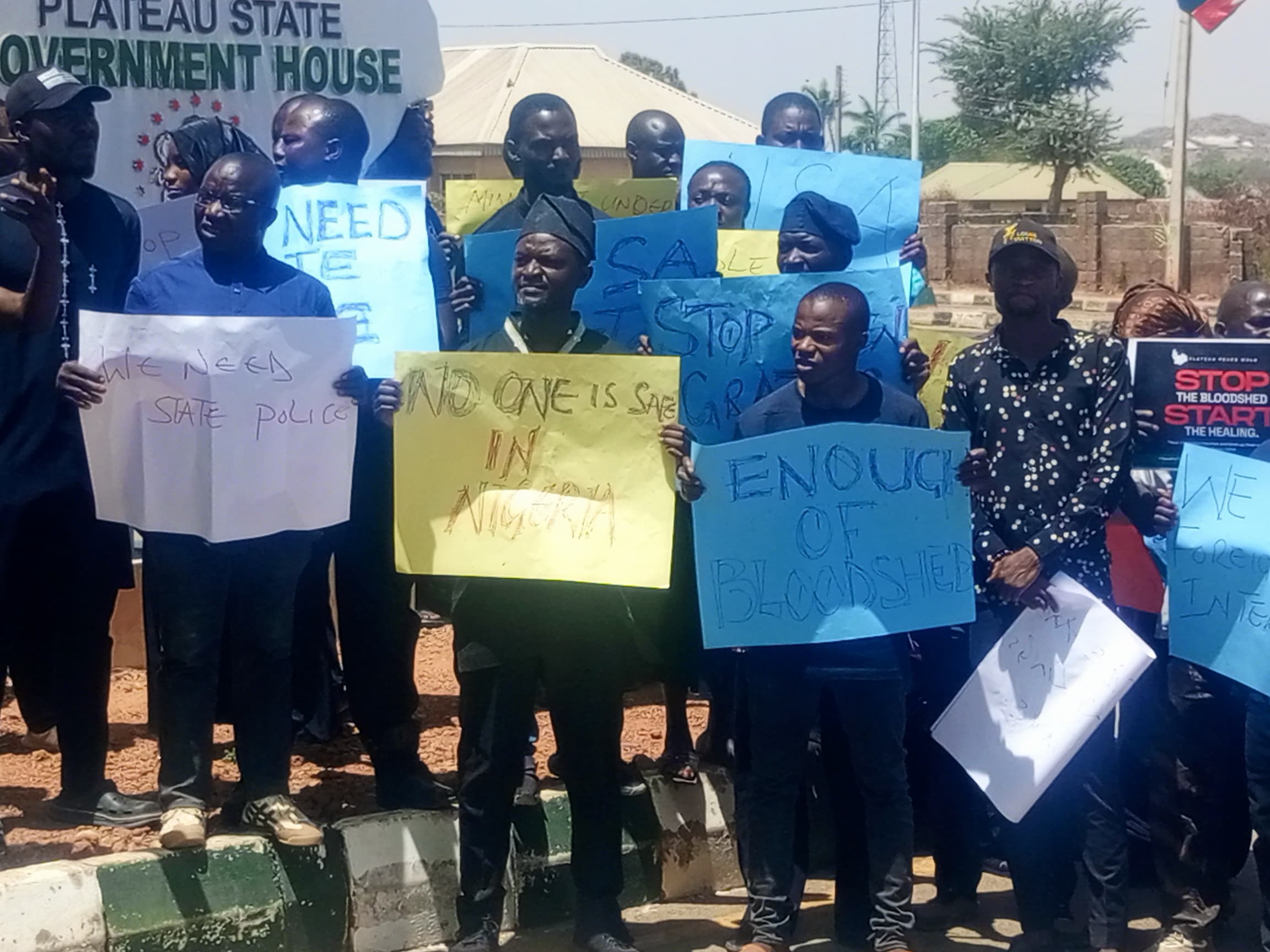
Youths in Plateau State on Wednesday March 25, marched to the State Government House in Jos to protest the continued killings in rural communities, calling on the government to decentralise Nigeria’s security system and take urgent action to protect residents.
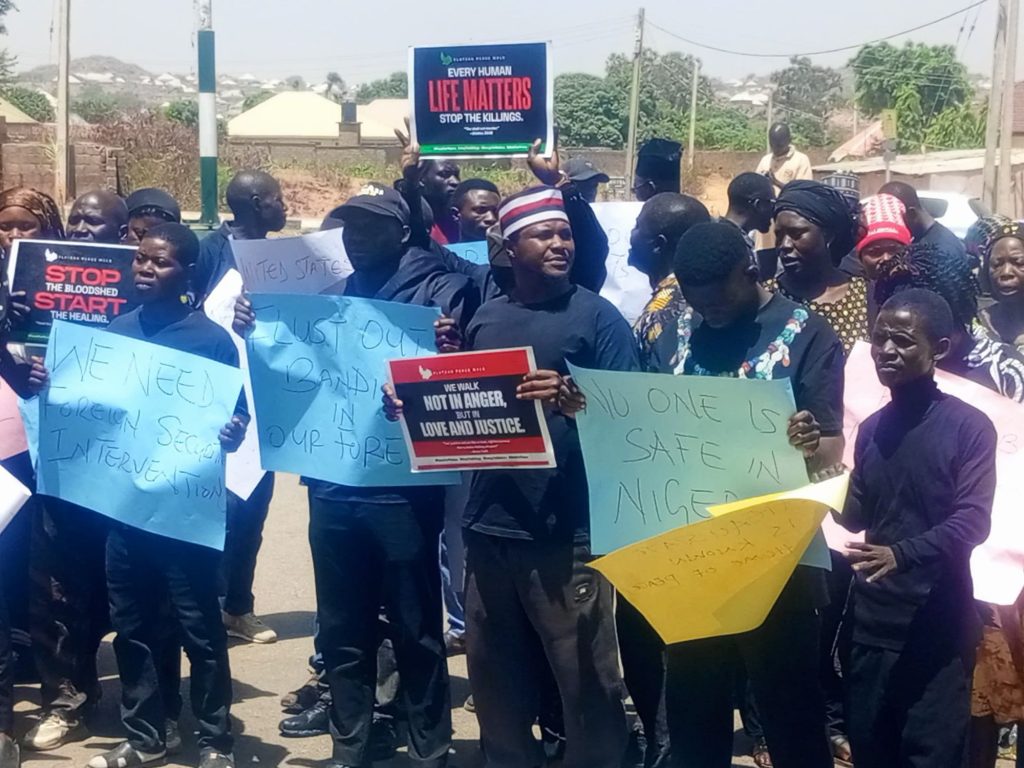
The protesters, under the Coalition of Northern Zone Ethnic Nationalities and the Plateau Youth Coalition, gathered in the hot weather, said repeated attacks in communities across the state had left many people living in fear. They said recent violence in Kanam and Riyom Local Government Areas, where more than 25 people, including soldiers and vigilante operatives, were reportedly killed, showed that the current security arrangement was no longer working.
Speaking to journalists, the President of the Coalition, Ezekiel Peter Bini, said even security personnel had become vulnerable to ambushes, adding that ordinary residents were even more exposed in their communities. He said the attacks should not be treated as a farmer-herder conflict, but as deliberate violence against rural communities.
Barr. Dalyop Solomon Mwantiri, President of the Berom Youth Movement and Chairman of the Northern Zone Coalition, said the insecurity in Plateau and other parts of the Middle Belt had been worsened by the movement of armed groups from other regions into the area. He called for closer cooperation between the state government and international partners to address the crisis.
Ngo Esther Banga, President of the Berom Women Development Association, said women and children have borne much of the burden of the violence, with the number of widows and orphans increasing in affected communities. She urged authorities to restore peace and create conditions that would allow normal life and tourism to return to the state.
Bini also appealed to the international community to support Nigerians in rural communities through humanitarian assistance and prayer. He said the killings would only stop if the government adopted state and community policing and equipped communities to defend themselves against armed attacks.



Post Comment