By Palang Paul
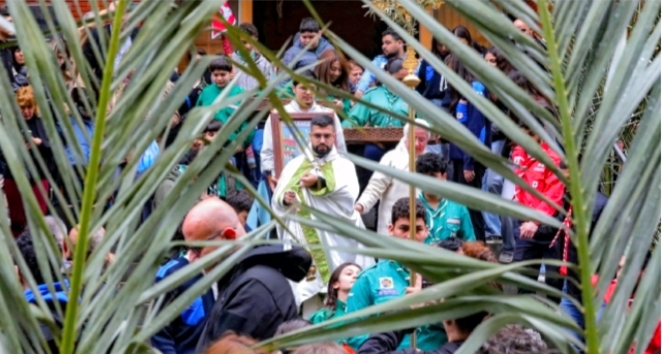
Christians across the globe on Sunday 29th March 2026 marked Palm Sunday with vibrant processions, solemn liturgies, and strong appeals for peace, as the celebration unfolded against a backdrop of rising geopolitical tensions.
The day, which signals the beginning of Holy Week in the Christian calendar, commemorates the biblical account of Jesus Christ’s entry into Jerusalem, where he was welcomed by crowds waving palm branches — a symbol of victory, humility, and peace.
At the Vatican, Pope Leo XIV used his Palm Sunday Mass at St. Peter’s Square to deliver a pointed message against war and violence. Addressing tens of thousands of worshippers, he stressed that religion must never be exploited to justify conflict, describing God as a “king of peace” in a world increasingly defined by division.
The pontiff also expressed concern for Christian communities in conflict zones, particularly in the Middle East, where instability continues to disrupt religious observances. He referenced ongoing global tensions, including those involving Iran and the war in Ukraine, warning that prayers offered by leaders engaged in violence contradict core Christian teachings.
Nigeria Sees Strong Turnout
In Nigeria, large congregations gathered in cities such as Lagos, Abuja, Jos and Port Harcourt, where worshippers participated in open-air services, processions, and special church programmes.
Clergy men across Nigeria blessed palm fronds carried by congregants, who later took them home as symbols of faith. Despite mounting economic pressures, churches reported high attendance, with many holding multiple services to accommodate large crowds.
The Christian Association of Nigeria (CAN) used the occasion to call on political leaders to demonstrate empathy and address the country’s economic challenges. In a statement signed by its president, Daniel Okoh, the body highlighted the symbolic humility of Christ’s entry into Jerusalem as a lesson for leadership in difficult times.
CAN noted that rising living costs and global tensions — particularly those involving Iran, Israel, and the United States — are already impacting Nigerians through increased fuel prices and economic strain.
Restrictions in Jerusalem Spark Concern
In Jerusalem, typically a focal point of Palm Sunday celebrations, events were overshadowed by reported restrictions on access to key holy sites.
According to the Latin Patriarchate of Jerusalem, Israeli police blocked the Latin Patriarch, Pierbattista Pizzaballa, from entering the Church of the Holy Sepulchre to lead Palm Sunday Mass.
Church officials described the incident as unprecedented, noting it marked the first time in centuries that senior Christian leaders were prevented from officiating at one of Christianity’s holiest sites during the observance.
France Condemns Action
French President Emmanuel Macron condemned the move, stating that freedom of worship for all religions must be upheld in Jerusalem.
He described the incident as part of a “worrying series of violations” affecting access to holy sites, underscoring broader international concerns over religious freedoms in the region.
A Season of Reflection Amid Uncertainty
Across continents, from Europe’s traditional palm-weaving ceremonies to Africa’s growing Christian congregations, this year’s Palm Sunday observance blended celebration with sober reflection.
For many believers, the message of peace, humility, and sacrifice central to the day resonated deeply in a world grappling with conflict, economic hardship, and uncertainty — setting a solemn tone for the days leading to Easter.


Post Comment