By Izhi Bitrus Adamu
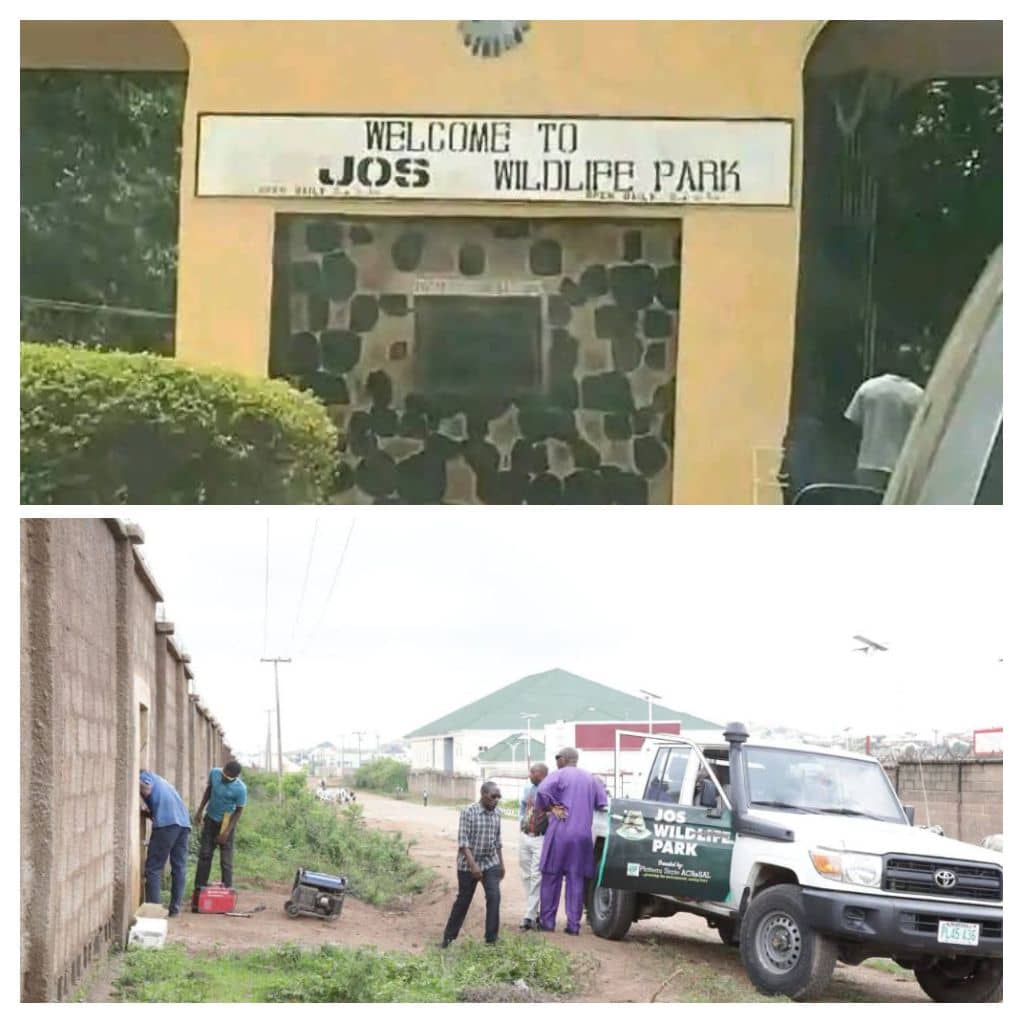
JOS, PLATEAU STATE As bandits turn forest reserves into hideouts across Nigeria, the Plateau State Government has taken a pre-emptive step: the temporary closure of all pedestrian access points into the Jos Wildlife Park.
The move, announced by the Plateau State Tourism Corporation, is aimed at stopping illegal grazing, mining, and the use of the park as a criminal corridor. It comes months after the park was fenced under the Agro-Climatic Resilience in Semi-Arid Landscapes, ACRESAL, programme.
Location:
Why Jos Wildlife Park Matters:
The Jos Wildlife Park sits within the heart of the Plateau, bordering communities like Dong Kasa and areas close to the Industrial Training Fund, ITF, headquarters along its western corridor.
It is a vast, densely forested reserve. That same vegetation that makes it a tourism and conservation asset also makes it a security risk.
According to the Tourism Corporation, intruders have been entering through water channels and by forcing gates open, especially between 8:00 p.m. and 7:00 a.m. when surveillance is low. Herders have reportedly been sneaking cattle in at night, while suspected miners and other illegal actors also use the routes.
Security agencies say the park has been linked to past kidnapping cases. Intelligence reports indicated that criminal elements used the forest as a hideout and escape route after attacks. The fencing under ACRESAL was therefore meant to consolidate the area as a conservation site, not a criminal transit zone.
The Current Phase: Miango, Rantiya, and a State on Edge:
This action is coming at a time when Plateau is again dealing with fresh bloodshed. Recent attacks in Miango, Bassa LGA, and Rantiya, Jos South LGA, have left communities grieving and questioning how far criminal elements can move through ungoverned spaces.
When forests and reserves sit next to towns, the risk is no longer theoretical. It is the same route pattern: dense vegetation, weak surveillance, and easy exit corridors.
If Jos Wildlife Park is not locked down now, it risks becoming another transit route that endangers Jos metropolis and its adjoining villages.
The Proactive Measure: Seal the Gaps
Plateau’s response is direct: close all pedestrian access points temporarily and intensify security patrols. Joint operations involving the Nigeria Police Force and other agencies are ongoing. Several suspected illegal herders and miners have already been arrested and are facing prosecution.
Governor Caleb Mutfwang has directed both immediate and long-term measures to secure the park, protect wildlife and fragile ecosystems, and preserve the facility as a major tourism asset for the state.
The government also commended residents of Dong Kassa and other neighbouring communities for their vigilance, and urged them to keep reporting suspicious movements.
Why It Matters:
The Danger to Surrounding Communities:
A forest reserve with weak control is a threat multiplier. When unauthorized persons move freely, three things happen:
Environmental degradation:
Illegal grazing and mining destroy habitats and water sources.
Criminal safe havens: Kidnappers and armed groups use dense forests as escape routes, as seen in past cases linked to the park.
Community vulnerability: Communities on the edge of the reserve, like Dong Kassa, become first points of contact, and first victims, when criminals exit the forest.
That is the pattern playing out in other states.
The Contrast:
Oyo’s Old Oyo National Park
In Oyo State, the Old Oyo National Park has become a flashpoint. Five forest guards were killed after an attack at Oloka village in Orire LGA. The Oyo Global Forum says the incident signals banditry moving southwards through vast, ungoverned forest corridors connecting Kwara, Niger, and Kebbi.
Reports also show that the Old Oyo National Park, spanning over 2,512 square kilometres and linking to Kwara, has been used as an infiltration and escape route. In May, bandits who attacked three schools in Oriire LGA and abducted 47 pupils and teachers reportedly escaped through the park.
In June, operatives of Iru Ekun, a security outfit linked to Sunday Igboho, were ambushed during an operation to dislodge suspected kidnappers inside the same forest.
PUNCH findings also show that forest routes across Oyo, Osun, Ogun, and Ekiti are being used by armed groups fleeing military operations in the North.
The Lesson for Plateau:
The Oyo case shows what happens when forest reserves remain porous: they become logistics corridors for bandits, kidnappers, and cattle rustlers.
Plateau’s decision to seal pedestrian entry points is therefore not just about protecting animals. It is about cutting off access before the park becomes a permanent hideout.
Whether it works will depend on enforcement: 24-hour surveillance, community intelligence from Dong Kasa, and sustained prosecution of offenders.
But the posture is clear. Instead of waiting for an attack like Oyo, Plateau is trying to close the door early.
In a region where forests are increasingly becoming battlefields, and where communities like Miango and Rantiya are still counting their dead, that may be the difference between containment and crisis.
Izhi Bitrus Adamu is a Public Affairs Commentator and Conflict Reporter




Post Comment