By Lawrence Zongo, The Nigeria Times.
At 44, Rebecca Jasper stands in her backyard, sorting through coconut shells, corn cobs, and groundnut husks spread out under the sun. With steady hands, she separates biodegradable farm waste from plastic and other harmful materials. She prepares the heap for controlled burning, the first step in producing eco-friendly charcoal briquettes — a skill she learned through the Plateau Resilience Initiative (PRIn).
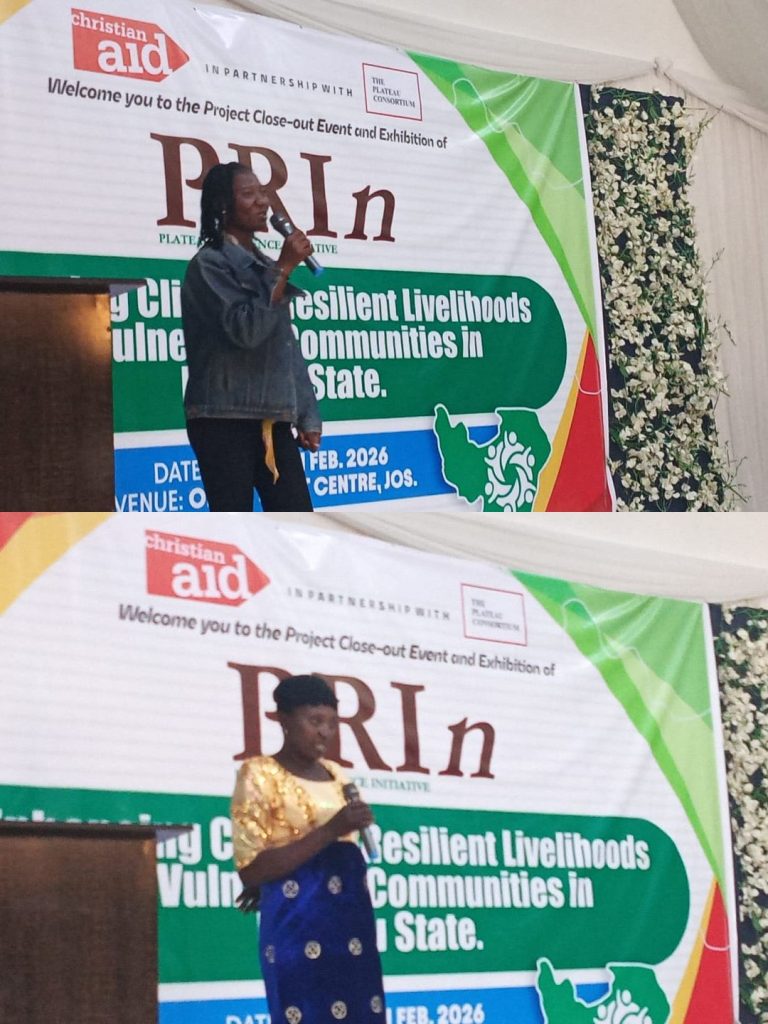
On February 25, at the Odilin Event Centre in Jos, Plateau State capital, Rebecca emerged as one of the featured beneficiaries during the close-out event of the Plateau Resilience Initiative project. The event gathered government officials, faith leaders, development partners, and community members to review the outcomes of the eight-month intervention implemented in Barkin Ladi and Bassa Local Government Areas.
Rebecca participated in the training organized under PRIN, supported by Christian Aid and implemented in partnership with Justice Development and Peace Commission (JDPC), Women, Children and Community Initiative (WOCCI Nigeria), and the Christian Council of Nigeria (CCN). The initiative focused on strengthening climate-resilient livelihoods, promoting social cohesion, and improving peacebuilding structures in crisis-affected communities.
Learning to Adapt Through Action
During her training under the Plateau State Resilience Initiatives (PRIn) component of the project, Rebecca chose charcoal briquette production from several options that included climate-smart agriculture and other livelihood skills. She assessed her immediate environment and identified agricultural waste as a resource readily available in her community.
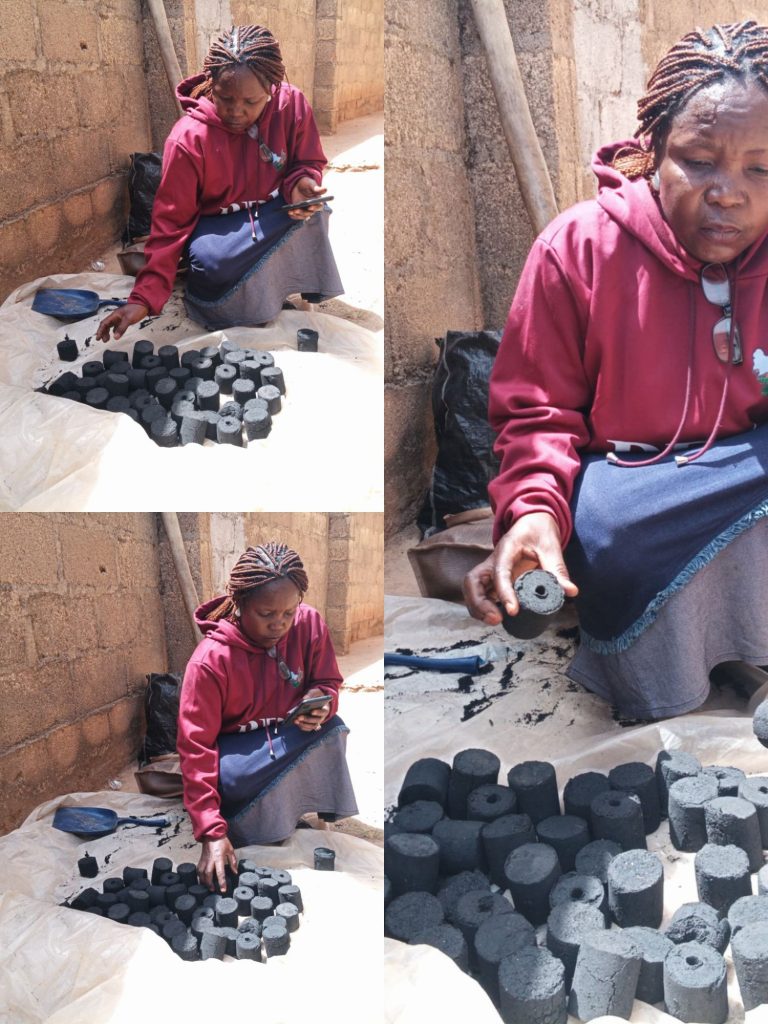
She gathers coconut shells, corn cobs, and groundnut shells from farms and households. After drying the materials, she burns them carefully in a controlled process to produce charcoal. She then grinds the charcoal into powder using manual tools. Rebecca mixes the powder with starch, which serves as a binding agent, ensuring the mixture holds together during molding. She presses the mixture into molds to form uniform briquettes and arranges them under the sun to dry. Once hardened, the briquettes are ready for cooking use.
Rebecca uses the briquettes in her home, reducing her household’s dependence on purchased charcoal. She also packages and sells small quantities within her neighborhood. Though still in the early stages, she has completed several production cycles and recorded steady local interest.
Expanding Knowledge Within the Community
Rebecca does not work alone. After mastering the process, she invited other women in her neighborhood to observe and learn. Seven women now regularly visit her workspace. They practice grinding, mixing, molding, and drying the briquettes under her guidance. Together, they discuss pricing, packaging, and ways to increase production capacity.
She plans to organize the women into a small production group that can operate collectively. With larger molds, improved grinding equipment, and structured marketing, they aim to increase output and reach markets beyond their immediate community.

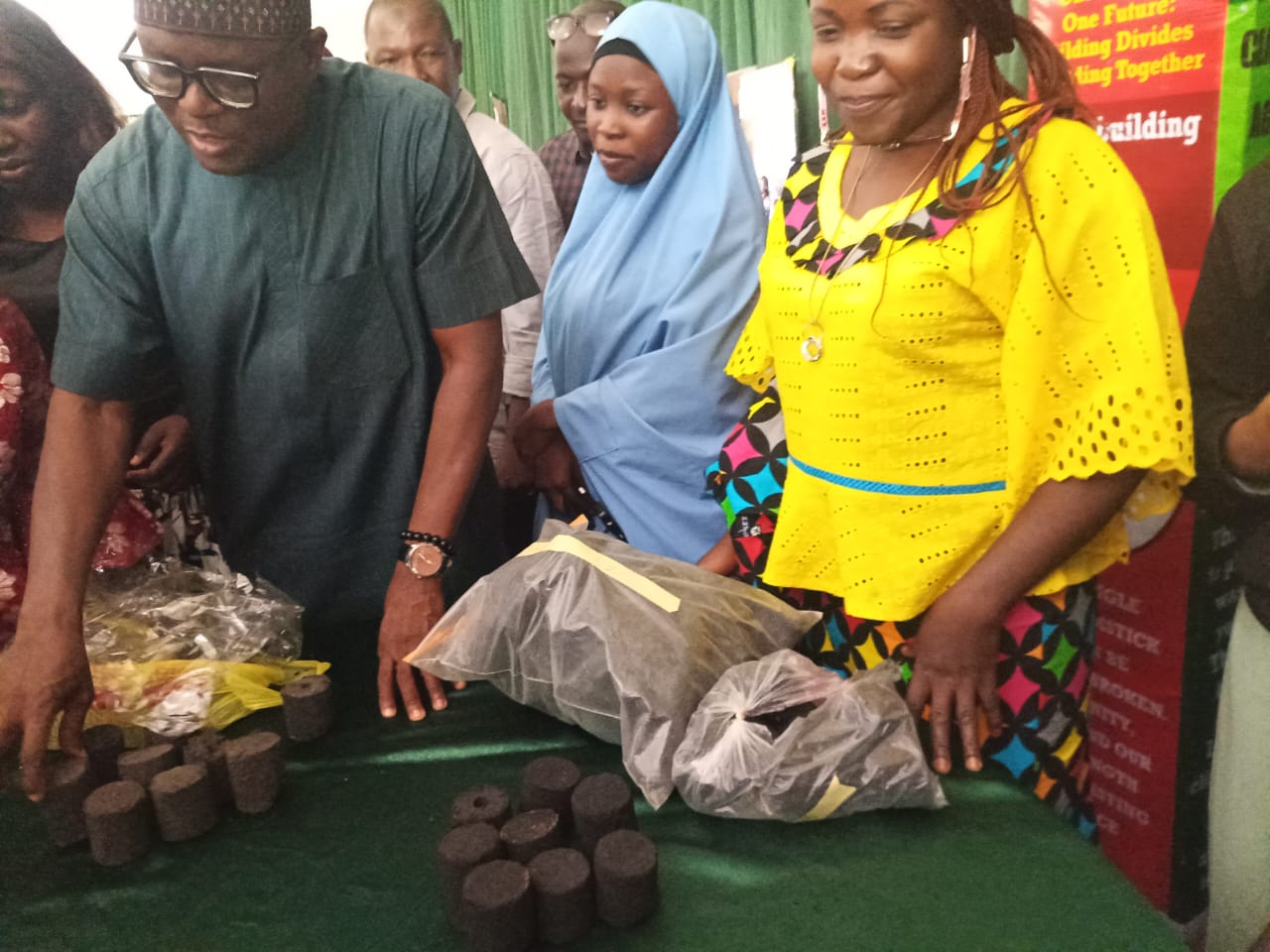
Awareness remains limited. Many residents are unfamiliar with eco-friendly briquettes and continue to rely on traditional charcoal. During the PRIn close-out event in Jos, Rebecca and other beneficiaries displayed their products to invited guests. The exhibition allowed participants to examine the briquettes, ask questions about production methods, and discuss market opportunities.
Rebecca stated that financial support would enable her to purchase better molds and equipment, increase raw material collection, and expand distribution. She also identified advertising and community sensitization as priorities for scaling up.
Rebecca, a mother of five, directs her earnings toward household expenses and school fees. She tracks her sales carefully and reinvests part of the proceeds into subsequent production cycles.
Project Scope and Implementation
Speaking at the event, Oluchukwu Obele, representing the Head of Impact for Christian Aid West and Central Africa, acknowledged the collaboration between government institutions and implementing partners. He described climate-smart agriculture and community-based innovation as practical responses to environmental and economic pressures. He noted that similar interventions have expanded beyond Nigeria into other parts of West Africa, where communities receive tools, training, and technical support to strengthen resilience and improve energy access.
The coordinator of Justice Development and Peace Commission, Benedicta Daber, addressed participants on behalf of consortium partners, including Women, Children, and Community Initiative and the Christian Council of Nigeria. She reported that the project directly trained 150 vulnerable individuals — including women, youth, and persons with disabilities — and indirectly reached more than 1,700 beneficiaries.
The intervention delivered training in climate-smart agriculture, confectionery and pastry production, waste management, and financial literacy. Beneficiaries received starter packs to launch small enterprises. The consortium also installed solar-powered streetlights in 14 communities to improve nighttime visibility and strengthen social interaction. Community-based early warning and response systems were reinforced, and dialogue sessions were facilitated across religious and cultural lines in Barkin Ladi and Bassa LGAs.
Despite security concerns and difficult terrain, project staff and community members implemented activities across targeted locations.
A Continuing Enterprise
Following the close-out ceremony in Jos, Rebecca returned to her production routine. She collected fresh agricultural waste, prepared another batch for carbonization, and scheduled practice sessions with the women learning under her guidance.

She measures charcoal powder into basins, mixes starch in precise proportions, and presses each briquette firmly into molds. She arranges them in neat rows to dry in the sun. When hardened, she stacks them for sale and home use.
Rebecca documents her sales in a small notebook and calculates reinvestment needs for the next production round. As demand grows gradually within her neighborhood, she continues refining her process and training additional women interested in participating.
At 44, Rebecca Jasper converts farm residue into fuel, organizes women around a shared enterprise, and builds a small but expanding charcoal briquette business in Plateau State.





Post Comment