Mike Odeh James
Rebuilding Trust Between Citizens and Police
Stakeholders in Kaduna State have issued an urgent call for comprehensive police reforms, strengthened accountability mechanisms, and strict adherence to criminal justice standards as part of concerted efforts to tackle the growing insecurity plaguing the state.
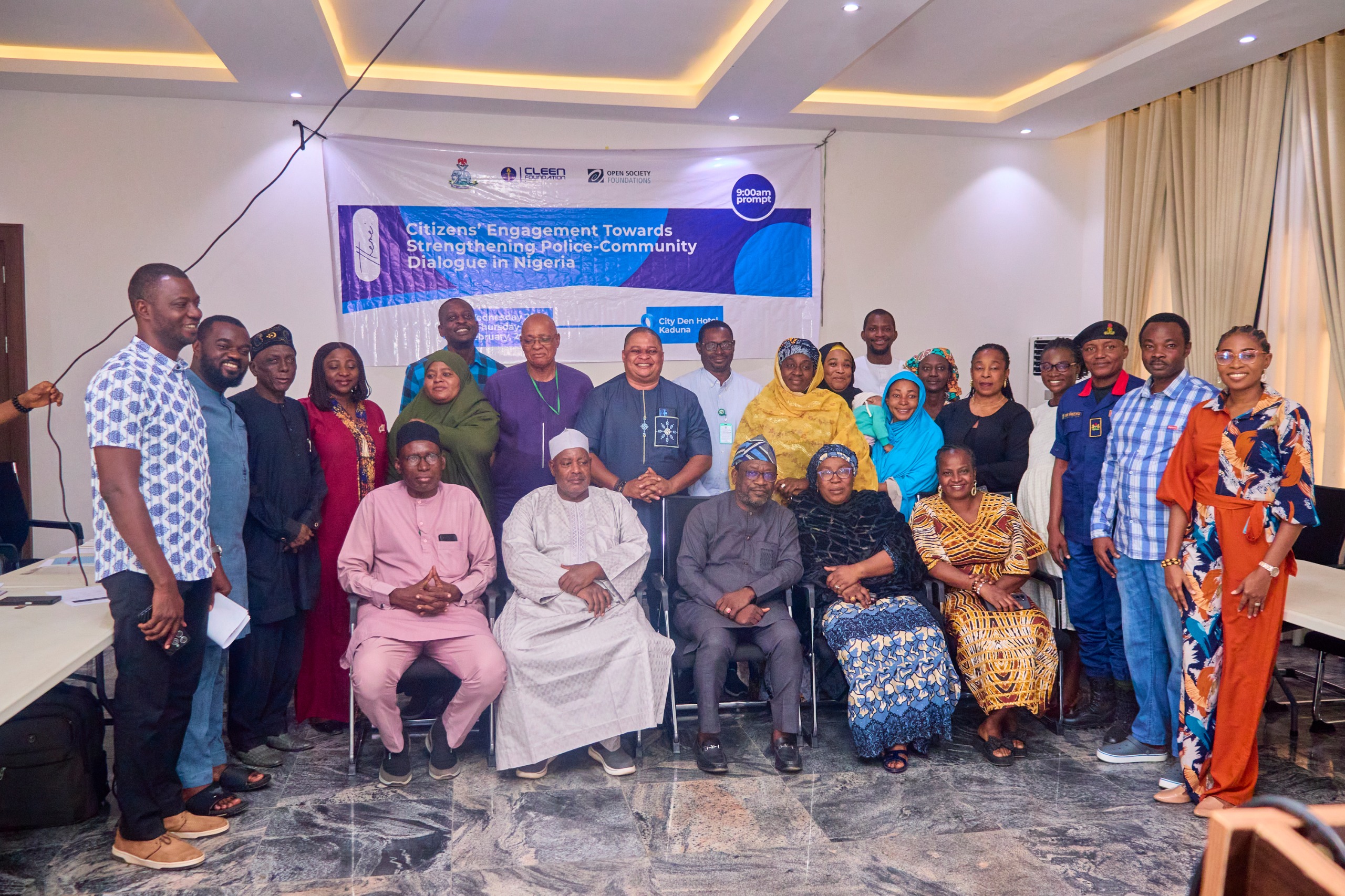
The demand was made during a two-day Citizens’ Engagement on Community Policing Practice and Reform Agenda, organised by the CLEEN Foundation in Kaduna.
Speaking at the event, the Executive Director of CLEEN Foundation, Peter Maduoma, emphasised that effective policing cannot be achieved without first rebuilding the fractured trust between citizens and law enforcement agencies.

Maduoma, who spoke through the Foundation’s Senior Program Officer, Bernard Ekoboy, noted that while the Police Act 2020 provides a legal framework for reform, the security realities in states like Kaduna remain deeply complex—with persistent cases of banditry, communal clashes, farmer-herder tensions, and rising urban crime.
He pointed out that weak communication channels and ineffective feedback mechanisms have further deepened the mistrust between communities and the police.
“Our goal is to move beyond complaints to actionable solutions,” Maduoma stated.
He explained that the forum was specifically designed to generate a Charter of Demands—a document outlining clear expectations for police professionalism and defining the role of community oversight in ensuring safety and justice.
Maduoma urged officers of the Nigeria Police Force to view citizens’ feedback as constructive input for institutional improvement, while also encouraging civil society groups to promote responsible engagement and actively discourage the spread of misinformation.
Human Rights and Justice Standards
In his remarks, Dr Terngu Gwar, Kaduna State Coordinator of the National Human Rights Commission and Chairman of the Kaduna Administration of Criminal Justice Law (ACJL) State Level Working Group, stressed that security and human rights must be mutually reinforcing.
He underscored the importance of fully implementing the Administration of Criminal Justice Law, noting that it sets clear standards for lawful arrests, detention procedures, bail conditions, access to legal representation, and the protection of vulnerable persons.
Gwar argued that strict adherence to these safeguards would significantly strengthen public confidence in the justice system, while violations such as unlawful detention and torture only serve to undermine legitimacy and discourage community cooperation.
He also acknowledged the operational challenges facing the police, including personnel shortages, funding constraints, welfare concerns, and the increasing sophistication of criminal networks operating in the state.
Police Commit to Joint Effort
Receiving the Charter of Demand on Police-Community Relations on behalf of the Kaduna State Police Command, Assistant Commissioner of Police in charge of Administration and Finance, Abdulkadir Yahaya, described policing as a joint effort requiring active collaboration between law enforcement and the communities they serve.

He urged community members to see the police as partners and allies, and to support efforts to make society safer by providing authentic and timely information.
Chairman of the Police-Community Relations Committee in the state, Sanusi Muhammed, called for regular community dialogue to strengthen the existing relationship with the Police.
He expressed particular concern that inadequate information flow from the police to the public continues to hinder the effectiveness of community policing.
“A situation whereby an arrested criminal suspect finds his way back into society without any explanation on why that happened further pitches the Police against the people,” he said.
Call for Funding, Intelligence and Capacity Building
Earlier, Chairperson of the Federation of Women Lawyers, Barrister Funke Bamikole, stressed the urgent need for improved funding, enhanced intelligence gathering capabilities, and regular capacity building for officers and men of the Nigerian Police Force.
Priority Areas for Reform
Participants at the engagement—which included representatives from the Nigerian Police Force, Nigerian Bar Association, Federation of Women Lawyers, media, civil society, and other key stakeholders—identified several priority areas for reform.
These include restoring public trust, strengthening accountability systems, and deepening civic responsibility as essential pillars for achieving lasting security and justice in Kaduna State.



Post Comment