By Ted Ebute
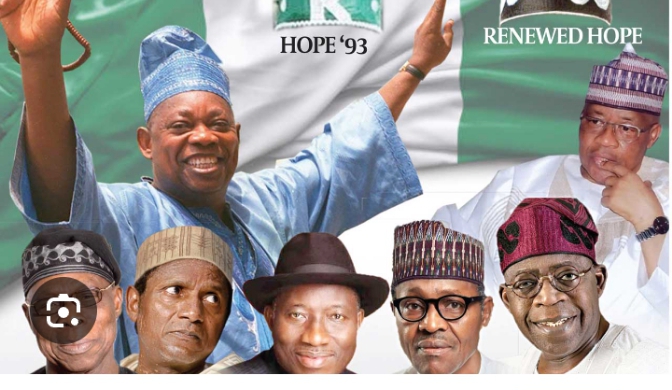
Another June 12 has come. Since 2018, Nigeria has officially marked this date as Democracy Day, in honour of the historic June 12, 1993 presidential election, widely regarded as the freest and fairest election in the nation’s history.
Yet, as the nation celebrates, one question refuses to go away: Is Nigeria truly practising democracy in the fullest sense of the word?

Democracy is not merely the conduct of elections every four years.
It is expected to guarantee accountable leadership, citizen participation in governance, respect for fundamental rights, the rule of law, transparency in public affairs and, above all, the protection of lives and property.
Can we honestly say that the Nigeria of today reflects these ideals?
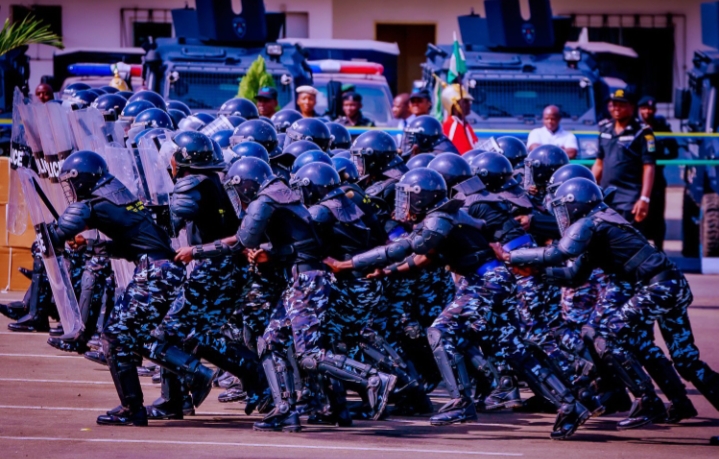
Across the country, insecurity remains a defining feature of national life.
Communities continue to experience terrorist attacks, banditry, kidnapping and other forms of violent crime.
Many citizens live in fear, uncertain of what tomorrow holds.
The painful reality of the abducted schoolchildren in Oyo State serves as yet another reminder of the enormous responsibility government bears in safeguarding the lives of its people.
While security operations often require confidentiality, citizens deserve regular and reassuring communication regarding efforts being made to rescue victims and prevent future occurrences.
The economic situation has equally deepened public frustration.
Rising inflation has significantly diminished the purchasing power of ordinary Nigerians.
Families struggle with increasing costs of food, transportation, healthcare and education.
For many, survival has become a daily battle.
At such a time, political leaders appear preoccupied with calculations for the next electoral cycle.
Political realignments, endorsements and succession plans dominate public discourse, while millions of Nigerians are more concerned about how to put food on the table and live in safety.
A healthy democracy also depends on a free and vibrant press.
The media has historically served as the watchdog of society, holding those in authority accountable.
Any environment that discourages investigative journalism or creates fear around legitimate criticism weakens democratic culture.
Similarly, attempts—whether through legislation, intimidation or other means—to constrain free expression in the digital space deserve careful scrutiny in a democratic society.
It is worth remembering that democracy in Nigeria was not handed to us on a platter. Men and women paid dearly for the freedoms we now enjoy.
The late Chief Moshood Kashimawo Olawale (M.K.O.) Abiola, presumed winner of the June 12, 1993 election, became the enduring symbol of the struggle after the annulment of the election by the military government of General Ibrahim Babangida. Abiola died in detention on July 7, 1998, after years of insisting on his mandate.
His wife, Kudirat Abiola, was assassinated on June 4, 1996, because of her relentless campaign for the restoration of democracy. Pro-democracy activists such as Alfred Rewane, who was murdered in 1995, and Bagauda Kaltho, the courageous journalist who disappeared under suspicious circumstances in 1996, also paid the ultimate price.
Numerous others endured imprisonment, harassment and exile in the struggle against military dictatorship.
Their sacrifices contributed immensely to Nigeria’s return to civilian rule on May 29, 1999.
It is therefore understandable that many Nigerians, including yours truly, approach Democracy Day with mixed feelings.
There is indeed something to celebrate:
the fact that the country has sustained an uninterrupted civilian dispensation for over two decades.
Military rule, with its arbitrary decrees and suppression of dissent, remains a painful chapter in our history.
However, democracy cannot be judged solely by longevity.
Its success must be measured by the quality of governance it delivers and the extent to which it improves the lives of citizens.
Democracy should mean more than periodic elections.
It should translate into security, justice, economic opportunity, accountable institutions and the protection of civil liberties.
It should inspire confidence that government exists primarily to serve the people.
As Nigerians commemorate another Democracy Day, perhaps the occasion should be less about celebration and more about reflection.
It should be a moment to ask difficult questions, evaluate national progress and recommit ourselves to the ideals for which so many sacrificed.
Only then can we truly honour the memory of our heroes past.
And only then can we say, with conviction, that their labour was not in vain.
Happy Democracy Day, Nigeria.



Post Comment