By Palang Paul
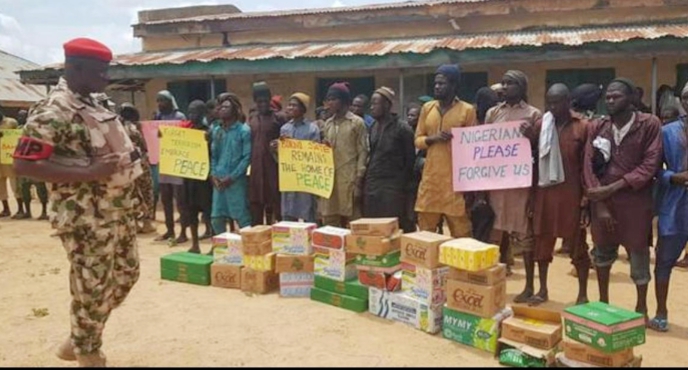
At least 40 individuals previously identified as members of the Boko Haram insurgent group have been shortlisted for recruitment into the Nigerian Army and have undergone medical screening in Maiduguri, sparking serious concerns among serving military personnel over security risks, recruitment integrity, and possible circumvention of enlistment procedures.
The candidates, reportedly sponsored by the Borno State Government, were transported in a government-provided bus to the Nigerian Army’s 7 Division Military Hospital at Maimalari Cantonment, where they participated in medical examinations as part of the ongoing 91st Regular Recruits Intake (RRI 91).
The development, confirmed by two serving military officers who spoke on condition of anonymity, has reignited controversy surrounding the reintegration of former insurgents and raised questions about how individuals with documented ties to terrorist groups progressed through the Army’s recruitment process.
Officers Raise Alarm
A serving Army Major attached to the 7 Division Military Hospital said he personally witnessed the arrival and screening of the former insurgents.
“I can confirm that the Borno State Government brought about forty repentant Boko Haram members for medical screening this week,” the officer said. “While some were declared medically unfit, many progressed to the next stage of the recruitment process.”
The officer expressed concern over what he described as gaps in the verification process.
“To join the Army, applicants are expected to present documents including birth certificates or age declarations, educational qualifications, certificates of origin, and attestation letters from recognized authorities,” he said. “The question is whether all these requirements were genuinely met.”
According to him, concerns have emerged among personnel about the possibility of irregular documentation and the broader implications of admitting former insurgents into military service.
A second officer, a Lieutenant who also witnessed the exercise, said the situation had generated unease among serving troops.
“The issue is not just that they came for medical screening,” the officer said. “The bigger concern is understanding how they were shortlisted in the first place and what message it sends about recruitment standards.”
The Borno Reintegration Programme
The candidates are believed to be among thousands of former Boko Haram members processed through the Borno State Government’s Deradicalisation, Rehabilitation and Reintegration programme, popularly known as the “Borno Model.”
Launched in 2021 under Governor Babagana Zulum, the initiative was designed to encourage insurgents to surrender, undergo rehabilitation, and return to civilian life.
Programme officials say participants receive vocational training, psychological support, religious reorientation, and skills acquisition before being reintegrated into their communities.
At the latest reintegration ceremony, state officials announced the reintegration of hundreds of former fighters alongside their families, describing the programme as a key non-kinetic strategy for ending insurgency in the North-East.
Supporters argue that rehabilitation reduces the number of active fighters and promotes long-term peace. Critics, however, question whether adequate safeguards exist to prevent security breaches and ensure accountability.
Growing Tension Within Security Circles
The latest recruitment controversy comes amid broader concerns within military circles over the increasing involvement of rehabilitated ex-insurgents in security-related activities.
In recent months, soldiers involved in counterinsurgency operations have reportedly expressed reservations about directives encouraging collaboration with former Boko Haram members attached to community-based security structures supporting military operations.
Several serving personnel have argued that trust remains a significant challenge, citing fears that operational information could be compromised.
One officer said many troops remain skeptical because insurgent groups continue to demonstrate knowledge of military movements and operations.
According to security sources, these concerns have led some units to maintain strict separation between serving personnel and rehabilitated former fighters despite official efforts to promote cooperation.
Why the Issue Matters
The controversy unfolds against the backdrop of a conflict that has lasted more than fifteen years and claimed thousands of lives across northeastern Nigeria.
Boko Haram and its splinter factions, including the Islamic State West Africa Province (ISWAP), have been responsible for deadly attacks on civilians, military installations, and critical infrastructure across Borno, Yobe, and Adamawa states, while also extending operations into other parts of the country.
Although authorities have repeatedly stated that the insurgency has been significantly degraded, attacks on military personnel and communities continue to occur.
For many serving officers, the prospect of former insurgents entering the military through official recruitment channels raises difficult questions about vetting standards, loyalty, and operational security.
Questions Over Recruitment Procedures
The Nigerian Army’s 91st Regular Recruits Intake exercise commenced nationwide on June 9, 2026, with applicants required to meet established eligibility criteria and provide specified documentation.
The central question emerging from the Maiduguri screening exercise is whether the former insurgents met all recruitment requirements and, if so, how their applications were assessed and approved.
At the time of filing this report, military authorities had not publicly clarified the circumstances surrounding the shortlisting of the candidates.
What remains undisputed, according to two independent military sources, is that approximately forty former Boko Haram members arrived at the military medical facility in a government-sponsored vehicle, participated in medical screening, and that a significant number reportedly advanced to subsequent stages of the recruitment process.
Awaiting Official Response
Efforts to obtain official clarification were unsuccessful before publication.
Calls and text messages sent to the Director of Army Public Relations, Colonel Appolonia Anele, were not answered. Similarly, officials of the Borno State Government and members of the state’s Deradicalisation, Rehabilitation and Reintegration Committee had not responded to requests for comment as of press time.


Post Comment