
By Palang Paul
The Nigerian military has disclosed that suspects arrested at illegal weapon manufacturing factories in Plateau State confessed to producing and selling locally fabricated firearms to Fulani militias because the groups were willing to pay higher prices than other buyers.
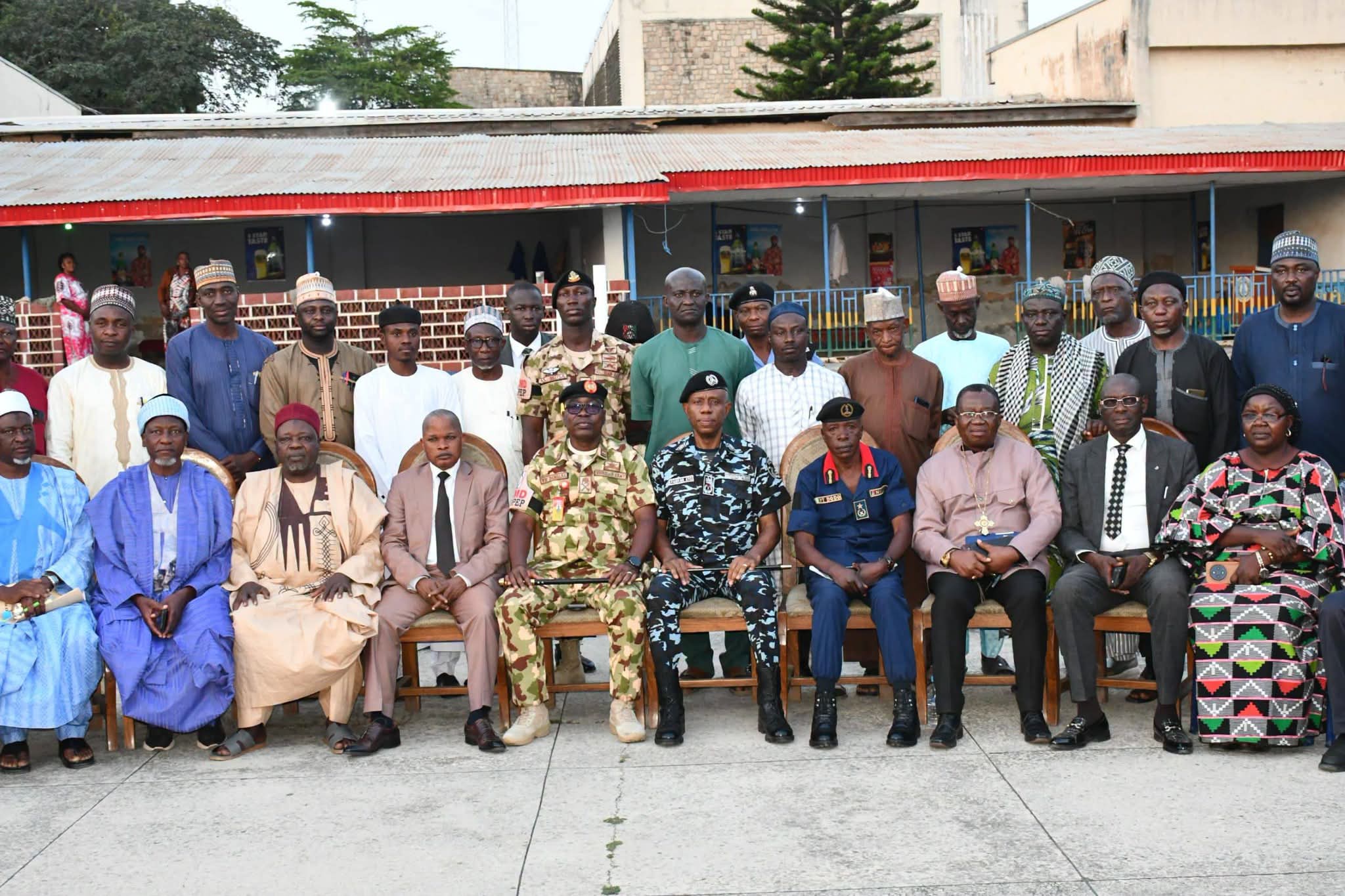
The revelation, which security authorities say underscores a major factor fueling persistent violence in the state, was made by the Chief of Staff of Operation Safe Haven (OPSH), Brigadier General Selong Sule, during an engagement with journalists in Jos.
Speaking on behalf of the General Officer Commanding (GOC) 3 Division of the Nigerian Army and Commander of Operation Safe Haven, Major General Folusho Oyinlola, Sule said intelligence-driven operations recently led troops to several clandestine arms production sites operating within Plateau State.
According to him, security forces successfully uncovered and dismantled multiple illegal weapon manufacturing facilities as part of ongoing efforts to curb the proliferation of firearms across the region.
“We have a lot of illegal weapon manufacturing factories. Recently, based on intelligence, we discovered and busted about three or four of such factories,” Sule said.
The senior military officer disclosed that investigations and interrogations of suspects arrested during the operations revealed that some of the locally manufactured weapons were being supplied to armed groups involved in violent attacks.
“Some of the suspects claimed they manufactured weapons for members of their communities to defend themselves. However, some later confessed that they also sold these weapons to Fulani militias because they paid more,” he stated.
Sule warned that the widespread availability of locally fabricated firearms continues to pose a significant threat to peace and security in Plateau State, noting that such weapons frequently end up in the hands of non-state actors.
“The proliferation of firearms and the activities of illegal weapon manufacturers raise serious security concerns. A weapon in the hands of a non-state actor is a major challenge to our operations,” he said.
He added that while many civilians justify the possession of firearms as a means of self-defence, the uncontrolled circulation of weapons often contributes to further violence and criminality.
“People tell us they carry weapons to defend themselves, but once weapons circulate among civilians, they easily fall into the hands of criminals who use them to attack communities,” Sule explained.
The military officer contrasted the conduct of armed civilians with that of members of the armed forces, emphasizing that soldiers operate under strict constitutional provisions, military regulations and Rules of Engagement.
“Our soldiers are governed by the Constitution, military laws and Rules of Engagement. They cannot simply use force at will. But when civilians illegally possess weapons, there is no such control,” he said.
Beyond kinetic military operations, Sule noted that Operation Safe Haven has increasingly embraced non-kinetic strategies aimed at building trust between security agencies and local communities.
According to him, community cooperation remains essential to gathering actionable intelligence capable of preventing attacks and dismantling criminal networks.
“If we do not win the hearts and minds of the people, it becomes difficult to obtain credible intelligence that is essential for successful operations,” he said.
He called on the Plateau State Government, traditional institutions and community leaders to intensify efforts aimed at identifying and dismantling illegal arms manufacturing networks, encouraging the voluntary surrender of illicit weapons and strengthening collaboration with security agencies.
Security analysts have long identified the proliferation of small arms and light weapons as a major driver of recurring communal violence and armed attacks in Plateau State and other parts of Nigeria’s North-Central region.
The latest disclosures by military authorities are expected to intensify concerns about the role of illegal arms production and trafficking in sustaining insecurity across the state.


Post Comment