By Palang Paul
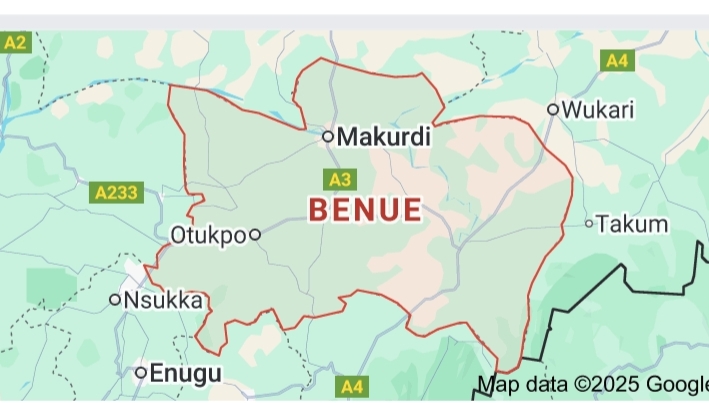
Ugboju community in Otukpo Local Government Area of Benue State Nigeria has once again been plunged into mourning following the assassination of an All Progressives Congress (APC) the Nigerian ruling party chieftain, Ejeh Ijachi, in the early hours of Monday.
Eyewitnesses told Journalist that the attackers, who rode on motorcycles, laid an ambush around his residence. Upon sighting him within his compound, they reportedly opened fire at close range, killing him instantly. His remains have since been deposited at a morgue in Otukpo.
The killing is believed to be connected to a long-standing land ownership dispute between the late APC stalwart and a relative. The feud, dating back more than a decade, has triggered cycles of violence across Ugboju, Ondo, and Ogobia communities.
In 2017, the conflict spiraled into one of the bloodiest episodes in Otukpo’s history, claiming at least eight lives, including that of retired Major Lawrence Ugboh, a former chairman of the Peoples Democratic Party (PDP) in the state. Since then, Ijachi reportedly survived multiple assassination attempts, making Monday’s attack yet another grim chapter in the unresolved crisis.
The Chairman of Otukpo Local Government Area, Maxwell Ogiri, confirmed the killing, describing it as a premeditated and determined act.
“Ejeh Udeh was murdered. We don’t know the immediate or remote reasons yet, but his killers were resolute. They traced him to his residence after an outing with friends, waited for him to park his car, and opened fire before closing in to finish him off,” Ogiri said.
He added that he visited the crime scene with the DSS director and other security chiefs, who promised to widen their dragnet to apprehend the perpetrators.
However, the Benue State Police Command said it had not received formal reports on the killing as of press time. The Police Public Relations Officer, DSP Udeme Edet, told Journalist that details were still being awaited.
The assassination of Ijachi underscores the fragile security situation in Benue State, where unresolved communal disputes, political rivalries, and land conflicts often spiral into deadly violence.
Political observers note that the killing comes at a sensitive time, with the APC seeking to consolidate its presence in the state ahead of the next electoral cycle. The attack also mirrors a disturbing pattern of politically exposed persons in Nigeria becoming targets of assassination, particularly in rural communities where state security presence is thin.
The Otukpo killing further highlights the lingering challenge of impunity. Despite the 2017 bloodshed, few perpetrators were successfully prosecuted, leaving communities vulnerable to reprisal attacks and settling of scores.
Security analysts warn that without a comprehensive peace and justice process to address deep-rooted disputes in Benue, especially over land and political dominance, the state may continue to witness cycles of violence that claim lives of both the ordinary and the influential.



Post Comment