
By Lawrence Zongo, The Nigeria Times
A 12-year-old Fulani Christian boy, Ngwe Ayuba Isa, walked to a riverside in Miango, with a cutlass to gather grass for cattle. He never made it home.
Fulani ethnic militias ambushed the boy near the water’s edge on February 24 at about 4:35 p.m., community members told The Nigeria Times. Witnesses said the attackers used machetes, striking him on the head and other parts of his body. Villagers later recovered his body and prepared to move it to a mortuary the next day.
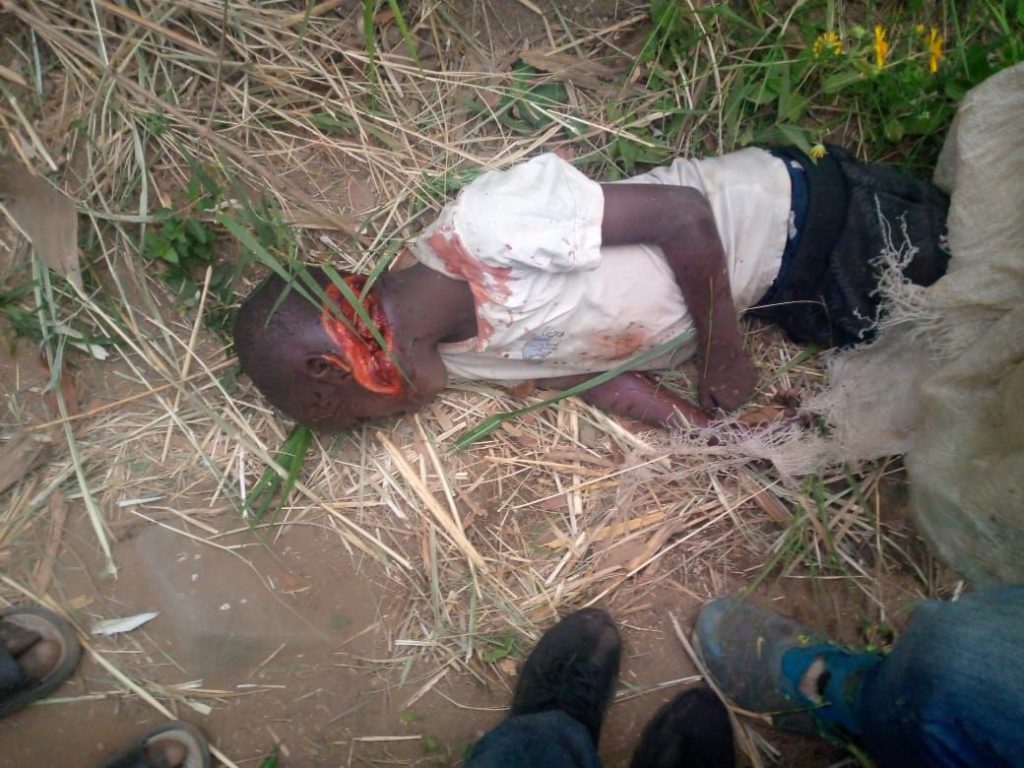
The killing unfolded in Miango District of Plateau State, in Nigeria’s Middle Belt. Residents said the boy came from a Fulani background but practiced Christianity. He had gone alone to cut grass. Herdsmen grazed cattle nearby. Minutes later, he lay lifeless on the ground.
Community leaders said the attackers fled before help could reach him.
The boy’s death followed another deadly attack just hours earlier.
On the night of February 23, gunmen opened fire in Miango shortly after 8:00 p.m. Residents heard rapid gunshots crack through the dark. People ran for cover. Families pulled children inside. The shooting lasted about 10 minutes, according to local accounts.
By the time the noise stopped, Abbas Musa, a civil servant in his sixties, lay dead.
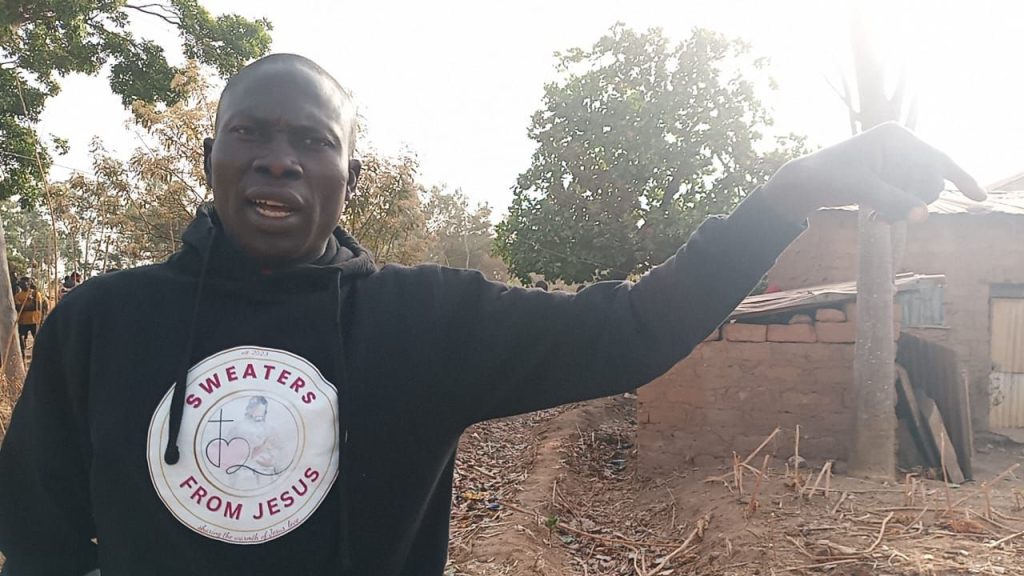
Reverend Gado John, who serves as Public Relations Officer for the community, told The Nigeria Times that the gunfire erupted close to a military checkpoint.
“The shooting happened about 30 meters from the Sector 3 FOB checkpoint near ECWA Secondary School,” he said. “That distance is very short.”
Residents said they called soldiers stationed near the College of Accountancy area. Reverend John said he personally made contact. Soldiers did not arrive until close to 10:00 p.m., after the attackers had left the area.
Local vigilantes moved first. Community members formed a security group in response to years of violence. When they heard the gunshots, they grabbed flashlights and basic weapons and rushed toward the sound. They reached the scene after the gunmen had disappeared into the night.
Miango sits in Bassa Local Government Area, part of Irigwe land. The Irigwe people farm maize, tomatoes, and other crops. Residents said disputes over grazing have intensified in recent weeks.
Farmers accused herders of driving cattle into cultivated fields. Community leaders met with security officials and herder representatives at the Sector 3 Command checkpoint near ESS Secondary School. They demanded enforcement of agreements to stop cattle from entering farmland.
Days later, attackers struck again.
Sunday Gara, 66, now lies in a hospital bed at Enos Hospital. He said three men attacked him while he worked on his maize and tomato farm.
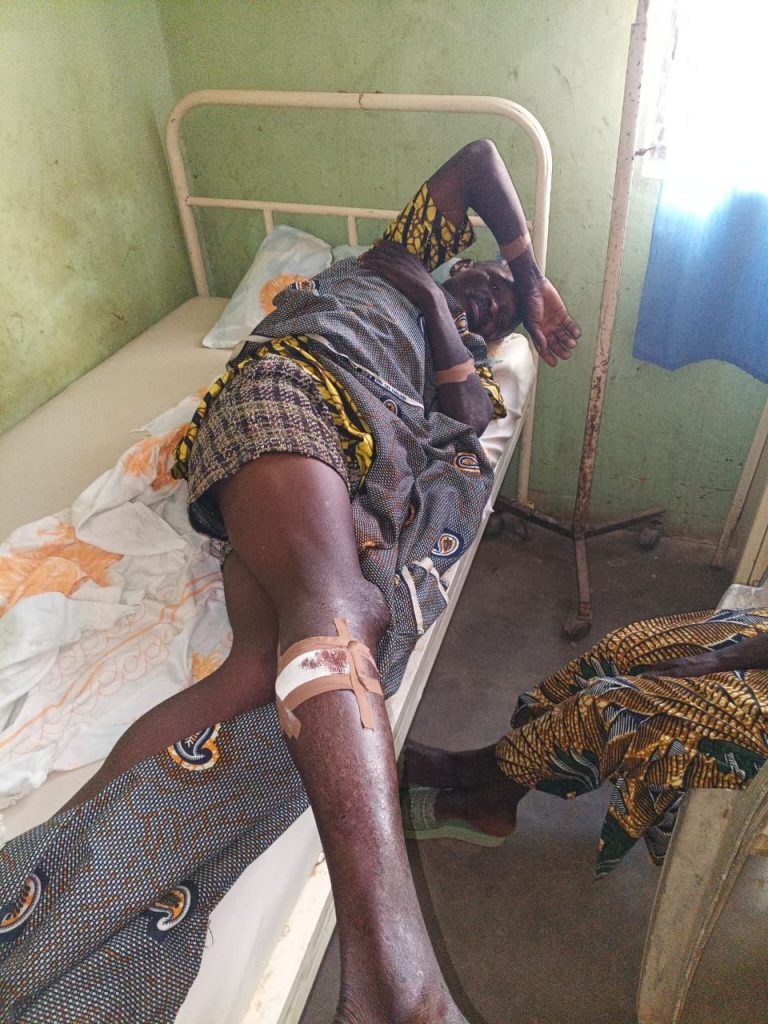
“They are three in number,” Gara told The Nigeria Times, struggling to speak because of injuries to his right leg. “I fought to escape.”
Gara said the men slashed him with machetes. He believes they wanted to kill him and graze cattle on his land. Family members rushed him to the hospital. Doctors treated deep cuts on his leg.
Abel Joseph, a medical worker at Enos Hospital, confirmed that Gara arrived Sunday evening, February 22, with machete wounds.
“In the past seven years, I have treated more than 300 survivors of gunshots or machete cuts,” Joseph said. “Many times, families say Fulani attacked them.”
Joseph said some victims die from their injuries. Others survive but cannot pay medical bills. He called for more drug supplies and financial support to treat victims who arrive with severe wounds.
The violence did not stop in Miango.
On Sunday night, armed Fulani ethnic militias launched coordinated attacks in Riyom and Barkin Ladi Local Government Area, residents told The Nigeria Times. Between 8:00 p.m. and 9:00 p.m., gunmen stormed the communities of Jol and Dorowa Babuje.
Solomon Dalyop, National President of the Berom Youth Moulders Association, said attackers rode into Jol on motorcycles from the Mahanga axis. He said nine people died in Dorowa Babuje and one in Jol.
Dalyop said residents had received terror alerts before the assault. He said armed men still penetrated the community. Personnel from Operation Rainbow, a state-backed security outfit, engaged the attackers and pushed them back.
In Dorowa Babuje, Dalyop said gunmen advanced from the Jong-Wereh area, where they had set up a temporary camp. Security forces responded after residents raised an alarm. The exchange of gunfire limited the number of casualties, according to Dalyop.
In a separate Monday night attack in Miango, residents said Fulani ethnic militia killed another male resident under the cover of darkness before fleeing.
Across Plateau State, communities such as Riyom, Bassa, Barkin Ladi, Mangu, and Bokkos have reported repeated nighttime raids. Residents describe a pattern: gunmen arrive on motorcycles or by foot, fire shots, attack homes or farms, then withdraw before security forces intercept them.
During a public mourning gathering for Abbas Musa, Bassa Local Government Chairman Dr. Joshua Riti addressed residents directly. He accused the Nigerian Army of failing to respond adequately to repeated threats.
“When I called the Sector 3 commander during a previous attack in Nzharuvo, he told me his soldiers were there,” Riti said. “That was not true.” Mourners shouted in agreement.
Riti demanded the removal of the Sector 3 commander stationed in Jos, the Plateau State capital. He called for Mobile Police units to replace the soldiers currently deployed in the area.
Residents also alleged that they had seen Fulani individuals in the company of soldiers on multiple occasions. Some claimed they witnessed cash exchanges between herders and soldiers in recent weeks. Authorities have not independently verified those allegations.
Police officers who visited the community declined to comment. One officer told The Nigeria Times he did not have permission to speak with journalists. As of press time, the Nigerian Army had not released a public statement about the killings. Authorities announced no arrests.
In Miango, families continue to bury their dead.
Neighbors described Ngwe Ayuba Isa as a quiet boy who helped with chores. On the day of his death, he carried a tool for cutting grass. He walked toward the riverside in the late afternoon light. Herds grazed nearby. Villagers later found him with severe machete wounds.
His killing adds another name to a growing list of victims in Plateau’s rural communities.
Local leaders now press security agencies for action. They want visible patrols. They want enforcement of grazing agreements. They want arrests.
“We cannot continue like this,” Reverend John said during the mourning gathering. “Our children go to the farm and do not return.”
For now, families in Miango and Barkin Ladi keep watch as night falls. Vigilantes gather at road junctions. Farmers look over their shoulders in the fields. Community leaders place calls to security commanders.
And a 12-year-old boy’s walk to the riverside has become the latest flashpoint in Plateau’s long-running genocidal attacks in Christian villages.




Post Comment