By Faith Chondol
When 18-year-old Tabitha Bulai completes a dress from the small sewing space in her family home, she carefully inspects every stitch before handing it to her customer. Over the past months, more than 20 clients have entrusted her with their clothing, paying ₦4,000 per outfit. The income helps her save for school and contribute to her household’s daily needs.
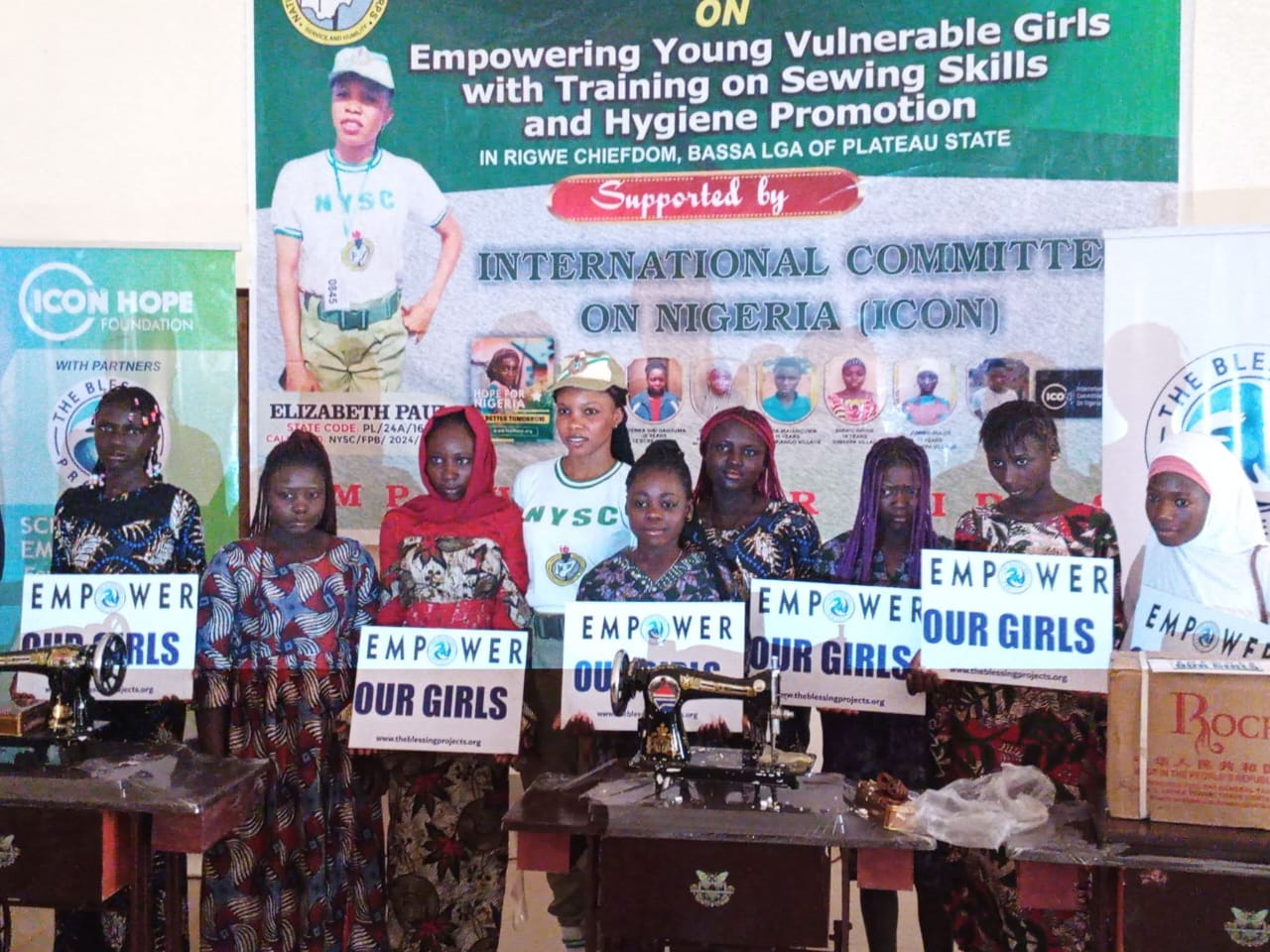
Tabitha is one of many young women trained through the Blessing Projects’ Sewing School, which began in January 2025. The programme provides hands-on tailoring instruction and sewing machines to young women who previously had no stable source of income. In December 2025, the second cohort of trainees graduated, equipped with practical skills to establish small businesses in their communities.
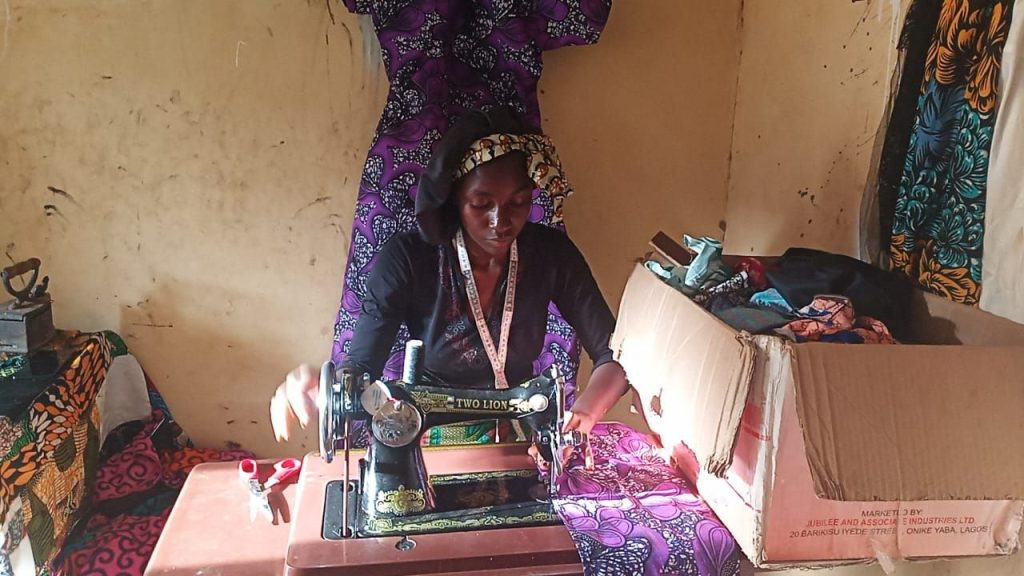
“I sew dresses, skirts, and traditional outfits. People come to my house because they like my work,” Tabitha said. In addition to tailoring, she also makes caps and smaller clothing items to supplement her earnings. The flexibility of working from home allows her to assist her mother with household responsibilities and care for her siblings while building her customer base.
Another beneficiary, 21-year-old Shafa’atu Saleh, now operates her own tailoring shop. Before joining the programme, she did not have a consistent means of income. After completing her training, she began sewing both male and female clothing. She has produced outfits for more than 20 customers, charging between ₦3,500 and ₦5,000 per piece.

With her earnings, Shafa’atu buys food items for her parents and covers personal expenses. She plans to expand her shop by selling sewing materials such as linen, threads, and measuring tapes, creating an additional revenue stream within her community.
The Sewing School is one of several initiatives introduced by Blessing Projects in 2025 to support vulnerable women and families.
In February 2025, the organisation launched a Chicken Farming programme that trained 100 girls and children of widows from 10 communities in poultry farming. Each participant received five chicks to raise for food and income. The project provides practical instruction on feeding, vaccination, and poultry management. Beneficiaries are able to sell mature birds or eggs in local markets, generating income while also improving household nutrition.
By March 2025, Blessing Projects began sponsoring 100 women pursuing the Nigeria Certificate in Education (NCE) at the National Teachers Institute. The education sponsorship covers essential academic needs, enabling participants to work toward formal qualifications. Many of the women enrolled had previously suspended their studies due to financial constraints. The programme allows them to continue their education while preparing for teaching and other professional opportunities.
In April 2025, the organisation expanded into large-scale agriculture, cultivating more than 250 acres of farmland. A total of 135 widows received access to land, along with training, seeds, and farming tools. The agricultural output now supports over 2,300 people through crop production. Participants engage in planting, harvesting, and distribution, strengthening food security within their communities.
Later in September 2025, Blessing Projects initiated a School Support programme that provided educational materials and sponsorship to 50 students who were unable to afford school supplies and fees. The support enabled the students to enroll or remain in school during the academic year.
Across these initiatives, beneficiaries describe increased access to income-generating skills, education, and agricultural resources. For young women like Tabitha and Shafa’atu, the programmes have created pathways to self-employment and financial contribution within their families.
As customers continue to visit Tabitha’s home for tailored outfits and as Shafa’atu grows her client base in her shop, their work reflects the practical training they received. Through sewing machines, poultry, farmland, and classroom sponsorships, Blessing Projects’ activities in 2025 have reached women, widows, and students across multiple communities, providing tools designed to support long-term livelihoods.



Post Comment