
By Lawrence Zongo & Palang Paul.
Jos, Nigeria — The Special Adviser to Governor Caleb Manasseh Mutfwang on Sustainable Technology and Carbon Credit, Nuhu Yakubu Chayi, opened a three-day climate policy town hall in Jos with a keynote address calling for urgent, coordinated, and inclusive climate action to safeguard Plateau State’s economic stability, food systems, and vulnerable communities.
Speaking at the Inclusive Climate Policy Advocacy Townhall held at Lamonde Hotel in Jos, Chayi described climate change as a present-day development and security issue with measurable local impacts. He cited rising average temperatures, irregular rainfall patterns, prolonged dry seasons, and recurring flash floods as emerging risks affecting agriculture, water access, and public health across the state.
“Climate change is no longer a distant environmental conversation,” Chayi said. “It is shaping our farming cycles, influencing food prices, affecting water availability, and increasing pressure on land and livelihoods. Our response must be structured, inclusive, and backed by law.”
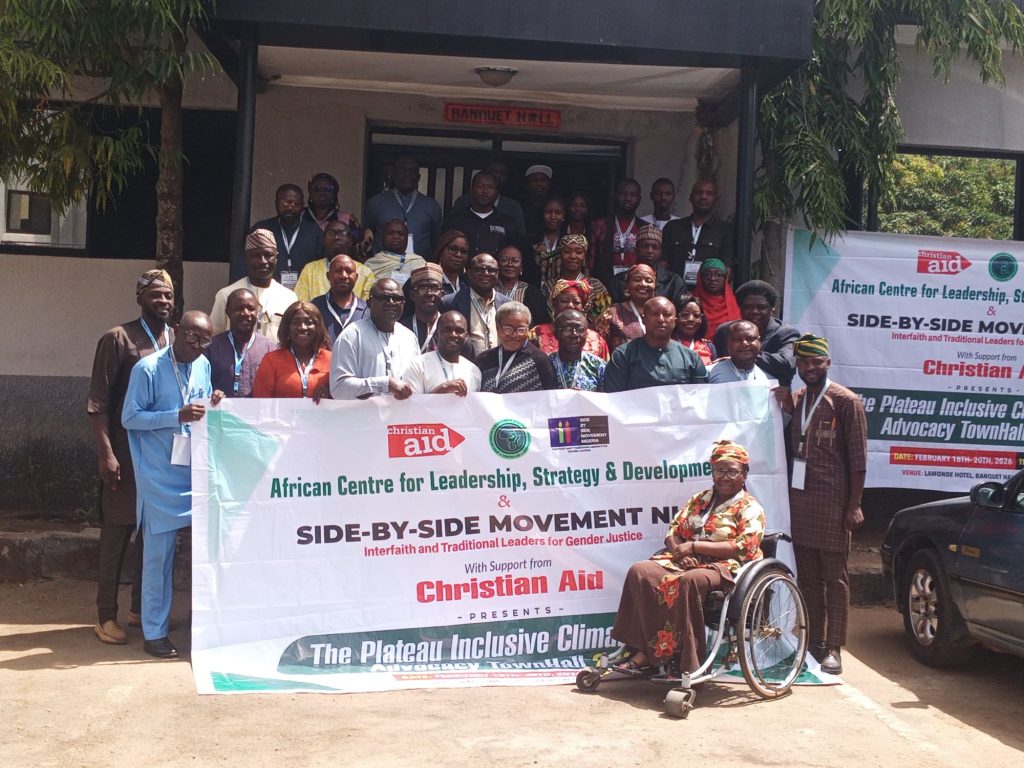
The town hall, convened by the African Centre for Leadership, Strategy & Development in partnership with Side-By-Side Movement Nigeria and supported by Christian Aid, brought together lawmakers, civil society organizations, traditional rulers, religious leaders, and representatives of women’s groups and persons with disabilities.
Climate Change in Global and Local Context
Globally, climate scientists report that 2023 and 2024 ranked among the hottest years on record, with average global temperatures exceeding pre-industrial levels by more than 1°C. According to international climate monitoring agencies, extreme weather events—including heatwaves, floods, and droughts—have increased in frequency and intensity over the past two decades.
Nigeria has experienced similar trends. Data from the Nigerian Meteorological Agency indicate rising temperature averages across several ecological zones and increasing rainfall variability. The Middle Belt region, including Plateau State, has recorded episodes of delayed rainfall onset, shorter rainy seasons, and more concentrated downpours leading to erosion and flooding.
Plateau State, historically known for its temperate climate and agricultural productivity, has reported noticeable environmental shifts. Local agricultural extension records show that farmers in parts of Bassa, Barkin Ladi, and Mangu, Langtang have adjusted planting calendars due to unpredictable rainfall. In some communities, early cessation of rains has reduced yields of maize, potatoes, and vegetables.
Flood events in recent years have displaced households in riverine communities, while prolonged dry spells have affected pasture availability, intensifying competition over land and water resources. Environmental experts note that land degradation linked to mining activities and deforestation has compounded vulnerability to climate shocks.
Legislative Efforts Underway
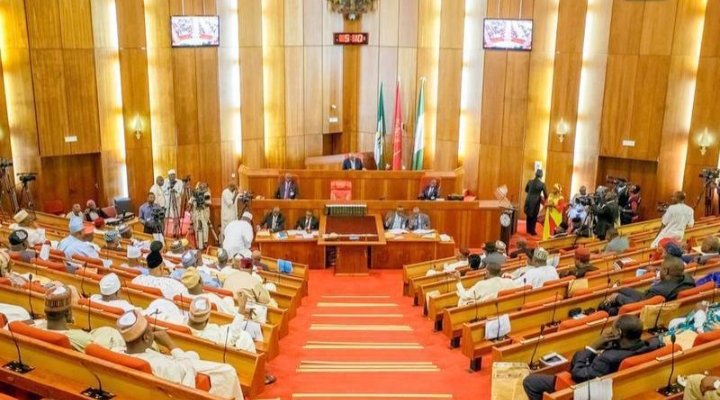
At the center of the discussions is a proposed Climate Bill currently being drafted for submission to the Plateau State House of Assembly. Mr. Desmond Chollom, Speaker of the Plateau State Climate Assembly, said the bill aims to provide a statutory framework for coordinated climate governance.
“The objective is to institutionalize climate action so that policies continue beyond political transitions,” Chollom said. “The bill will define responsibilities across ministries, create monitoring mechanisms, and align Plateau’s policies with national and international climate commitments.”
The Climate Assembly was established by Governor Mutfwang to coordinate multi-sectoral climate initiatives and position Plateau to access climate financing opportunities, including carbon credit markets.
Chayi noted that climate-related investments could generate economic opportunities in renewable energy, climate-smart agriculture, land restoration, and green enterprise development. He emphasized that structured policy frameworks are necessary to attract international climate funds and private sector participation.
Gender and Disability Inclusion in Focus
Civil society representatives at the town hall called for explicit gender and disability provisions in the proposed legislation. Pastor Offiong Enang of the African Centre for Leadership, Strategy & Development said the advocacy process seeks to ensure that policy design reflects community realities.
“Women are central to agricultural production and household water management in Plateau State,” Enang said. “When rainfall patterns shift or drought occurs, women are directly affected. Their representation in climate planning structures is essential.”
Representatives from the disability community also addressed participants. Mr. Aaron Adamu, Chairman of the Joint National Association of Persons with Disabilities in Plateau State, said emergency response plans often overlook accessibility needs.
“When floods or other disasters occur, evacuation systems and relief distribution frequently do not consider persons with disabilities,” Adamu said. “Inclusion must be clearly written into policy provisions.”
Program officers from Christian Aid referenced global research indicating that climate impacts disproportionately affect women and marginalized populations due to economic and social inequalities. They advocated for budget allocations within the proposed law to support targeted adaptation programs.
Environmental and Economic Implications
Agriculture contributes significantly to Plateau State’s local economy, employing a large percentage of rural households. Irregular rainfall and soil degradation have affected crop output in recent seasons, according to local farming cooperatives. Reduced harvests have implications for food prices, household income, and market stability.
Public health officials have also reported seasonal increases in waterborne diseases following flood events in some local government areas. Environmental specialists link such outbreaks to compromised sanitation infrastructure during extreme weather.
Chayi said integrating climate-smart agricultural practices—such as improved irrigation, drought-resistant seed varieties, and soil conservation—could strengthen resilience. He also referenced renewable energy deployment and reforestation as strategies capable of reducing environmental stress while creating employment.
Stakeholder Participation
Traditional and religious leaders participating through the Side-By-Side Movement in Nigeria highlighted the role of community institutions in awareness campaigns and local mobilization. Organizers said the town hall includes a clause-by-clause review of the draft Climate Bill to incorporate stakeholder recommendations before submission to lawmakers.
Participants are expected to produce a communiqué outlining proposed amendments, implementation timelines, and accountability measures.
If enacted, the legislation would position Plateau among the states in Nigeria’s North Central region with a dedicated climate law incorporating gender and disability considerations.
Chayi concluded his keynote by urging sustained collaboration among government agencies, civil society, and communities.
“Climate resilience requires continuity, data-driven planning, and inclusive participation,” he said. “Plateau State has the opportunity to design systems that respond to environmental realities while expanding economic prospects for its people.”
The town hall is scheduled to conclude with the presentation of recommendations to members of the Plateau State House of Assembly for legislative consideration.



Post Comment