
By Palang Paul
American Christian missionary, Alex Barbir, has accused Fulani armed groups of carrying out systematic killings of Christians across several states in Nigeria, alleging that the Federal Government is complicit in a cover-up and has failed to protect vulnerable communities.
Barbir, who recently returned from a visit to Nigeria, made the claims during an interview with US-based CBN News. He dismissed official narratives attributing much of the violence to Boko Haram, asserting that the insurgency is not the primary threat in Nigeria’s Middle Belt.
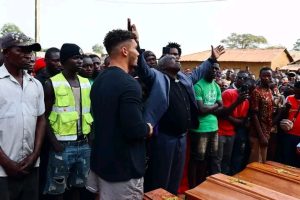
“In Benue, it’s not Boko Haram. In Plateau, it’s not Boko Haram. In Taraba, it’s not primarily Boko Haram. In Kaduna, it’s not Boko Haram. It is Fulani that are going about killing and massacring,” Barbir said.
He further accused the administration of President Bola Tinubu of shielding perpetrators and using public relations tactics to downplay the scale of attacks on Christian communities.
“The government is not doing anything. They are basically covering [the militias] up. They are paying billions to lobby, saying there is no Christian genocide,” Barbir alleged. “Why are we hiding the truth? Who is going to be the one to say the truth and fight for the people of Nigeria? If it’s just me, I will do it.”
Barbir called on the global Christian community to break its silence, insisting, “We can’t be Christians and stay on the sidelines.”
Dispute with Benue State Government
Barbir’s latest allegations follow earlier tensions with the Benue State Government. He had proposed rebuilding Yelwata village—a community previously attacked by Fulani—by constructing a market for residents. According to Barbir, the state government rejected his ₦60 million proposal and instead presented him with a ₦300 million blueprint.
“There is no market in any Nigerian village worth ₦300 million,” Barbir said, alleging that officials are exploiting the suffering of internally displaced persons for personal enrichment.
As of the time of this report, neither the Federal Government nor the Benue State Government had issued a response to Barbir’s claims.
US Lawmakers Propose Sanctions Over Religious Violence
Barbir’s interview comes amid heightened international scrutiny of religious freedom in Nigeria. On the same day, US lawmakers introduced the Nigeria Religious Freedom and Accountability Act of 2026, a bipartisan bill targeting perpetrators of sectarian violence.
The legislation, introduced by Representatives Riley Moore (R-WV) and Chris Smith (R-NJ), recommends sanctions against Fulani militias accused of attacks on Christians. It also targets former Kano State Governor Rabiu Kwankwaso for his role in introducing Sharia criminal law in the state—a move critics say laid the groundwork for religious discrimination.
“The U.S. is a Christian nation. As such, we must stand with persecuted Christians around the world,” Moore said. “This legislation builds upon the momentum of President Trump designating Nigeria as a Country of Particular Concern and the recent US-Nigeria security framework agreement.”
Sean Nelson, Senior Counsel for Global Religious Freedom, praised the bill, describing it as a “powerhouse” effort to increase accountability. The proposed law is expected to undergo committee review in the House of Representatives.
US to Deploy 200 Troops for Training Mission
In a related development, the United States has confirmed it will deploy 200 troops to Nigeria to provide training and technical support to the country’s armed forces. Officials from both governments have stressed that the personnel will not engage in combat operations.
Major General Samaila Uba, spokesperson for Nigeria’s Defence Headquarters, confirmed the development to AFP, stating, “We are getting US troops to assist in training and technical support.”
The deployment marks a significant expansion of security cooperation between Washington and Abuja, even as US lawmakers push for greater conditionality in bilateral ties based on human rights performance.
Palang Paul reports on security and conflicts for The Nigeria Times.


Post Comment