By Lawrence Zongo, The Nigeria Times
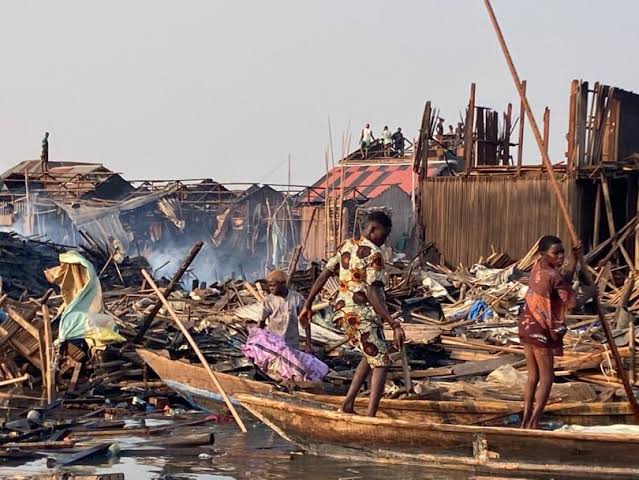
A few minutes after sunrise on the Lagos Lagoon, 52-year-old fisherman Saliu Adebayo stood on a narrow wooden plank, staring at the splintered remains of what used to be his home in Makoko. His fishing nets lay buried under broken planks and twisted zinc sheets, while his wife and three children searched through the debris for schoolbooks and cooking utensils. “Everything we own is here,” he said quietly. “Now we don’t know where to sleep, and I don’t know how to fish again.”

Scenes like this have become common across Makoko since January 5, 2026, when Lagos State authorities began another round of demolitions in the historic waterfront community. Heavily armed security personnel accompanied demolition teams, pulling down homes built on stilts over the lagoon and on reclaimed land along the shoreline. Schools, churches, mosques, small clinics, and hundreds of wooden shops were also destroyed, cutting off education, worship, healthcare, and livelihoods for thousands of residents who depend almost entirely on fishing and petty trading.
Amnesty International has condemned the demolitions as unlawful and violent, describing them as a blatant violation of the right to adequate housing and a continuation of a decade-long pattern of forced evictions in Lagos. In a statement shared on X, Amnesty said Lagos State authorities were “once again destroying homes and livelihoods in Makoko, using armed security forces, without consultation, adequate notice, compensation, or resettlement,” and called on the government to immediately halt the evictions and protect the rights of affected residents.
Makoko, often referred to as the “Venice of Africa,” is home to an estimated 80,000 to 100,000 people, many of whom have lived on the lagoon for generations. Despite its cultural and economic significance, the community has long been treated as an eyesore by successive Lagos administrations pursuing an aggressive urban renewal agenda. Since 2016, demolitions and threats of eviction have repeatedly displaced families, leaving thousands stranded and impoverished.
According to data compiled by housing rights groups, Nigerian authorities have demolished tens of thousands of homes across Lagos over the past decade, disproportionately affecting communities living in poverty. In Makoko alone, local leaders estimate that several thousand structures have been pulled down since January, though the state government has not released official figures. Each structure often houses extended families, meaning the number of people affected far exceeds the number of buildings destroyed.
The use of armed security personnel during the current operation has deepened fear and trauma among residents. Witnesses told The Nigeria Times that police and other security agents fired shots into the air, beat residents who tried to salvage belongings, and prevented journalists and civil society observers from accessing some demolition sites. “They treated us like criminals,” said Funke Ojo, a petty trader whose roadside stall was demolished. “We were not given any paper, any warning. They just came and started destroying everything.”
Amnesty International says these actions violate Nigeria’s obligations under international and regional human rights law, including the International Covenant on Economic, Social and Cultural Rights and the African Charter on Human and Peoples’ Rights, both of which guarantee the right to adequate housing and protection from forced evictions. The organisation has repeatedly warned that forced evictions carried out without genuine consultation, adequate notice, legal remedies, compensation, and alternative housing are unlawful.
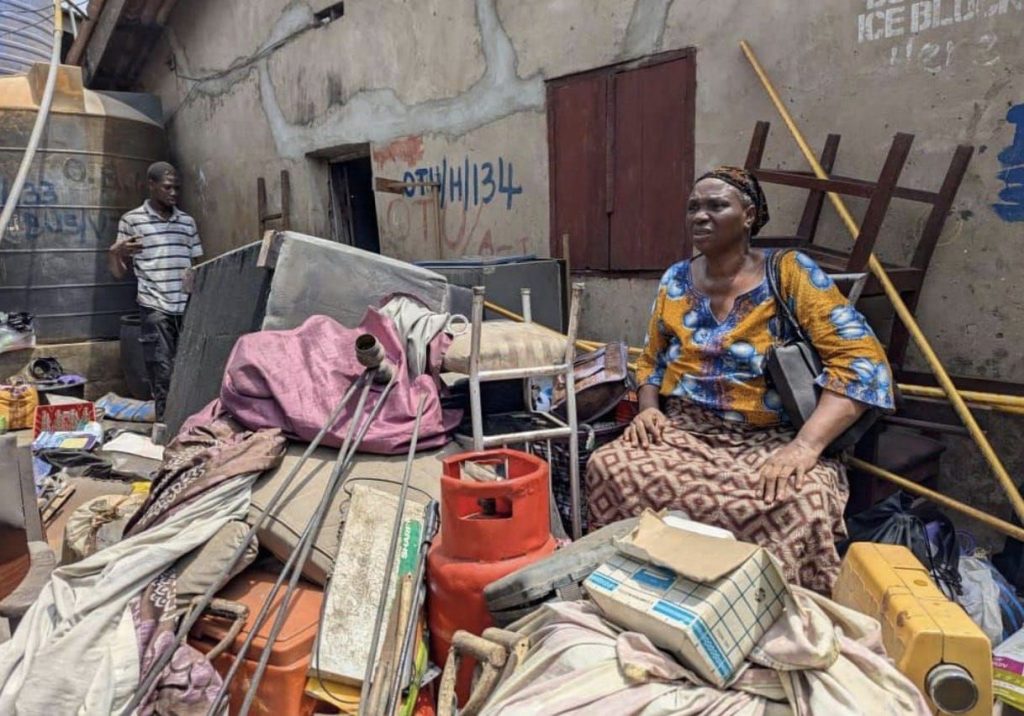
Makoko is not alone. In March 2025, security forces violently evicted residents of the Ilaje-Otumara community, also in Lagos, rendering more than 10,000 people homeless in a single day. Homes were flattened, personal belongings destroyed, and entire families forced to sleep outdoors or seek refuge with relatives. Amnesty and other groups documented the operation as one of the largest forced evictions in Lagos in recent years, yet no official has been held accountable.
At Oworoshoki, another waterfront settlement, residents continue to live under constant threat of eviction, with many saying the demolitions in Makoko have heightened their fears. “We cannot sleep well,” said a community youth leader. “Any morning, they can come for us too.”
Critics argue that the Lagos State government’s pursuit of a “mega city” vision has consistently prioritised elite real estate development over the rights and welfare of low-income communities. While authorities often justify demolitions by citing environmental concerns, safety risks, or urban planning regulations, human rights groups say these arguments ring hollow when no efforts are made to upgrade informal settlements or provide alternatives for residents.
“Lagos must be an inclusive city,” Amnesty International said, stressing that urban development cannot be built on the destruction of the lives and livelihoods of people living in poverty. “A mega Lagos cannot come at the expense of human dignity.”
For families like the Adebayos, the immediate concern is survival. With his home destroyed, Saliu has nowhere to store his canoe or nets, making it nearly impossible to continue fishing. His children have stopped attending school, and his wife worries about illness now that the nearest clinic has been demolished. “We are citizens of this country,” she said. “Why are we treated like we don’t matter?”
Amnesty International is calling on the Lagos State government to place an immediate moratorium on mass evictions, investigate the use of violence and the role of security forces during forced evictions, and provide effective remedies, including compensation and resettlement, to all those affected in Makoko, Oworoshoki, and Ilaje-Otumara. The organisation insists that until these steps are taken, the cycle of displacement, poverty, and rights violations in Lagos will only deepen.
As night falls over the lagoon, displaced families huddle under makeshift shelters, uncertain of what tomorrow will bring. For them, the promise of a modern, world-class Lagos feels distant and hollow, overshadowed by the loss of homes, history, and hope.



Post Comment