By Mike Odeh James
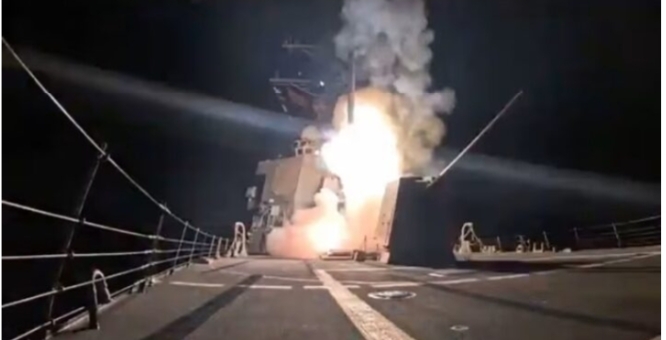
The Christmas Day U.S. airstrikes in northwestern Nigeria marked a sharp escalation in Washington’s posture toward violence in Africa’s most populous country.
Authorized under the renewed counterterrorism focus of Donald Trump, the operation—confirmed by U.S. Africa Command (AFRICOM)—targeted Islamic State-linked camps in the northwest. Nigerian authorities acknowledged cooperation.
The strikes were swift, public, and deliberately symbolic: a Christmas intervention framed around the protection of civilians, particularly Christians. Yet the aftermath exposes a deeper problem.
Nigeria’s violence is not driven by a single enemy or ideology. It is a tangled battlefield of jihadist insurgency, criminal banditry, ethnic militias, land disputes, and state absence.
Airstrikes against ISIS cells may disrupt one node—but they do not resolve the wider war.
What the U.S. Hit—and Why
Pentagon statements indicated precision strikes against known Islamic State locations in the northwest, a region better known for banditry than classic jihadist insurgency.
The messaging from Washington was unusually blunt. Trump cited mass killings and kidnappings, saying prior warnings had gone unheeded.
Defense officials, including Secretary of Defense Pete Hegseth, praised intelligence coordination with Abuja and signaled that further action could follow.
Nigerian officials framed the strikes as part of existing bilateral security cooperation—intelligence sharing, targeting support, and joint assessments.
In Abuja, the emphasis was continuity, not capitulation.
But geography matters.
The northwest—Sokoto, Zamfara, Katsina—has long been dominated by armed gangs, cattle rustling networks, and kidnap-for-ransom enterprises. ISIS-linked groups are present, but they are not the primary perpetrators of everyday violence across the Middle Belt and rural north.
Abuja Pushes Back on the Narrative
President Bola Ahmed Tinubu rejected claims that Nigeria’s crisis is principally a campaign of religious extermination. His aides argue that civilians of all faiths are targeted, that criminality often masquerades as ideology, and that it’s “farmer–herder” disputes—however distorted that label has become—still explain much of the bloodshed.
That framing is fiercely contested on the ground.
Community leaders in Benue, Plateau, and southern Kaduna insist attacks follow clear patterns: Christian villages raided, churches burned, farmlands seized, survivors displaced. To them, semantics obscure reality.
The Data Problem: Terrorism vs. Everything Else
One reason the debate persists is how violence is counted. International databases tend to classify attacks by Boko Haram and Islamic State West Africa Province (ISWAP) as “terrorism,” while categorizing Fulani militia attacks as communal conflict or banditry—even when casualty counts are comparable.
This matters.
Global indices shape policy, funding, and military focus. When killings fall outside the “terrorism” box, they attract less international urgency.
Independent datasets complicate the picture. Nigerian conflict trackers show that, month after month, the northwest and Middle Belt record the highest civilian deaths—mostly from gunmen raids, village burnings, and kidnappings. Only a small fraction of incidents are formally labeled terrorism, yet the human toll rivals classic insurgencies.
Who Is Actually Killing Whom?
Human rights researchers and faith-based monitors point to disproportionate Christian casualties in certain states. The Observatory for Religious Freedom in Africa (ORFA) reports that in areas experiencing attacks, Christians are killed at significantly higher rates relative to their local population.
Displacement figures reinforce the crisis: millions uprooted, farms abandoned, entire districts emptied.
At the same time, it is also true that Boko Haram—now weakened but not defeated—has killed more Muslims in absolute terms over the past decade, especially in Borno and Yobe. This dual reality fuels political friction: both sides cite selective truths.
Fulani Militias and the Ranking Paradox
A striking anomaly persists in global terrorism rankings. Armed Fulani groups once appeared among the world’s deadliest violent actors, then largely vanished from lists—even as attacks continued. Analysts argue this reflects classification choices, not improved security.
Long-term incident tallies from multiple research centers show Fulani-affiliated militants responsible for hundreds of documented attacks in recent years, particularly in Benue and Plateau.
By contrast, ISIS-linked incidents in the northwest—where the U.S. struck—remain relatively limited. The optics of airstrikes, critics say, may not align with the geography of suffering.
Why the Northwest Still Matters
None of this renders the U.S. strikes irrelevant. ISIS cells exploit ungoverned spaces, forge alliances with criminal gangs, and provide training, weapons, and ideology that can metastasize quickly. Sokoto and Zamfara sit astride porous borders feeding into the Sahel, where Islamic State franchises are expanding.
But precision strikes are, at best, a holding action. Without sustained ground security, justice reform, land dispute resolution, and economic recovery, armed groups regenerate.
Nigeria’s security vacuum is structural.
The Christian Question—and an Uncomfortable Answer If the stated goal is protecting vulnerable Christian communities, airpower alone cannot deliver it.
Churches are attacked in villages far from ISIS camps. Kidnappings surge along highways and farms. Survivors often report perpetrators known locally, operating with impunity.
A durable response would require Abuja to confront militia violence as a national security threat—regardless of ethnic sensitivities—and for international partners to recalibrate metrics that undercount non-jihadist mass violence.
What Comes Next
The Christmas strikes signaled resolve. They also exposed limits. Nigeria’s war is not one war but many, overlapping and feeding each other.
Counterterrorism frameworks designed for insurgency struggle against hybrid threats that blend crime, ethnicity, and ideology.
The unanswered questions remain: Will Washington broaden its lens beyond ISIS? Will Abuja accept tougher classifications that invite scrutiny? And can data finally catch up with the lived reality of communities caught between denial and destruction?
Until then, airstrikes may win headlines—but Nigeria’s civilians will continue to pay the price.


Post Comment