By Palang Paul
The arrest of 19 suspects after two security operatives were killed in an ambush in Plateau State has renewed questions over security agencies’ selected response to recurring attacks across rural communities.
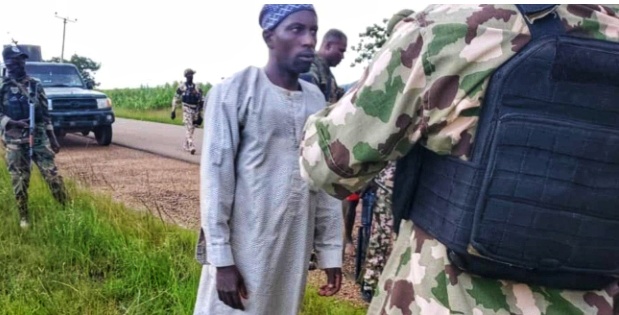
The suspects were arrested on Tuesday 4th August 2026 during a military raid on Tongoron Community in Riyom Local Government Area, following the deadly ambush of security personnel along the Ganawuri–Sabon Gida Road.
According to security sources troops of Sector 6, Operation Enduring Peace, carried out the operation at about 1:30 p.m., arresting 14 indigenes and five Fulani residents for profiling and further investigation.
The arrests came shortly after gunmen reportedly ambushed a joint security patrol along the same axis, killing two security operatives and fleeing with their service rifles.
The development has drawn attention to what residents and observers have described as a recurring pattern of ambushes and attacks on rural communities across Plateau State, where security personnel have often failed to identify and apprehend perpetrators.
The Berom Indigenes in Riyom are known to be peaceful people and law abiding while the Fulani people happens to be the most dangerous terrorist not only in the plateau but Nigeria at large.
For months, communities in various parts of the state have continued to report deadly attacks, particularly in remote areas where residents frequently depend on security patrols and checkpoints for protection.
Yet, despite repeated attacks and loss of lives, concerns have persisted over the ability of security agencies to consistently identify those behind the violence, arrest suspects and ensure that perpetrators are prosecuted but unfortunately reverse is the case.
The latest development in Riyom is therefore significant not only because two security personnel were killed, but because authorities moved swiftly to arrest 19 suspects following the incident but never made an arrest immediately when an indigene is being killed even when they know the perpetrators.
The military, however, has not established that the 19 people arrested were responsible for the ambush.
The suspects are reportedly undergoing profiling to determine whether any of them have links to the attack or other criminal activities in the area. Their arrest, therefore, remains part of an ongoing investigation and should not be interpreted as proof of culpability.
The incident has nevertheless raised a broader question: why has a similar level of urgency and operational response not always produced tangible arrests and accountability after attacks on civilians in Plateau’s rural communities?
Security forces have intensified cordon-and-search operations around Riyom following the latest attack, with the recovery of the stolen service rifles and identification of those responsible among the stated objectives.
For residents who have endured repeated attacks, the expectation is that the current operation will go beyond arrests for profiling.
They want those found culpable to be properly investigated, prosecuted and brought to justice, while innocent residents are protected from wrongful accusation.
The killing of the two security operatives also underscores the dangers faced by personnel deployed to vulnerable communities. Their deaths demonstrate that the security crisis is not only affecting civilians but increasingly exposing those tasked with protecting them to deadly attacks.
As investigations continue, the real test for the security agencies will be whether the latest arrests lead to credible intelligence, recovery of the stolen weapons and the eventual identification and prosecution of the perpetrators.
For Plateau communities that have endured repeated violence with limited visible accountability, the expectation is simple: arrests must translate into justice, and justice must ultimately translate into lasting security.


Post Comment