By Palang Paul
The growing security partnership between the United States and Nigeria is delivering military action against ISIS-linked groups, but questions remain over whether the same urgency is being applied to deadly violence in Nigeria’s Middle Belt.
The concern has become more pronounced since Washington intensified counterterrorism cooperation with Abuja, including U.S.-Nigeria operations targeting Islamic State elements in northern Nigeria. In May 2026, U.S. Africa Command confirmed coordinated strikes against ISIS fighters in northeastern Nigeria, saying the operation was designed to reduce the group’s ability to plan attacks threatening the United States and its partners.
The operation followed the December 2025 U.S. strikes in Sokoto State against targets identified by Washington as ISIS-linked terrorists. Nigerian authorities described the broader cooperation with the United States as part of intelligence-sharing and counterterrorism efforts.
But the focus of the American military response has raised questions among Nigerians and observers about the fate of communities in the Middle Belt facing persistent attacks by armed groups described by the U.S. Commission on International Religious Freedom (USCIRF) as Fulani militants.
In a May 2026 report, USCIRF said armed actors from a Fulani ethnic background had carried out some of the most notorious and deadly attacks affecting religious communities in Nigeria, often, but not exclusively, against Christians. The commission also stressed that the violence is complex and that not every attack involving Fulani actors is necessarily driven by religion.
USCIRF’s assessment provides a significant dimension to the debate. It documented attacks across Plateau, Benue, Kaduna and other parts of the Middle Belt, including killings, abductions, destruction of property and displacement.
The commission said violence by Fulani militants and other armed actors has helped force at least 1.3 million people in the Middle Belt from their homes, while noting that the motivations behind the violence can include overlapping religious, economic, environmental and land-related factors.
The Middle Belt question
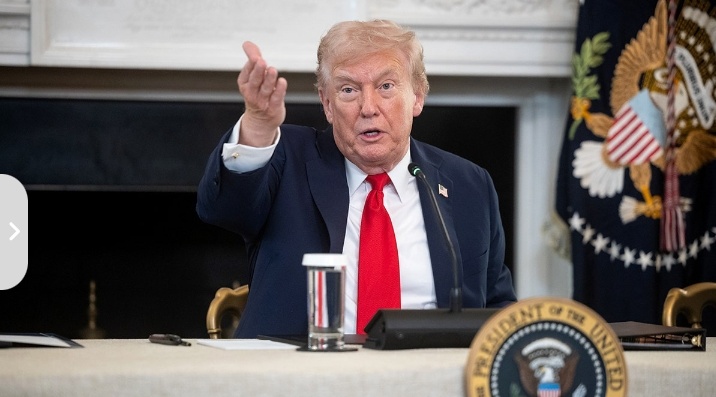
The disparity is particularly striking because President Donald Trump’s decision in October 2025 to designate Nigeria a Country of Particular Concern under the International Religious Freedom Act was explicitly connected to concerns over religious violence and persecution. The U.S. government continues to list that designation in its Nigeria-related guidance.
Yet the military operations publicly confirmed by U.S. authorities have been directed against ISIS-linked organisations.
AFRICOM has specifically described its recent operations as strikes against ISIS fighters and senior ISIS leadership. The command said the May 2026 operation was conducted in coordination with Nigeria and was intended to degrade threats to the United States and its partners.
That distinction matters.
The Middle Belt’s crisis is not identical to the insurgency in the Northeast or the activities of ISIS-linked groups in the Northwest. Communities in Plateau, Benue, Kaduna and neighbouring states have endured a mixture of attacks involving armed Fulani herder groups, criminal gangs, communal conflict, land disputes and religious cleansing against Christians.
But the consequences have been equally devastating.
In June 2025, the Yelwata massacre in Benue State killed about 150 people, according to Nigerian prosecutors who later filed terrorism charges against nine suspects. Prosecutors alleged that the accused planned the attack, raised funds, procured weapons and mobilised fighters across several states.
The violence has continued.
During Easter 2026, at least 17 people were killed in an attack in Mbalom, Gwer West Local Government Area of Benue State. The incident formed part of a wider weekend of violence in which at least 31 Christians were killed in Plateau on Palm Sunday.
And in July, gunmen killed at least eight people after a funeral in Otukpo-Nobi, Benue State, according to police, while Amnesty International Nigeria put the death toll at 10. Authorities said the motive remained unclear, underscoring the difficulty of assigning every Middle Belt attack to a single ideological or ethnic cause.
Is Washington’s approach too narrow?
This is where the emerging U.S.-Nigeria security relationship deserves closer scrutiny.
Washington has demonstrated that it possesses the intelligence, surveillance and military capabilities to work alongside Nigerian forces against sophisticated terrorist organisations. The question is whether that partnership will eventually extend into a broader strategy capable of addressing the armed groups terrorising farming communities across the Middle Belt.
The issue is not simply whether the United States should conduct airstrikes against every armed group operating in Nigeria. Such an approach would be dangerous and would ignore the complicated nature of the Middle Belt conflict.
Rather, the bigger question is whether the security partnership is sufficiently addressing all major threats to civilian life, including mass killings, abductions, displacement and destruction of especially Christians communities.
USCIRF itself has warned that the violence affects both Christians and Muslims and that Fulani communities have also been victims of attacks. It has also cautioned that competing narratives and difficulties establishing the identities and motivations of armed actors have complicated efforts to understand the crisis.
That makes accountability even more important.
Beyond ISIS
Nigeria’s security crisis cannot be reduced to Boko Haram, ISWAP or ISIS-linked groups alone.
The country is confronting several overlapping threats: jihadist insurgency in the Northeast, ISIS-linked activity in the Northwest, banditry and mass kidnapping, and armed Fulani attacks against Christians in the Middle Belt.
Nigeria and the United States have already committed themselves to deeper cooperation in counterterrorism, intelligence sharing, defence and regional security. In May, National Security Adviser Nuhu Ribadu held high-level meetings with U.S. officials as both countries sought to strengthen their security partnership.
The challenge now is ensuring that the partnership does not become narrowly defined by the groups that fit most clearly into Washington’s global counterterrorism framework.
For communities in Plateau, Benue, Kaduna and other parts of the Middle Belt, the question is straightforward: if Washington’s stated concern is the protection of religious communities and civilians, when will the security partnership begin delivering comparable attention to the armed groups responsible for their continued displacement and killings?
The answer will determine whether Trump’s Nigeria policy becomes merely another chapter in America’s global campaign against jihadist terrorism—or a genuinely broader response to Nigeria’s complex and increasingly deadly security crisis.
Palang Paul reports on Security and Conflict for The Nigeria Times.


Post Comment