By Palang Paul
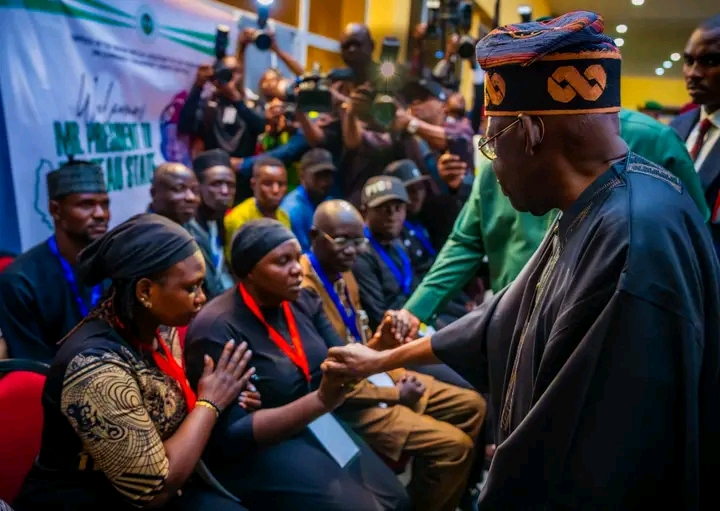
The Nigerian President Bola Ahmed Tinubu had travelled to Jos to commiserate with victims of the attack in Angwan Rukuba, Jos North Local Government Area, where at least 28 Christians were killed by Islamic terrorist on Palm Sunday.
The visit sparked backlash after Tinubu held meetings with victims and stakeholders on Thursday 2nd April 2026 at the airport before departing shortly after in ten minutes.
Addressing the victims, Tinubu cited time and logistical constraints, saying he had to return to Abuja within ten minutes. He also noted the absence of electricity at the airport, adding that while no amount of money could undo the tragedy, the government would ensure such incidents do not reocur.
Earlier, presidential spokesman Bayo Onanuga had announced the visit as part of efforts to console the people of Plateau State following the deadly attack.
Backlash from Opposition, Public
Criticism intensified shortly after the President shared updates from the visit on social media, where he expressed sympathy and pledged justice for the victims.
Former Vice-President Atiku Abubakar, through his aide Phrank Shaibu, described the visit as a “choreographed spectacle,” accusing the President of prioritising optics over empathy.
He said true leadership requires physically standing with grieving communities, not engaging them from a distance.
“It is shocking that days after the killings, the President’s visit did not extend beyond the airport or reach the affected communities,” the statement said.
Public Reactions
Public reaction on social media was largely critical, with many questioning the decision to meet victims at the airport rather than visiting the scene of the attack.
Some commentators described the move as insensitive, arguing that victims and grieving families should not have been transported to meet the President.
Others pointed out that the airport is located outside Jos city, raising concerns about the symbolic value of the visit.
However, a minority of voices defended the President, saying his engagement with victims, even briefly, demonstrated compassion and acknowledgment of their pain.
Context
The attack, which occurred on Palm Sunday, left dozens dead and several others injured, further highlighting ongoing security concerns in Plateau State and Nigeria’s Middle Belt region.
The incident has renewed calls for stronger, more visible leadership responses to insecurity and greater engagement with affected communities.


Post Comment