By Palang Paul
The federal government of Nigeria has triggered widespread outrage by prioritizing the tracking of social media influencer Martins Vincent Otse, widely known as VeryDarkMan VDM, while failing to rescue scores of school children abducted in Borno and Oyo states.
On 27 May 2026, Nigeria celebrated National Children’s Day. Standard political speeches praised the country’s youth as “the leaders of tomorrow.” Yet, beneath this performative celebration lay a darker reality.
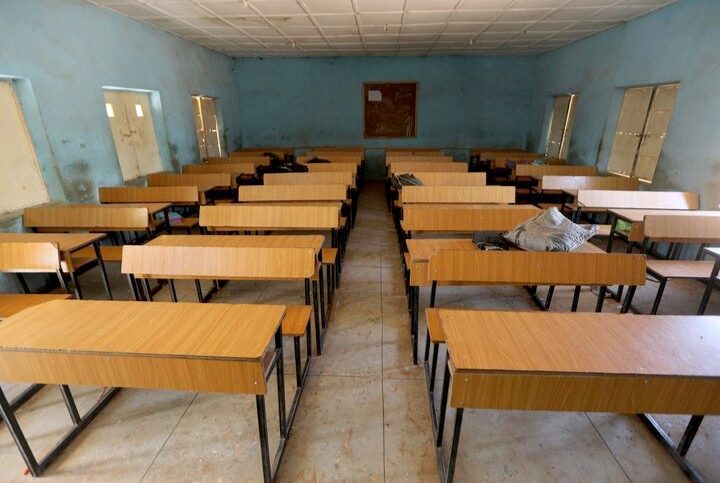
Just two weeks prior, armed assailants tore through classrooms in two opposite corridors of the country. In the Northeast, Boko Haram invaded the Primary and Government Day Junior Secondary School Mussa in Askira-Uba, Borno State, dragging away 42 school children—including toddlers as young as two years old. Meanwhile, in the Southwest, armed bandits raided the Community Grammar School in Ahoro-Esiele, Oriire Local Government Area of Oyo State, seizing at least 40 pupils.
The crisis peaked dramatically on National Children’s Day when the central administration of President Bola Tinubu chose to deploy its state security tools against digital expression.
Instead of routing advanced geospatial intelligence toward the expansive forest hideouts of Oyo and Borno to pinpoint the kidnappers, the state targeted its elite investigative structures at the internet commentator.
Special Adviser on Information and Strategy, Bayo Onanuga, issued an aggressive public statement demanding that the influencer face the full weight of the law for disseminating the audio.
Retaliating via his own Facebook Page, the content creator labeled the presidential handlers out-of-touch for exhausting national energy on an obvious digital manipulation while real-world territories continue to burn out of control.
This stark operational contrast underscores how the Nigerian security apparatus has weaponized its surveillance assets. When political egos are bruised or elite reputations are threatened by online commentary, law enforcement moves with precision. However, when the physical lives of the state’s youngest citizens are stolen directly from their classrooms, that exact same institutional urgency dissolves into bureaucratic inaction and recycled press statements.
The dynamic represents a deeply ingrained policy choice. Over the years, the government has repeatedly demonstrated that its digital tracking infrastructure, geolocation intelligence, and rapid-response units are optimized for huntingjournalists,bloggers,whistleblower,and social commentators under the widely criticized Cybercrimes Act. Conversely, when columns of heavily armed bandits ride fleets of motorcycles into vulnerable, rural communities, this operational competence routinely vanishes. Security agencies frequently cite a lack of terrain accessibility, deficient manpower, or poor communication infrastructure as justifications for prolonged rescue delays.
Yet, the digital footprint left by kidnappers negotiating ransoms via registered SIM cards rarely yields the same swift interventions that an online critic faces.
The human rights implications of this structural blindness are catastrophic. In a comprehensive analysis, Amnesty International Nigeria revealed that at least 1,100 people were abducted across the country in just the first few months of 2026.
The organization explicitly stated that the unrelenting wave of school raids is a damning indictment of the government’s absolute failure to guarantee the safety of children and educators. Amnesty International warned that these mass kidnappings have triggered a massive educational crisis, noting that entire school districts are shutting down as teachers refuse to work in unprotected zones, leaving thousands of traumatized pupils permanently out of classrooms.
The international community is watching this misallocation of priorities with escalating alarm. In its recent reports on the country’s security architecture, the United States Commission on International Religious Freedom detailed a terrifying crisis of religious violence and structural instability raging entirely unchecked across Nigeria’s Middle Belt rural corridors.
The independent federal watchdog revealed in a specialized May 2026 study that approximately 30,000 armed militants, including heavily equipped armed Fulani herdsmen, bandits, and insurgent entities like Boko Haram and the Islamic State West Africa Province ISIS, are actively operating across the country. The United States Commission on International Religious Freedom emphasized that the federal government is consistently unable or profoundly slow to react to mass violent attacks against vulnerable populations.
The commission further reported that while the central administration excels at projecting a polished image of control to international allies to protect Western development aid, its ground-level accountability is virtually non-existent, leaving interior communities entirely defenseless against organized criminal networks operating with total impunity.
By dedicating high-level state energy to policing an audio voice note online while leaving school children to rot in the bush, the current administration has made its priorities clear to the international community.
In today’s Nigeria, a bruised political ego triggers immediate, armed state intervention. A stolen child, however, gets nothing more than an empty, recycled press release. Until the federal government applies the same fierce, retaliatory urgency to hunting down terrorists that it uses to silence digital critics, classrooms across Nigeria will remain hunting grounds, and the nation’s future will continue to be held for ransom.



Post Comment