By Palang Paul
The grass by the riverside where 12-year-old Ngwe Ayuba Isa went to cut fodder on February 24 is still stained with his blood. He never returned home.

The boy, a Christian Fulani, was attacked with machetes by Fulani Ethnic Militias around 5:35 p.m. His body was found near the water’s edge, another casualty in a cycle of violence that has left Miango community in Bassa Local Government Area[County]drowning in grief and rage.
“for more than two decades the Fulani terrorist have been launching attacks on us, simply because we became Christians and for our faith in Jesus Christ,” said Ayuba Samuel, the boy’s father, his voice heavy with a decade of loss. “They have also stolen all my cows. Sometimes they used to meet us and tell us to come back to Islam.”

Samuel’s family history is a testament to the religious fault lines running through Nigeria’s Middle Belt. His grandfather was Fulani but converted to Christianity. Samuel was born and raised in the faith. Years back attackers killed his father. Now, his son is dead.
“This is the ninth one that they killed my son,” he said, referring to the repeated attacks on his family. “Since 2017, they have been killing us. If anything happens with them, they will come and kill us. They have stolen all my 120 cows.”
Days after Ngwe Ayuba Isa’s murder, the killers returned.
Another Night, More Blood
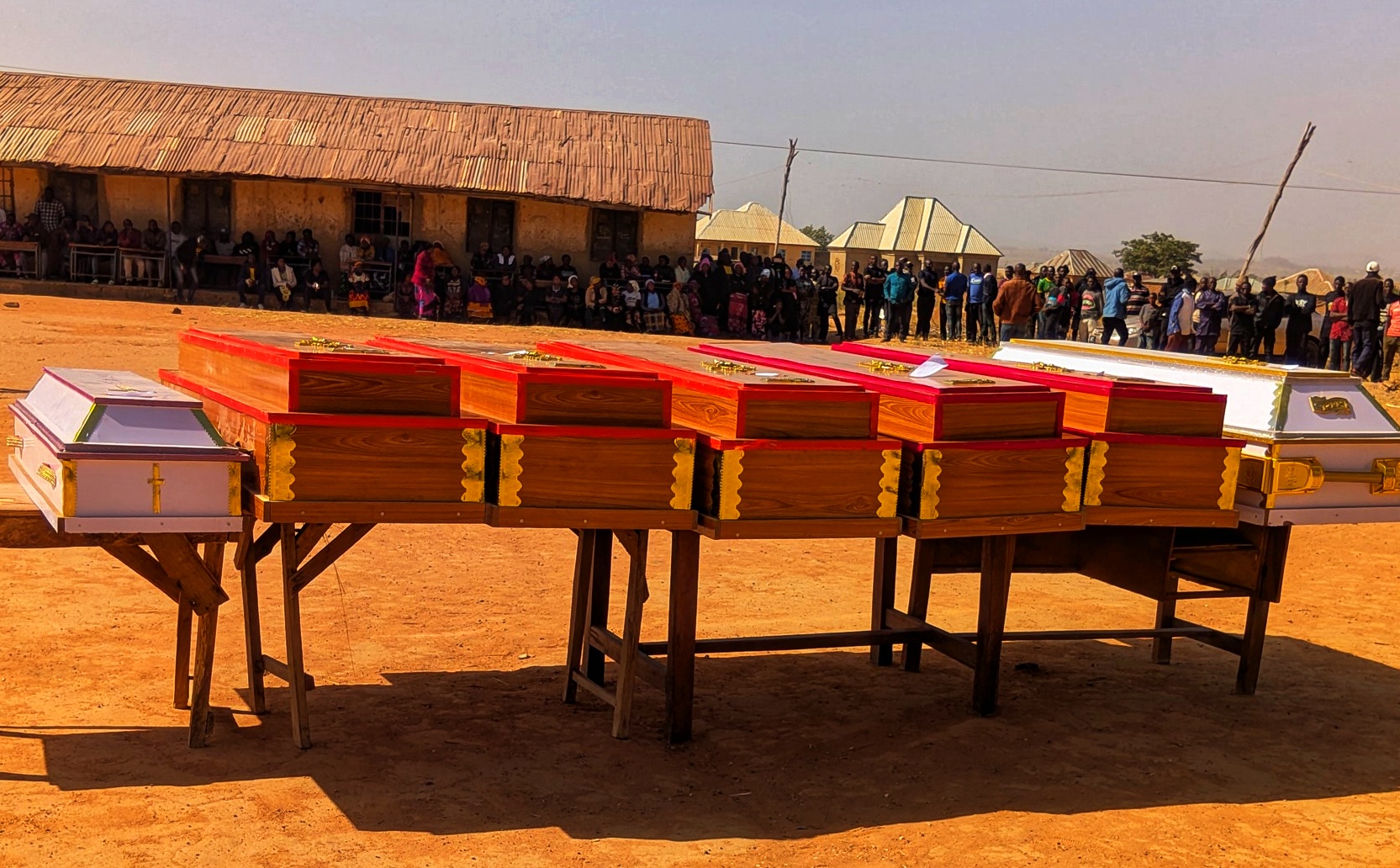
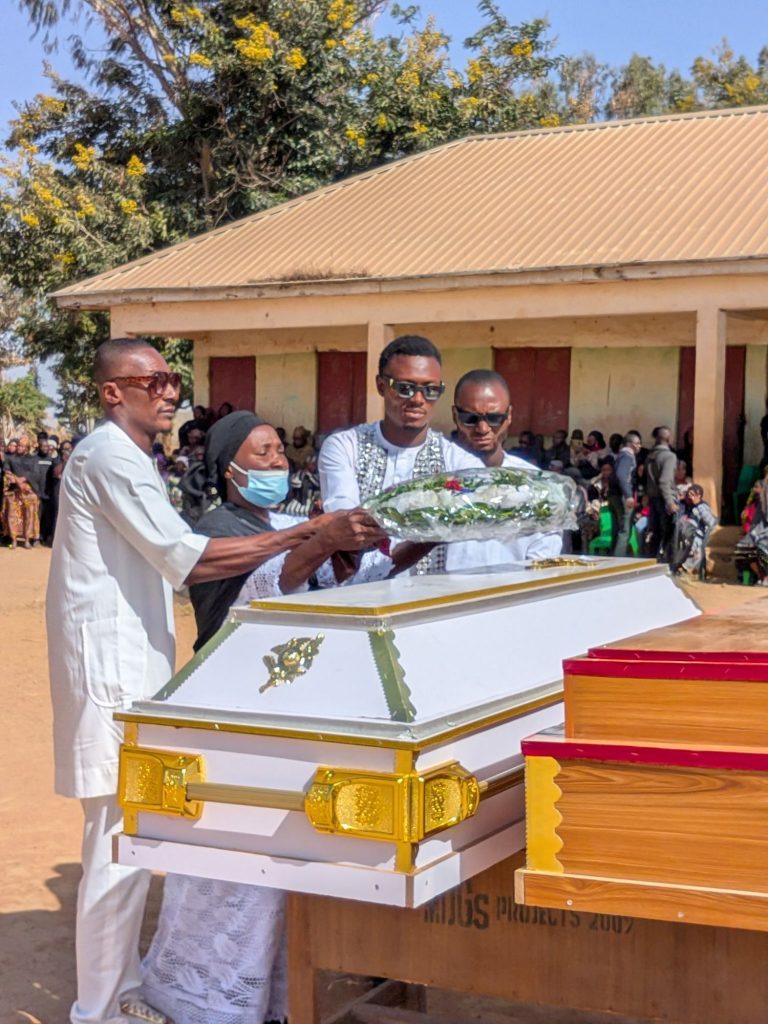
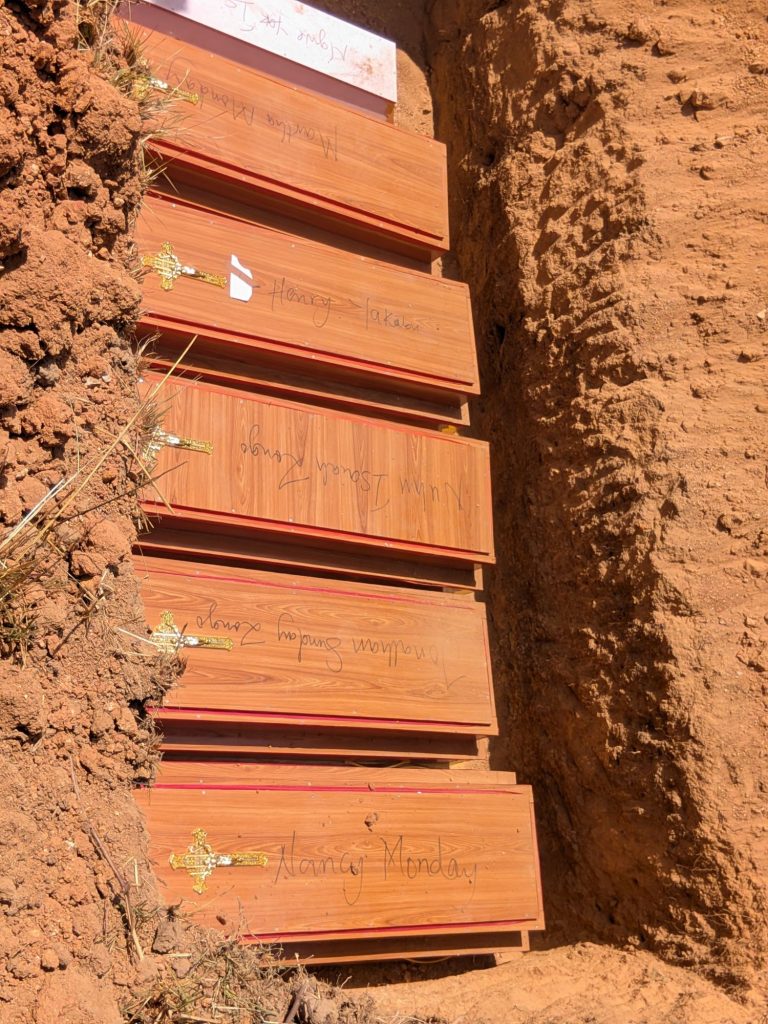
At least seven Christians were confirmed dead in a fresh attack on Miango community Tuesday and Thursday around 9:00 p.m. local time. Among the dead was Dr. Abbas Musa Sunday, a civil servant, who was buried close to his compound. Six other victims were laid to rest together in a mass grave today 28Febuary 2026.
‘Five people were confirmed killed. I am currently with two women and one adult who survived bullet gunshots,'” a community member who plead anonymity said. The injured survivors are receiving urgent attention as tension grips the area.
The attacks bring the confirmed death toll in Miango over a single week to at least seven.
At the mass burial program today in Miango, Ezekiel Beni, President of the Irigwe Youth Movement (IYM), did not mince words.
“We are tired and can no longer take this again because enough is enough,” Beni said. “We have cried, we have talked, and nothing is happening. In Nigeria, we don’t have protection.The Christian genocide in Nigeria is real.”
A History Written in Blood
The Middle Belt of Nigeria, where Plateau State sits at the crossroads of Nigeria’s predominantly Christian, has for decades been a flashpoint for violence.
Local leaders describe the situation as a humanitarian and security emergency, warning that communities remain exposed and vulnerable despite the presence of security forces close to where all this attacks has happened.
The paramount ruler of the Miango nation issued an urgent plea: “Open grazing must stop with immediate effect. The government must take action immediately because enough is enough. We are tired. We cannot rule or be a chief without people.”
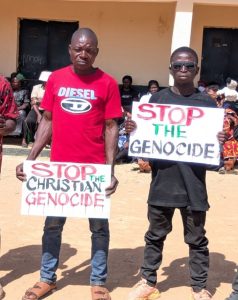
At the burial ceremony, Rev. Ezekiel Dachomo, a fearless anti-Christian genocide preacher, prayed with the grieving community. He urged them to “remove the spirit of fear in them and stand up to defend their land.”
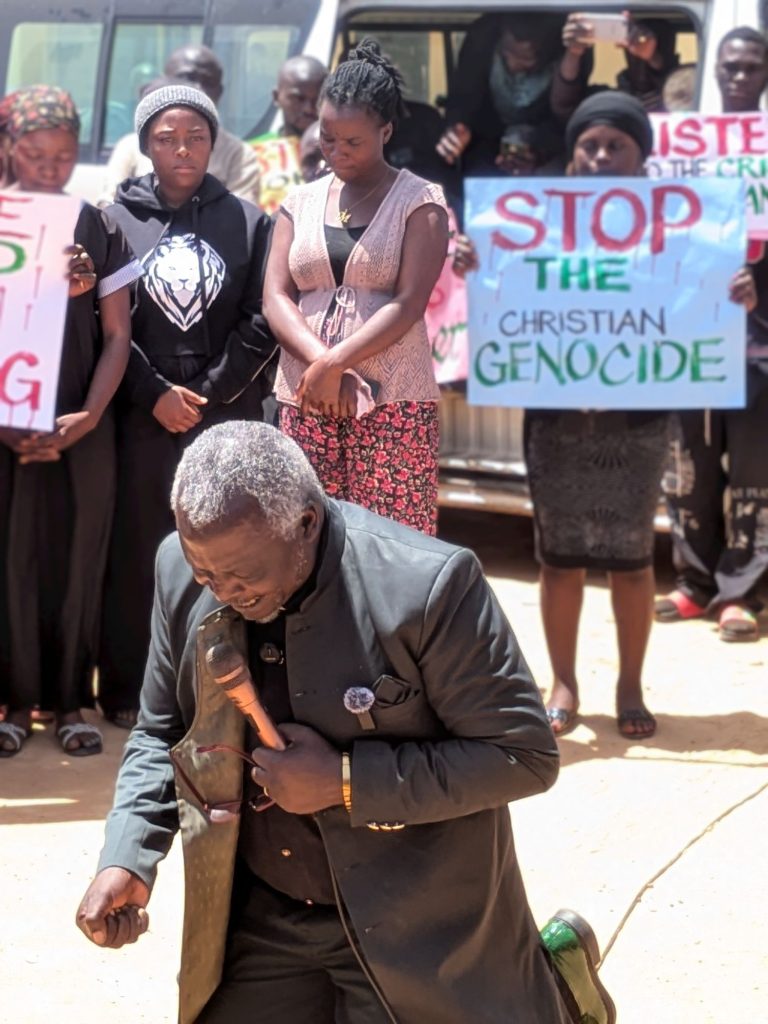
“I said there is genocide, but the Nigerian government says there is no genocide,” Dachomo said. “Then what can we call this one again?”
The question hangs in the air, unanswered.
Victims of the Attack
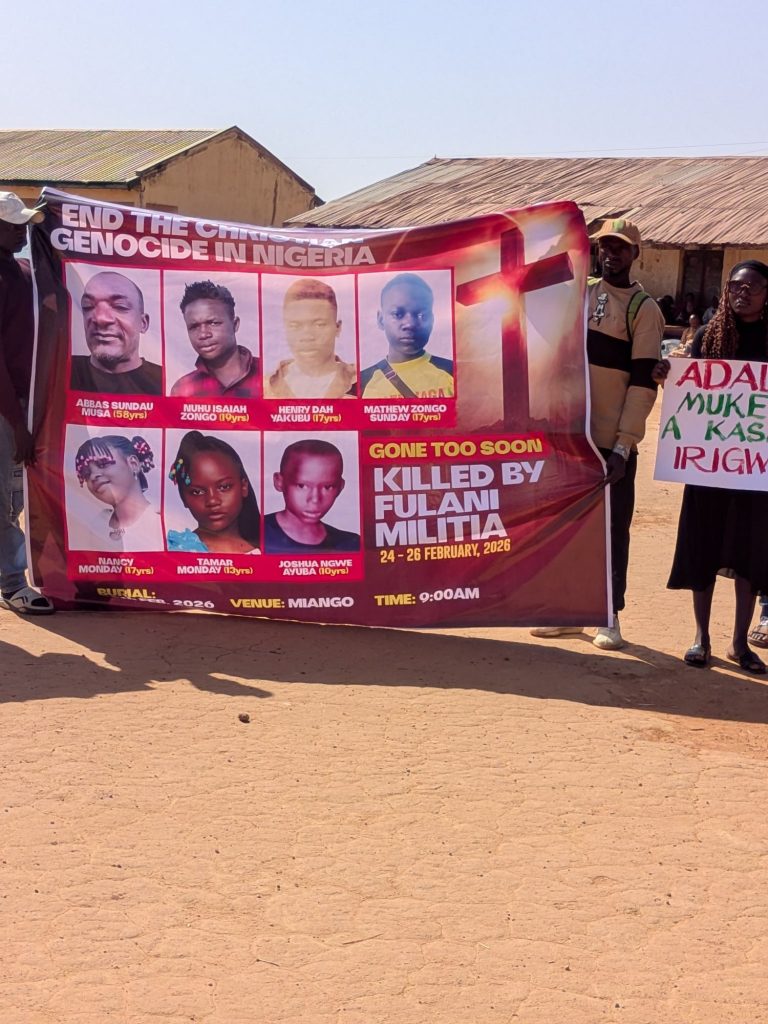
The victims of the attack are as follows:
Dr.Abbas Sunday Musa 58years
Ngwe Ayuba Isa 10years
Nuhu Isaiah Zongo 10years
Henry Dah Yakubu 17years
Mathew Zongo Sunday 17years
Nancy Monday 17years
Tamar Monday 13years
Silence from Those in Power
The Chairman of Bassa Local Government Area, Joshua Riti, visited to sympathize with victims. But he stopped short of naming what is happening.
“He only sympathized with victims but did not say anything about the genocide ravaging the people,” He said he is part of the government that’s why he can’t talk about it.
Barrister Solomon, President of the Berom Youth Moulders, went further, calling for self-defense.
“The military has failed to protect the lives and properties of citizens,” Solomon said. He also alleged a pattern of deception by attackers, claiming that “Fulani killers killed their own in Barkin Ladi and framed it that it is the Berom people that did it, which makes them to kill ten Christians in Doruwa Babuje in Barkin Ladi as promised last week.”
A Family’s Reckoning
Back in Miango, Ayuba Samuel counts his losses. Five relatives killed since 2017. One hundred twenty cows stolen. A father murdered. A son butchered.
He has four children now remaining only three left. He does not know if they will survive.
Ayuba Isa, the 12-year-old boy, was his child. The boy who went to cut grass by the river and met Fulani men with machetes. The boy whose only crime, his father believes, was being born into a family that chose Jesus Christ over Muhammad.
“My grandfather is a Fulani, but he converted to Christianity, and I was born and brought up in Christianity,” Samuel said. “Last year, after they killed our father years back, they said to us, ‘You are suffering. Why can’t you come back to Islam?'”
The question was not an invitation. It was a threat. And threats, in Miango, have a way of becoming truth.
The Unanswered Questions
As of press time, there has been no official statement from security agencies regarding the latest killings. The military and police, stretched thin across Nigeria’s multiple security crises, have not responded to requests for comment.
Residents are calling for immediate deployment of security forces, medical assistance for the injured, and an independent investigation into the recurring attacks.
The attacks in Miango add to the growing concerns over targeted violence in rural communities of Plateau State, where repeated killings continue to raise questions about accountability, protection of civilians, and the government’s obligation to safeguard the fundamental right to life.
In the absence of answers, the people of Miango bury their dead. They bury them in mass graves. They bury them near their compounds. They bury children and civil servants and farmers. And they wait for the next attack.
“We are tired,” Ezekiel Beni said. “Enough is enough.”
But in the quiet evenings along the riverside, where a 12-year-old boy once cut grass, the grass grows back. And the blood, invisible now, remains.
Palang Paul reports on security and Conflict and for The Nigeria Times .


Post Comment