
Kaduna State Takes Bold Step to Modernise Qur’anic Schools and Combat Out-of-School Crisis
The Kaduna State Government, through its flagship Reaching Out-of-School Children (ROOSC) initiative, is preparing to formalise partnerships with 50 traditional Qur’anic teachers, known as Alaramas, in a landmark move to revolutionise Islamic education across the state.
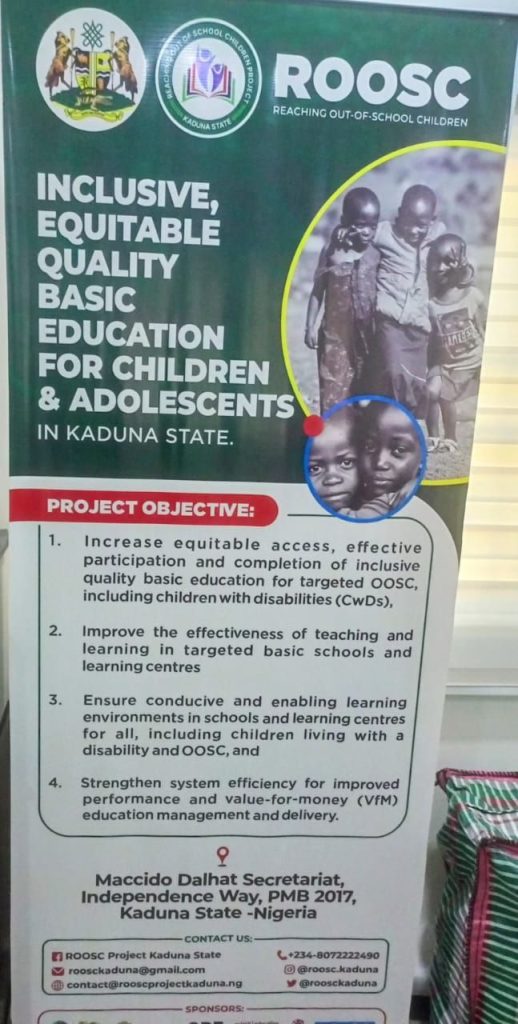
This strategic collaboration, which will be sealed through official Memoranda of Understanding, represents a significant shift in how the state approaches the integration of traditional religious learning with contemporary educational standards.
Project Coordinator Ezra Angai, speaking to journalists in Kaduna, outlined the comprehensive nature of the intervention, which aims to transform Tsangaya centres from purely religious institutions into holistic learning environments that equip children with both spiritual knowledge and practical life skills.
Building on Proven Success
The upcoming partnership with 50 Alaramas follows the successful completion of the project’s Year Two targets under its first phase, where 25 Alaramas were already brought on board. These pioneer participants are currently implementing structured teaching programmes covering foundational literacy, numeracy, and essential life skills.
The participating centres have received substantial support, including:
· Regular stipends for centre management
· Comprehensive teaching and learning materials
· Infrastructure upgrades at six selected schools
· Construction of proper toilet facilities
· Installation of boreholes for clean water supply
· Improvement of learning environments
Comprehensive Approach to Education Reform
Angai emphasised that the initiative goes beyond mere classroom instruction, addressing the fundamental needs of both learners and educators. The second phase expansion will replicate these successes across 50 additional Tsangaya centres, ensuring that more vulnerable children gain access to quality education.
Each participating centre will receive:
· Instructional materials tailored to the Tsangaya curriculum
· Teacher support and professional development
· Infrastructure improvements
· Enhanced water and sanitation facilities
· Hygiene promotion programmes
Tackling the Out-of-School Challenge Head-On
The ROOSC Project represents the Kaduna State Government’s most ambitious intervention to address the crisis of out-of-school children, targeting 100,000 children across all 23 local government areas.
In what Angai described as Nigeria’s most extensive household mapping exercise, the state surveyed over 360,000 households, identifying 187,719 children currently out of school. This data-driven approach has enabled the government to understand precisely who these children are, where they live, and the barriers preventing their education.
Inclusive Education for All
Demonstrating its commitment to leaving no child behind, the project has provided specialised assistive devices to more than 1,444 children with disabilities across nine pilot local government areas. Following detailed medical assessments by specialists, children have received:
· Prescription eyeglasses
· Hearing aids
· Braille materials
· Walking canes
· Specialised laptops
· Standing devices
These provisions enable children with disabilities to participate fully in inclusive classrooms alongside their peers.
Empowering Teachers, Transforming Classrooms
The project has invested heavily in teacher development, with over 3,000 educators receiving professional training in:
· Classroom management techniques
· Structured pedagogy
· Inclusive education practices
This investment in teacher capacity building is expected to significantly improve the quality of learning across Kaduna schools.
Exceeding Expectations
The project has already demonstrated remarkable success, surpassing its first-year target by returning 15,000 out-of-school children to classrooms against an initial goal of 10,000. Currently, over 11,000 children have been mainstreamed as part of the Year Two target of 25,000.
Angai emphasised that these numbers represent more than statistics—each child returned to school carries renewed hope for a brighter future. The Kaduna State Government, in partnership with development organisations, remains resolute in its commitment to ensuring every child in the state receives quality, inclusive, and equitable education.




Post Comment