By Palang Paul
The morning of May 15, 2026 began like any other school day in the quiet farming communities of Oriire Local Government Area, Oyo State. Children filed into classrooms at Baptist Nursery and Primary School in Yawota, at Community Grammar School, and at L.A. Primary School in Esiele. Teachers called the register. Books were opened.
Then the gunmen came.
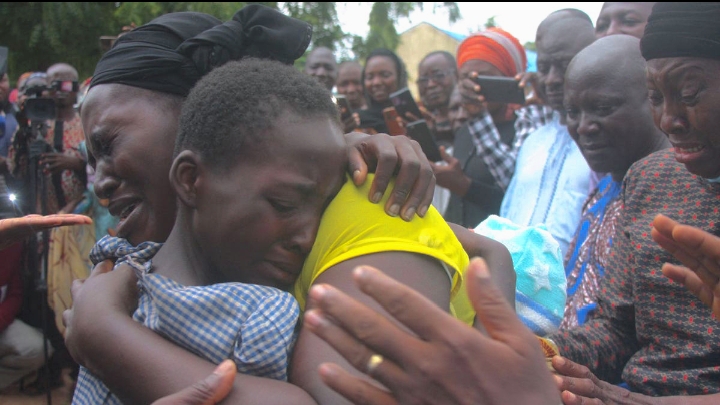
In a coordinated assault, armed men swept through three schools, abducting 49 pupils, teachers, and even a toddler.
Within 48 hours, the horror deepened. The kidnappers released a video showing the beheading of Michael Oyedokun, a 57-year-old mathematics teacher — a man who had spent his life preparing children for the future, murdered in captivity to demonstrate that the criminals meant business.
For decades, southwestern Nigeria considered itself an island of relative calm in an increasingly stormy nation. That illusion is now dead.
The attack shattered the sense of security that many residents had long associated with their communities. For many residents of Ogbomoso and the wider Southwest, the incident represented a painful reminder that insecurity is no longer a distant problem confined to other regions of the country.
It is a lesson Nigeria has been forced to learn, again and again, at enormous cost in blood.
A Nation Under Siege
Nigeria’s security crisis did not arrive suddenly. It has metastasized over years — from the northeastern swamps where Boko Haram first rose, outward in every direction, like cracks spreading across glass under pressure. What has changed in 2026 is the geography and the audacity of the violence.
Nigeria’s security crisis is moving southward toward the country’s commercial capital, with islamic jihadists and armed gangs threatening parts of the West African nation as yet largely untouched by decades of roiling violence.
In February, the country woke to one of its bloodiest single nights in recent memory. On the night of February 3rd, hundreds of extremist militants attacked the villages of Woro and Nuku in Kwara State, killing at least 162 residents.
The attackers burned down homes, shops, and a palace belonging to the traditional king. After a massacre that continued until 2 AM, soldiers arrived — an hour after the attackers had already fled.
In March, gunmen attacked the Angwan Rukuba community in Plateau State Nigeria’s Middle Belt, killing over 31 Christians people, firing indiscriminately on residents as they tried to flee.
Later that same month, three suspected suicide bombings were carried out at locations in Maiduguri, Borno State, killing at least 27 people and injuring 146 others breaking a year of relative quiet in the city that first gave Boko Haram its name.
And now, Oyo. The southwest. Places Nigerians once fled to for safety.
New Actors, Widening Fronts
The cast of perpetrators has grown more complex and more dangerous. Jama’at Nusrat al-Islam wal-Muslimin (JNIM), an al-Qaeda affiliate, reportedly carried out its first attack in Nigeria, while ISWAP is seeking to expand across the Sahel region.
International jihadist networks are no longer circling Nigeria’s borders — they are operating inside them.
In 2025, attacks in Borno State signalled a resurgence of the JAS faction of Boko Haram. Killings, kidnappings, and violent raids by criminal groups continued to devastate the Northwest.
Meanwhile, deadly coordinated violence linked to Fulani Ethnic Militias persisted across the Northcentral region.
Schools have become a particularly grotesque target. Soft targets, including schools, churches, and mosques, particularly in vulnerable rural communities with limited state security presence, have been at particular risk.
The logic is cold and calculated: abduct children, collect ransoms, recruit from the desperate, and demonstrate that the government cannot protect its own citizens.
Following the Oyo attacks and escalating threats, the Kwara State government ordered the closure of schools in four local government areas. In late 2025, following the mass abduction of over 300 students in Niger State, the government there closed all schools indefinitely, while the Federal Government shuttered at least 41 unity colleges nationwide. An entire generation is being kept from classrooms at gunpoint.
Hunger Follows the Gun
Violence and famine are travelling together. Nearly 35 million people are projected to face severe food insecurity during the 2026 lean season from June to August — the highest number ever recorded in the country.
Northern Nigeria is experiencing the most severe hunger crisis in a decade, and rural farming communities are the hardest hit. Nearly six million people are projected to face crisis levels of hunger or worse in Borno, Adamawa, and Yobe states alone.
The UN’s World Food Programme has been blunt about the stakes: if food insecurity cannot be contained, growing desperation could fuel increased instability, with insurgent groups exploiting hunger to expand their influence, creating a security threat that extends across West Africa and beyond.
A Government’s Triumphant Claims vs. the Evidence
On June 12th 2026, in a nationally televised Democracy Day address, President Bola Ahmed Tinubu declared progress. He said Nigeria’s military had “neutralised” more than 13,000 “terrorists” in the past year, and that the death toll from Nigeria’s fight against armed rebels was down 81 percent since he took power in 2023.
But the arithmetic of suffering tells a different story. Despite the victorious tone of his speech, Africa’s second-biggest economy is in the throes of a spiralling insecurity crisis that has seen armed groups linked to ISIS and al-Qaeda, as well as criminal gangs, continue to abduct citizens for ransom.
In Oriire, Oyo State, parents like Ojo Adekunle are not counting enemy kills. They are counting empty chairs. “We had been noticing security issues and reporting them to the police, but they did not take us seriously,” he said. His son Joseph was among those abducted.
Human Rights Watch has warned that the recurring features of Nigeria’s attacks — indiscriminate killings and weak state responses — demand urgent and comprehensive action. Without stronger protection, genuine accountability, and sustained efforts to address root causes, countless lives will continue to be lost and cycles of insecurity will persist.
The children of Oriire are still missing for 30 days. The families of Woro and Nuku are burying their dead. And across a nation of over 220 million people, the question is no longer whether violence will reach your community. For millions of Nigerians, the question has become far simpler — and far more terrifying: when?
Palang Paul reports on Security and Conflicts for The Nigeria Times, He’s also a Human Rights Defender and Investigative Journalist From Nigeria’s Middle Belt.


Post Comment