By Gata Moses
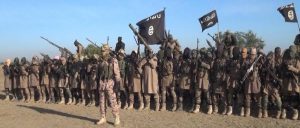
Borno State, — In a horrifying attack that accentuates the unrelenting violence of Islamic extremist groups in northeastern Nigeria, 23 farmers and fishermen were slaughtered on Thursday, May 15th, 2025, in Malam Karanti village, near Baga in Kukawa Local Government Area. The perpetrators—fighters from the Islamic State West Africa Province (ISWAP), a deadly faction of the Islamic State—accused the victims of collaborating with a rival faction of Boko Haram.
According to Zagazola Makama, a counter-insurgency platform monitoring terror activity in the Lake Chad region, the victims, mostly bean farmers from Gwoza, were seeking to work on land under insurgent control when they were rounded up and executed at about 9 a.m. Eighteen others were abducted, and their whereabouts remain unknown.
This massacre is part of a larger pattern of brutality by jihadist groups operating in the Lake Chad Basin. According to a 2023 report by the International Society for Civil Liberties and Rule of Law (Intersociety), over 52,250 Christians were killed in Nigeria between 2009 and 2023 by Islamist groups, including Boko Haram, ISWAP, and Fulani militants. The report identifies Nigeria as the world’s deadliest country for Christians.
In 2024, Open Doors USA ranked Nigeria sixth on its World Watch List of countries where Christians face the most severe persecution, stating that “violence against Christians in Nigeria remains at a staggering level.” The organization noted that Islamic extremist groups increasingly target rural farming communities, displacing thousands and contributing to one of the world’s largest internal displacement crises.
Borno State Governor Babagana Zulum has consistently warned civilians against attempting to negotiate or align with terror factions in pursuit of access to land or livelihoods. “Such alliances not only fuel terrorism but also expose civilians to betrayal, inter-factional rivalry, and deadly reprisals,” the governor stated.
A local official, speaking anonymously due to security concerns, emphasized that many villagers are trapped between hunger and fear. “People believe that negotiating with insurgents will guarantee them a means to farm or fish, but history shows otherwise. Trusting jihadist groups is a fatal mistake.”
The attack on Malam Karanti is not only a tragedy but a call to action for both national and international stakeholders. As extremist groups grow more fractured and violent, communities are left to fend for themselves with little protection. Aid organizations, faith-based groups, and international partners must step up efforts to protect vulnerable populations, support displaced persons, and counter radicalization through education, livelihoods, and community rebuilding.
Experts suggest that the U.S. and other international partners should increase support for Nigeria’s counterterrorism efforts, strengthen community-based protection mechanisms, and prioritize humanitarian aid to regions devastated by jihadist violence.
The killings in Malam Karanti reflect a deeper crisis that demands more than domestic solutions. As Nigeria continues to endure what the Genocide Watch has described as a “slow-motion genocide,” particularly against Christians and rural villagers, global attention and solidarity are urgently needed.
Without stronger international action, the cycle of violence, impunity, and humanitarian suffering will only deepen. For the families of the 23 slain and the 18 abducted, the cost of inaction is not theoretical—it is painfully real.