By Ted Ebute
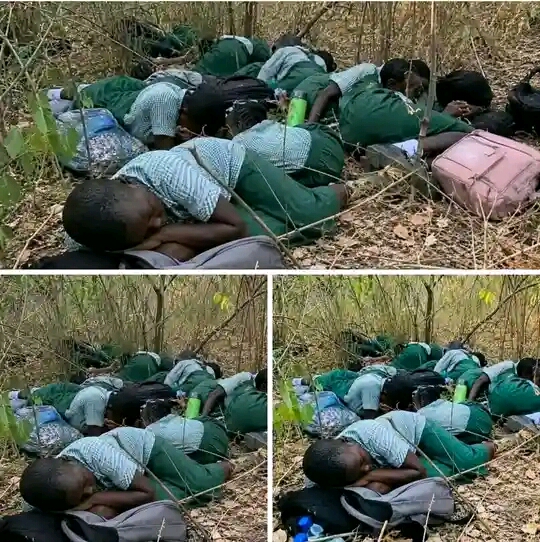
Two weeks ago, terrorists invaded a community in Oyo State, stormed three schools, and abducted a large number of students, including pupils in nursery school.
A few days later, a chilling video emerged showing the beheading of one of the teachers who had fallen into the hands of the attackers.
In another horrifying incident, an infant was reportedly strangled, with the child’s lifeless body left hanging as a grim testament to the cruelty and depravity of the terrorists.
Yet, despite the enormity of these atrocities, public reaction has been muted.
Media coverage has been limited, and national attention appears to have drifted elsewhere.
More than two weeks have passed, and much of our public discourse has shifted back to politics, electioneering, and the ambitions of those seeking public office.
One cannot help but ask politicians and government officials—particularly state governors—a simple but troubling question: when everyone is dead, who will be left to vote for you?
If communities are overrun by violence and citizens live in constant fear, what constituency will remain?
The graveyard cannot be an electorate.
The speed with which we move on from such tragedies is alarming.
Perhaps it is because these horrors have not yet touched many of us personally.
Perhaps it is because we have become desensitised by the relentless cycle of violence.
Whatever the reason, our indifference carries a heavy moral cost.
The victims did not choose their fate.
The children who were abducted did not volunteer to be taken.
The teacher who was beheaded did not ask to become a symbol of our collective failure.
They were ordinary people whose lives were shattered by extraordinary evil.
The late Nigerian poet and writer Niyi Osundare once reminded us, through his famous poem “Not My Business,” of the dangers of looking away when injustice and suffering befall others.
The lesson remains as relevant today as ever: what happens to one of us eventually concerns all of us.
As a nation, we must resist the temptation to move on too quickly.
We must continue to demand justice, accountability, and decisive action against those who terrorize our communities.
We must keep the victims in our thoughts and in our conversations long after the headlines fade.
Above all, we must remember our shared humanity. At the very least, let us be our brothers’ and sisters’ keepers.
Viewers discretion please. Some pictures here may be too graphic.
@Ted69
@Dove magazine


Post Comment