By Faith Chondol
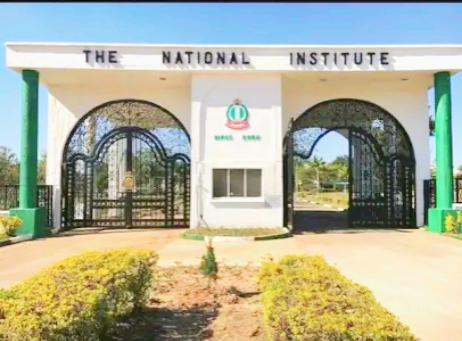
At least three security operatives were killed on Monday night, June 15, 2026, when armed gunmen stormed the National Institute for Policy and Strategic Studies in Kuru, near Jos, the Plateau State capital, in a fierce gun battle that shook one of Nigeria’s most sensitive government institutions and sent panic rippling through surrounding communities.
The attack, which occurred at approximately 11:40 p.m. in NIPSS Kuru of Jos South Local Government Area of Plateau State, was swift, calculated, and deadly.
The armed assailants descended on the facility without warning, opening fire on security personnel stationed at the institute’s perimeter and triggering a prolonged exchange of gunfire that residents said echoed across Kuru and its neighbouring communities for several minutes.
Three men paid with their lives to hold the line — two soldiers and one police officer, all attached to the institute’s security detail. Their deaths prevented what could have been a catastrophic breach of a facility that sits at the nerve centre of Nigeria’s policy and strategic thinking.
“They came suddenly and started shooting,” a staff member of the institute said, speaking on condition of anonymity for fear of reprisal. “Our security people engaged them immediately. It was the quick response that stopped them from getting inside.”
The National Institute for Policy and Strategic Studies in Kuru is no ordinary government building. Established in 1979, NIPSS is the country’s foremost institution for high-level policy research and strategic studies, a place where senior government officials, military officers, and policymakers are trained and shaped. That gunmen would target it — and do so with enough firepower to sustain a gun battle — raises questions that go far beyond a single night’s violence.
For Bulus Haruna, a resident of Kuru in Jos South Local Government Area, the night was one of raw terror. “We heard the shooting and nobody knew what was happening,” he said. “It went on for a long time. People were afraid to come outside. Everyone stayed indoors until it stopped.”
Security operatives ultimately repelled the attackers, preventing them from penetrating deeper into the facility or causing further structural damage. But the human cost was already irreversible. Three men in uniform — fathers, sons, colleagues — who reported for duty on Monday night did not live to see Tuesday morning.
The motive behind the attack remains unknown at the time of publication. No group has claimed responsibility, and it is unclear whether the institute was specifically targeted or whether the assault was part of a broader pattern of opportunistic violence that has plagued Plateau State for years.
Efforts to reach the Plateau State Police Command for official confirmation were unsuccessful at press time. NIPSS management equally did not respond to requests for comment before publication.
The attack on NIPSS is a watershed moment in Nigeria’s deepening security crisis — not merely because of where it happened, but because of what it represents. If gunmen can march on the institution that trains the country’s strategic minds, open fire on its gates, and kill soldiers and police officers in a sustained firefight, then the question is no longer which places in Nigeria are vulnerable. The question is whether any place is not.


Post Comment