By Bapzeng Bapkek Swarlat
The tragic events in Rukuba, Jos North, once again expose a painful truth the people of Plateau State know all too well, Violence has become predictable, and so has the government’s response.
Another attack.
Another loss of innocent lives.
Another curfew.
Another round of official condemnations.
And then—silence, until the next tragedy.
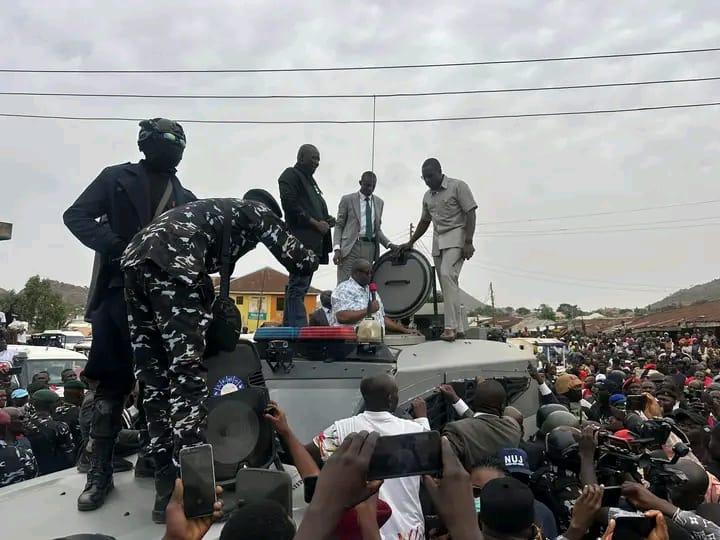
The recent 48-hour curfew imposed by the government of Caleb Mutfwang may appear decisive on paper, but in reality, it reflects a deeply flawed approach to a persistent crisis. Curfews restrict movement, yes—but largely the movement of law-abiding citizens, not the perpetrators who strike swiftly and vanish without a trace.
This raises a critical question:
Are we truly confronting insecurity—or merely reacting to it?
For years, communities across Plateau have endured cycles of violence followed by temporary measures that fail to address the root causes. The result is a growing sense of abandonment among citizens, many of whom now feel that their safety is no longer guaranteed by the state.
Security is not defined by how quickly a curfew is declared after an attack.
It is defined by how effectively such attacks are prevented in the first place.
If the government is serious about ending this cycle, then a shift in strategy is not optional—it is urgent.
First, there must be a transition from reactive deployments to intelligence-led policing. Attacks of this nature do not occur in a vacuum; they are often preceded by signals, patterns, and movements that can be detected and disrupted with the right intelligence framework. Strengthening local intelligence networks and fostering trust between communities and security agencies is critical.
Second, the establishment of permanent, well-equipped security outposts in known flashpoints such as Rukuba and its environs is long overdue. Temporary deployments after each incident only reinforce the perception of a government constantly playing catch-up.
Third, the state must invest in a rapid response infrastructure capable of acting within minutes, not hours. In many cases, the difference between life and death lies in the speed of intervention.
Additionally, embracing modern surveillance technology—including CCTV systems and drone monitoring—can significantly enhance situational awareness and deterrence in vulnerable areas.
Equally important is accountability and transparency. Citizens deserve to know what happens after the headlines fade. Who has been arrested? What progress has been made? Without clear answers, public confidence will continue to erode.
Finally, beyond security measures, there must be a deliberate effort to support victims—through medical aid, compensation, and long-term rehabilitation. Empathy must be demonstrated not just in words, but in action.
The people of Plateau are not asking for miracles.
They are asking for leadership that prioritizes their safety with urgency, sincerity, and strategy.
Because at this point, one truth is undeniable:
Curfews do not stop attacks.
Effective security does.


Post Comment