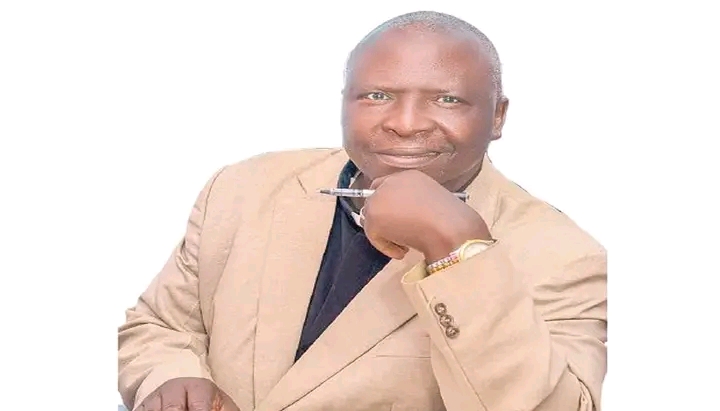
By Palang Paul
Rev. Ezekiel Dachomo speaks with a calmness that belies the dangers surrounding him, yet his message is urgent: Christians who dare to expose the violence engulfing their communities are being hunted. His claim that Boko Haram terrorists have placed a bounty on his head is not just a personal alarm—it is a stark reminder of the peril facing Christian leaders who challenge Nigeria’s worsening insecurity.
Rev. Dachomo, one of Plateau State’s most recognised voices on Christian persecution, has long been known for documenting attacks, raising global awareness, and calling for government action. A native of the troubled Middle Belt, he has spent years moving between displaced communities—comforting survivors, burying victims, and speaking openly about the failures of security agencies. His advocacy has placed him on numerous platforms, from local gatherings in rural churches to international conversations about the mass displacement of Christians in Nigeria.
According to him, these outspoken efforts have made him a target. He says that credible informants have warned that Boko Haram insurgents and allied terrorist networks are now actively seeking his location and have offered a reward to anyone who can assassinate him. For a man used to threats, this one is chillingly specific. The message, he explains, is simple: stop talking about Christian suffering—or be silenced forever.
The warning comes at a time of escalating violence across northern and central Nigeria. In Plateau, Benue, Kaduna, Taraba, Borno, and Yobe states, Christian villages have been attacked repeatedly by armed insurgents, bandits, and extremist militias. The killings often occur at night, forcing entire communities to flee into forests or overcrowded camps for displaced persons. Reports continue to emerge of churches burned, pastors kidnapped, farmland seized, and families uprooted from ancestral lands. Yet, for many survivors, the greatest pain is not only the violence—they say it is the silence that follows. In this environment, those who speak out often become the next targets.
Rev. Dachomo embodies this dangerous role. For years, he has collected testimonies of widows, orphans, and survivors and shared them with national and international advocacy groups. He has appealed for humanitarian aid, for international pressure on the Nigerian government, and for foreign missions to pay attention to the unfolding crisis. His activism has repeatedly embarrassed those who prefer to downplay the scale of the killings. As he continued to highlight mass graves, burnt homes, and ignored distress calls, the threats became more direct.
He recounts several moments when strangers approached him with warnings that his movements were being monitored. Rumours circulated that extremist cells within and outside Plateau were discussing him. Now, the alleged bounty has intensified community fears. To many Christians across the region, the threat confirms a troubling pattern: religious leaders who challenge the violence frequently face intimidation, harassment, and assassination attempts.
Church leaders in northern Nigeria have been killed before—some for refusing to renounce their faith, others for speaking boldly about attacks. Pastors have been kidnapped during church services, their congregations subjected to torture and ransom demands. In rural communities, Sunday worship is often held under heavy fear, with security volunteers keeping watch as people pray. The kidnapping of pastors’ families has become a method of silencing their public advocacy. Many clergy now limit travel, reduce public appearances, and rely on congregants to escort them.
For Rev. Dachomo, however, stopping is not an option. His message has always been that global attention is essential to protecting vulnerable Christian communities. He has consistently appealed to international organisations, human rights groups, and foreign governments to intervene—either through diplomatic pressure, humanitarian relief, or direct support for displaced families. His advocacy aligns with a growing number of Christian leaders who argue that Nigeria’s crisis has reached the level of international concern, comparable to other major humanitarian emergencies worldwide.
Yet speaking out comes with consequences. Many Christians who publicly document attacks find themselves labelled as enemies by extremists. Some receive anonymous calls or messages warning them to stop their activism. Others are accused of exaggerating violence or stirring religious tension. The pressure creates a climate of self-censorship, where even victims fear that reporting atrocities could attract more attacks. Within this environment, Rev. Dachomo’s refusal to retreat stands out—and it is precisely this refusal that extremists want to silence.
The threat against him has triggered widespread reactions. Community members, church groups, and human rights advocates have expressed alarm. Many argue that if a visible leader like Rev. Dachomo is not protected, ordinary villagers have no hope of safety. They are calling for increased security around him, including surveillance, escorts, and a formal investigation into the alleged terror plot. They also urge the government to treat the threat as part of the broader pattern of intimidation against Christian leaders.
Within Plateau State, many Christians view Rev. Dachomo as a voice for the voiceless. In displaced persons camps, his name is mentioned with gratitude. He has personally distributed relief materials, prayed with victims, and brought journalists to remote communities that would otherwise remain invisible. Survivors say that without him and other advocates, their suffering would be forgotten by the world. Losing him, they fear, would be another tragedy added to an already painful list.
The developments also expose a troubling reality: the more Christians speak about their persecution, the greater the danger they face. Activists, community leaders, and clergymen walk a thin line between advocacy and survival. Many have lost relatives, homes, and livelihoods simply for insisting that the crisis must not be ignored. The threat against Rev. Dachomo is therefore not just about one man—it symbolises the ongoing attempt to silence those who expose Nigeria’s hidden war against rural Christian communities.
As Nigeria continues its fight against Boko Haram, ISWAP, armed bandits, and extremist militias, Christian leaders fear that voices like Rev. Dachomo’s could disappear under violent pressure. His appeal to security agencies is not merely a personal plea. It is a warning that unless bold voices are protected, the truth about what many Christians endure will fade, and the terror networks will grow even more confident.
For now, he continues his work—despite the danger, despite the fear, despite the bounty. His courage underscores a painful truth: in Nigeria today, the simple act of speaking up for persecuted Christians can cost a person their life.


Post Comment