By Palang Paul
The embers still smoldered in Ngbra-Zongo village of Bassa Local Government Area of Plateau State Nigeria’s Middle Belt,when grieving survivors emerged from the surrounding bushes to count their dead after yet another deadly midnight attack earlier this month.
Armed with firearms and machetes, suspected Fulani ethnic militias descended upon the sleeping village in the early hours of Friday, May 8, 2026. Moving methodically from house to house, the assailants executed an unprovoked midnight massacre.
Among the 11 Christians slaughtered in those agonizing hours were two pregnant women with several others injured.
“They entered in the dark and began shooting indiscriminately,” said a traumatized survivor, her voice trembling as she recounted the mayhem. “They butchered my neighbors as they tried to flee. We are completely defenseless.”
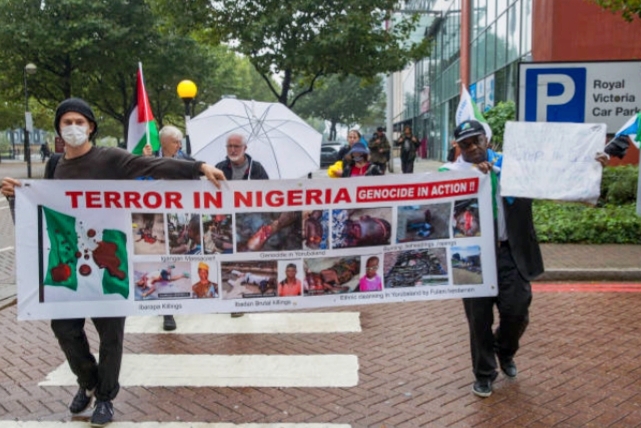
This brazen assault is not an isolated tragedy, but a lethal fragment of a sprawling crisis. According to tracking by International Christian Concern, a staggering wave of violence has swept across Plateau, Benue, and Southern Kaduna states, leaving hundreds dead and thousands uprooted from their ancestral lands.
A Targeted Campaign of Terror
While localized disputes over land and resources have historically plagued Nigeria’s fertile Middle Belt, rights experts emphasize that recent waves of violence reflect a deeply entrenched pattern of faith-based persecution especially on Christians.
Global watchdogs have repeatedly highlighted Nigeria as the epicenter of Christian martyrdom. A recent report by Open Doors ranks the country among the most dangerous places on earth to be a follower of Christ, revealing that thousands of believers are murdered annually.
Armed extremist factions—including radicalized Fulani militias, Boko Haram, and the Islamic State West Africa Province (ISWAP)—systematically torch churches and target Christians. Survivors consistently recount attackers explicitly declaring their intent to “destroy all Christians”.
“The violence is not indiscriminate,” one conflict analyst recently noted, pointing to the targeted execution of clerics, the destruction of church properties, and the abduction of worshippers.
The Cry for accountability
Despite the mounting death toll, the Nigerian government has pushed back against the “genocide” label. Officials frequently characterize the killings as complex security challenges and localized climate-driven conflicts, rather than deliberate religious cleansing.
However, this official stance frustrates local church leaders and international advocates who argue the government is facilitating a cover-up. In a damning report titled “Nigeria’s $10 Million Genocide Cover-Up,” ICC alleges that top officials are weaponizing misinformation to hide the reality of the targeted atrocities.
For the displaced and grieving, the political rhetoric offers zero comfort. At a mass burial site at Nding susut in Barkin Ladi, where communities gathered to bury victims following coordinated attacks on May 5 and May 9, 2026, mourners wept as fresh gunfire suddenly erupted from nearby hills. The attack forced them to hurriedly flee and abandon their loved ones in shallow graves. A beautiful couple were also killed days after at the front of their house in Barkin Ladi.
“We are bleeding, and our villages are burning,” says Pastor Musa, a local church leader who lost his family in a recent raid. “We need the world to stop looking away and act before our communities are completely erased.”
Palang Paul reports on Security and Conflict for The Nigeria Times.


Post Comment