By Palang Paul
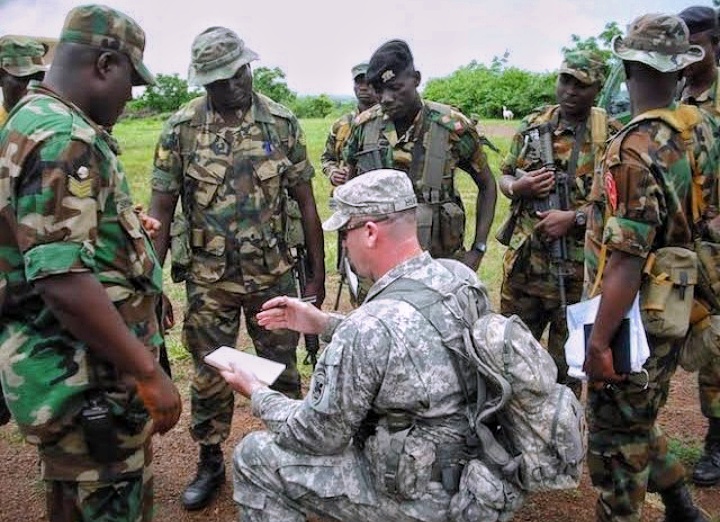
The United States has withdrawn most of the roughly 200 troops it deployed to Nigeria’s Lake Chad Basin in February, declaring its joint counterterrorism mission against ISIS complete, even as deadly attacks by armed Fulani militias continue to devastate predominantly Christian communities across Plateau, Benue and Kaduna states.
The withdrawal was announced by General Dagvin R.M. Anderson, Commander of U.S. Air Forces in Europe-Air Forces Africa, during a press briefing on the outcome of the African Chiefs of Defence Conference 2026. He said the operation, conducted alongside Nigerian forces, culminated in the elimination of Abu-Bilal Al-Minuki, identified as ISIS’ second-in-command, during an operation in Borno State.
Anderson said the mission had disrupted ISIS operations beyond Nigeria’s borders and that most of the American personnel involved had returned to Washington, D.C. He added that the United States would maintain its security partnership with Nigeria through intelligence sharing and other forms of military cooperation.
“The operation in the Lake Chad Basin of Nigeria not only helped the countries in that immediate region, but it also helps countries globally as it disrupts the ISIS network,” Anderson said.
He described Nigeria as a capable security partner with a strong military, saying years of U.S. counterterrorism experience had strengthened intelligence cooperation between both countries and contributed to the successful operation against the senior ISIS commander.
The troop withdrawal comes amid continued attacks on farming communities in Nigeria’s Middle Belt, particularly in Plateau, Benue and Kaduna states, where armed Fulani militias have been accused by local communities, Survivors of attack,church leaders and human rights organisations of carrying out repeated assaults that have claimed Thousands of lives and displaced Millions. Rights advocates have repeatedly argued that while international counterterrorism efforts have focused on ISIS and its affiliates, the violence attributed to Fulani militias remains one of the country’s deadliest and most persistent security challenges.
The development also comes after U.S. Congressman Riley Moore said the Trump administration would closely monitor Nigeria’s 2027 general elections, stating that Washington would pay “very close attention” to the credibility and transparency of the polls.
Moore, who has sponsored provisions in U.S. foreign operations legislation addressing the persecution of Christians in Nigeria, said he remains in direct contact with President Donald Trump on the issue and was expected to brief the president further on developments.
The juxtaposition of the troop withdrawal with Washington’s renewed interest in Nigeria’s electoral process has drawn criticism from some commentators and advocates, who argue that international attention should first focus on ending the sustained violence against civilians in the country’s Middle Belt.
Among them is political commentator Mike Arnold, who questioned the significance of Washington’s pledge to monitor Nigeria’s elections while, in his view, failing to confront those responsible for much of the ongoing violence.
“Who cares? So the same Trump administration that has declared ‘victory’ over the genocide—while stopping nothing and not even hitting the most prolific killers—is going to ‘monitor’ the election. The same Trump administration that won’t release the Tinubu files, and whose senior advisor is a Tinubu crony. And this is supposed to mean something? Just stop. Spare us the fake drama and false hope. Geez,” Arnold wrote in a post on his Facebook page using the hashtag #EarthShaker.
Anderson maintained that the U.S. approach in Nigeria reflected a broader strategy of supporting African partners by providing specialised capabilities while enabling local forces to lead security operations. He also called for greater intelligence sharing among African countries to combat terrorism, illicit trafficking and transnational organised crime.
Citing recent multinational cooperation, Anderson said intelligence coordination involving the United States, U.S. Africa Command (AFRICOM), African partners and Spain resulted in the interception of a record 31-ton cocaine shipment transiting the West African coast, describing it as the largest maritime drug seizure on record.
He said sustained collaboration between African governments, international partners and the private sector would remain essential to confronting evolving security threats, disrupting transnational criminal networks and fostering long-term peace, stability and economic investment across the continent.


Post Comment