By Bitrus Izhe
WUKARI, TARABA STATE — Africa’s persistent development challenges stem largely from a deep-rooted crisis of governance, participants at the 2nd International Conference of the Faculty of Social Sciences, Federal University Wukari, have concluded.
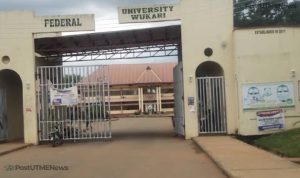
Held on May 5–6, 2025, at the 1,000-capacity Prof. Geoffrey Okogbaa Lecture Theatre, the conference brought together a diverse group of scholars and practitioners, united by a common goal—to foster a platform for critical engagement with Africa’s governance realities. Organizers described the event as “not just a gathering of scholars but a platform to impact the intellectual community studying society.”
Key discussions focused on defining good governance as “the process by which authorities exercise power, manage public resources, and uphold the rule of law transparently, accountably, and in a manner responsive to the needs of the people.”
Participants strongly emphasized that good governance is essential to achieving the United Nations Sustainable Development Goals (SDGs), highlighting core principles such as transparency, inclusivity, participation, and accountability.
Delivering the keynote address on the first day, Dr. Jonathan S. Maiangwa, Special Adviser to the Governor of Taraba State on Political Strategies, spoke on the topic “State Building, Institutions and Governance: The Nigerian Experience and Way Forward.” He stressed that “effective governance is highly dependent on the functionality of state institutions,” warning that “weak institutions breed poor governance.”
Professor Victor Adetula of the University of Jos, Plateau State, in his lead paper titled “Building Institutions for Good Governance and Ethical Leadership in Africa,” underscored the need for institutional reforms. He called for leadership that prioritizes integrity, citizen engagement, and long-term national interest over elite control.
More than 43 papers were presented during the conference, both physically and virtually, exploring themes related to democratic reversals, state fragility, corruption, and the increasing pushback against democratic norms in several African nations.
A recurring concern raised was the widespread evidence of poor governance in many African countries, reflected in mass corruption, inadequate public service delivery, and frequent socio-political unrest.
In its final communique, the conference identified key barriers to good governance and institutional development in Africa, including:
- Judicial corruption and public distrust in legal institutions
- Citizen apathy, ignorance, and cynicism toward democratic processes
- Economic volatility and a sharp decline in Foreign Direct Investment (FDI)
- Disruptions to ECOWAS economic cooperation goals
- The pervasive influence of elite interests in policy-making
- Gender inequality and religious intolerance
The communique further noted that religious and cultural dynamics are not mere backdrops to conflict but serve as active forces in shaping social tensions across the continent.
In conclusion, the conference called for stronger rule of law, more transparent governance systems, and robust institutions capable of meeting the demands of Africa’s growing population. It urged policymakers, academics, and civil society actors to work collaboratively toward building a more accountable and inclusive governance landscape in Africa.

