By Mike Odeh James
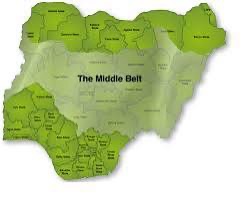
The Middle Belt Forum (MBF) has issued a strongly worded statement rejecting the common narrative that ongoing violence across Nigeria’s north-central region is merely a result of “herder-farmer clashes.” Instead, the group described the attacks as a well-coordinated campaign of terror, ethnic cleansing, and land occupation, particularly by heavily armed Fulani militias.
In a press statement signed by its spokesperson, Luka Binniyat, and issued on Sunday, the MBF expressed deep concern over renewed killings in Plateau, Taraba, Benue, Niger, Kaduna, and Kebbi states—while also mourning the loss of over 120 lives in recent floods in Mokwa Local Government Area of Niger State.
Floods Claim 120 Lives in Niger State
The MBF began its statement by commiserating with victims of the catastrophic floods that ravaged several communities in Mokwa LGA. Villages such as Muwo, Katcha, Rabba, and settlements along the Jebba-Mokwa road were submerged, leading to widespread destruction of homes, farmlands, and livelihoods.
“This is a humanitarian emergency,” Binniyat said, calling on both the state and federal governments to provide immediate shelter, food, and rehabilitation support for displaced families. “We stand in solidarity with all those affected,” the Forum stated.
‘Not a Clash, But a Coordinated Campaign of Terror’
Transitioning to what it described as a more insidious crisis, the MBF condemned what it termed “renewed massacres” in Plateau State. According to the Forum, at least 18 people have been killed in the past week in night raids and ambushes carried out in Mushere Chiefdom of Bokkos LGA, and the LGAs of Riyom and Bassa.
Communities like Maiyanga, Butura, Hurum, and Gana-Ropp were cited as recent victims of deadly attacks allegedly carried out by Fulani gunmen. The MBF also spotlighted continued atrocities in Tiv and Idoma communities across Benue State, where survivors reportedly identified some of the attackers.
“The carnage is unacceptable,” the statement read. “The silence and lukewarmness from the authorities against these mass murderers only embolden the perpetrators.”
50 Killed in Taraba State Attacks
The MBF further decried the killings in Karim Lamido LGA of Taraba State, where armed groups attacked Munga Lalau and Munga Doso villages, killing no fewer than 50 residents and razing homes. These attacks, the Forum asserted, were part of a larger, systematic pattern designed to depopulate indigenous areas for occupation.
“This is not climate change. This is not about competition for resources. What we are witnessing is organized ethno-religious cleansing masquerading as communal conflict,” Binniyat declared. “We reject any narrative that seeks to justify or downplay this genocide.”
Displacement Across the Region
The MBF outlined what it called “a coordinated campaign of territorial conquest” across the Middle Belt region, highlighting specific areas that have come under militia control or suffered mass displacement:
Niger State: Over 40 communities in Shiroro, Munya, and Rafi LGAs are now reportedly under the control of armed Fulani groups.
Southern Kaduna: More than 60 communities in Zangon Kataf, Kaura, Kauru, Chikun, and Kajuru LGAs have been sacked, with thousands displaced.
Southern Kebbi: At least 12 villages in Danko-Wasagu and Fakai LGAs have been overrun in recent months.
Benue State: According to the Benue State Emergency Management Agency (SEMA), more than 50 communities across 25 council wards in Gwer West, Guma, Gwer East, Kwande, and Makurdi LGAs have been displaced.
The MBF emphasized that these attacks are not isolated or random but part of a strategic attempt to displace indigenous populations and occupy ancestral lands.
A Call to Action
In response to the escalating crisis, the Forum called on the Federal Government of Nigeria to rise to its constitutional responsibility of protecting lives and property. It issued a four-point demand that includes:
- Immediate recruitment and deployment of forest guards and local volunteers—individuals familiar with the terrain—who can assist overstretched security forces.
- Provision of arms and logistics to ensure local defense units are not outgunned by better-equipped militias.
- Declaration of a security emergency across the Middle Belt, with special operations to retake occupied communities and dismantle terrorist networks.
- Rejection of misleading narratives, including those linking the violence solely to desertification or economic hardship.
“The perpetrators are not prosecuted, even when survivors identify them,” Binniyat lamented. “This culture of impunity is dangerous and must end.”
Growing Frustration
The MBF warned that communities might resort to “untoward ways” of defending themselves if the government continues to ignore their plight. The Forum accused the authorities of complicity through silence and misrepresentation of the crisis.
“Our people, known for their hospitality and resilience, are now facing extermination in silence,” Binniyat stated. “We demand justice. We demand protection.”
The statement concluded with a dire warning: “The Middle Belt has paid too much in blood and tears. We must not be pushed to the wall.”
A Region Under Siege
The Middle Belt, a multi-ethnic and religiously diverse region, has long suffered from a complex web of insecurity. However, the MBF insists that the current wave of attacks—marked by targeted killings, displacement, and land occupation—has exceeded any past precedents.
Security analysts have also warned that these developments pose a threat not just to local stability but to Nigeria’s national unity. “The idea that this is a farmer-herder conflict is dangerously misleading,” one analyst said. “We’re dealing with an ideological war for territory.”