By Gata Moses
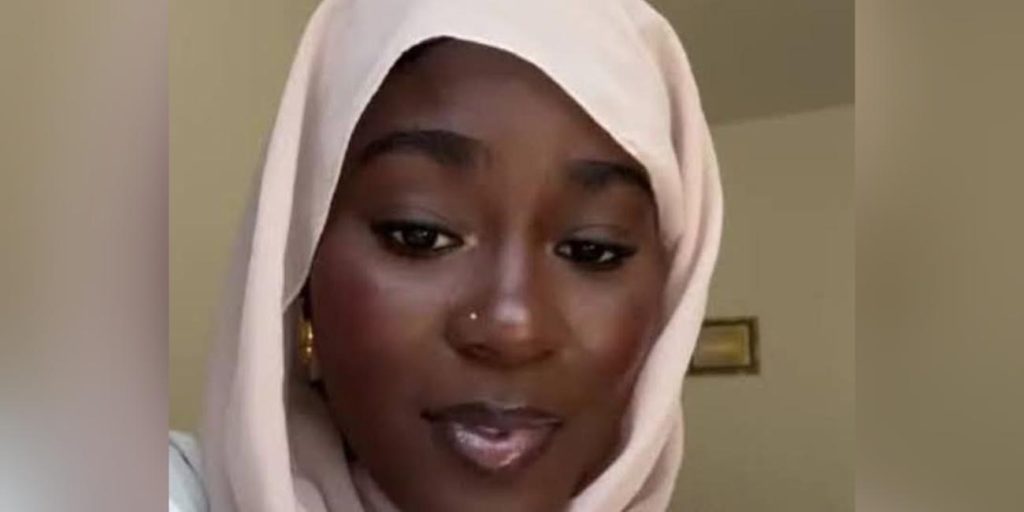
In the deeply contested terrain between law, faith, and human rights, 22-year-old Zainab Muhamadu has emerged as the face of one of Nigeria’s most pressing constitutional crises. Accused of apostasy under Sharia law in Zamfara State after converting from Islam to Christianity, Zainab’s life now hangs in the balance—not for a violent crime, but for an act of personal belief. Her case has stirred national outrage and international concern, reigniting debate over the fundamental question: Can Nigeria truly claim to uphold freedom of religion while tolerating legal systems that punish spiritual choice with death?
Zamfara State, Nigeria — On May 23, 2025, a small courtroom in northern Nigeria will become the center of global attention, as 22-year-old Zainab Muhamadu stands trial for apostasy—punishable by death under the region’s strict Sharia law. Her only alleged offense: converting from Islam to Christianity after finding spiritual connection through Pastor Samuel, a member of Nigeria’s National Youth Service Corps (NYSC).
Zainab’s choice, a deeply personal act of conscience, is protected under Nigeria’s constitution, which enshrines freedom of religion, thought, and belief. Yet, in Zamfara, where Sharia law has been in effect since 1999, her decision to embrace Christianity is being treated as a capital crime.
The implications of this trial reach far beyond the borders of Zamfara. It represents a profound test of Nigeria’s legal integrity and its commitment to international human rights conventions, including the Universal Declaration of Human Rights and the African Charter on Human and Peoples’ Rights—both of which affirm the right to freedom of religion.
“This is a defining moment,” said a prominent constitutional lawyer based in Abuja. “If Nigeria allows parallel legal systems to sentence someone to death for exercising a constitutionally guaranteed right, then we are eroding the very foundation of the rule of law in this country.”
Zainab’s case echoes that of Yahaya Sharif-Aminu, the gospel musician sentenced to death in 2020 for alleged blasphemy in Kano State. While his case is still under appeal, it drew international condemnation and intensified scrutiny on Nigeria’s dual legal system: one secular and democratic, the other religious and punitive.
Advocates are now pushing for Zainab’s case to be transferred to a secular court, arguing that subjecting her to Sharia law for a religious conversion contradicts Nigeria’s constitutional supremacy. “The Nigerian Constitution is the supreme law of the land,” noted one human rights advocate. “No state law, religious or otherwise, can override it—especially when it threatens fundamental human freedoms.”
What makes Zainab’s trial even more alarming is the stark double standard across Nigeria’s religious divides. In many Christian-majority southern states, Muslims who convert to Christianity or atheism face no legal penalties. Yet in the North, where Sharia law governs personal and religious conduct, Christians—especially converts—frequently encounter legal threats, social isolation, and in extreme cases, death sentences.
“This selective application of religious law only reinforces inequality and fuels sectarian division,” said an interfaith coalition leader in Abuja. “Religious freedom must be equal for all, or it is not freedom at all.”
Zainab is currently under protective custody, shielded from extremist threats but unsure of her fate. Her trial will not only determine her life or death—it will define Nigeria’s willingness to stand by its democratic principles or surrender them to religious extremism.
The stakes are high, not just for Zainab, but for millions of Nigerians who live under the looming tension between two contradictory legal systems. Religious freedom is not merely a Western value—it is a universal right, recognized across cultures and enshrined in the very fabric of Nigeria’s national identity.
International faith-based organizations, legal advocacy groups, and human rights defenders are rallying support for Zainab, urging the Nigerian government to intervene and honor its constitutional and global obligations. The international community is watching closely, with some calling for diplomatic pressure and targeted advocacy to prevent a gross miscarriage of justice.
For many Nigerians, Zainab’s story is a chilling reminder of how easily fundamental rights can be stripped away when legal systems fail to protect the vulnerable. Yet for others, her courage has become a rallying cry for reform and a beacon of hope.
As her trial date approaches, one question remains: Will Nigeria choose to uphold the sacred right to believe, or will it allow fear and extremism to dictate justice?
In the words of one activist in Jos: “Zainab’s life is not just her own. It symbolizes the soul of Nigeria’s democracy. And the world will not look away.”