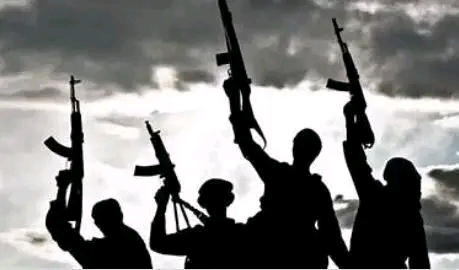
As attacks continue across the country, Nigerians are asking: if government and security agencies know where the terrorist hide, why can’t they stop the killings?
By Palang Paul
Nigeria’s long battle against terrorism and banditry has left the nation with a single, painful question that refuses to go away.
It comes after every attack on a village. After every mass burial. After every report of schoolchildren or travellers dragged from buses into the forest.
The question haunts deserted communities where farmers no longer farm and schools no longer open. It follows every funeral of a soldier killed in battle.
For millions of Nigerians, the issue is painfully simple: if the government knows who the terrorists are and where they hide, why are they still killing?
Gumi Confessed
The debate exploded recently when Islamic scholar Abubakar Gumi Confessed in a stunning claim on television.
Speaking on DRTV, Gumi said the government knows every terrorist by name and knows exactly where they operate.
He went further. He said his own controversial trips into the forest to meet with bandits were done with security agents watching over him.
The claim hit Nigerians like a thunderbolt. If a cleric can walk into bandit camps with state protection, why can’t soldiers march in and end this once and for all?
Governors Speak Out
From Zamfara State, Governor Dauda Lawal added his voice to the growing chorus.
In a video that went viral in 2025, the governor spoke with visible frustration.
“I swear to Almighty Allah, wherever a bandit leader is in Zamfara State, I know it. If he goes out, I know. With my phone, I can show you where they are today,” he said.
But knowing, he explained, is not the same as acting. The security command structure keeps power far from the people being attacked.
Then came former Kaduna governor Nasir El-Rufai who’s now in detention. On national television, he alleged that bandits had been secretly paid by the government to stop killing. He offered no proof, but the damage was done. The allegation spread like wildfire.
What Security Experts Say
So if everyone knows where the terrorists are, what is going wrong?
Security consultant Yahuza Getzo says the problem runs deep. On Channels Television, he pointed to Nigeria’s porous borders with Niger, Benin, Cameroon and Chad. These ancient trade routes, he said, have become highways for criminals.
But his most explosive claim was this: the government may simply be unwilling to act.
“The Nigerian government is intentionally refusing to address insecurity because we know those who are complicit, we know the criminals and we know their location,” Getzo said.
Retired U.S Army captain Bishop Johnson offered another view. He said Nigeria fights reactively, not strategically. When attacks happen, soldiers respond. But the planning, the preparation, the intelligence gathering—that part is weak.
Johnson also pointed to a dark reality: banditry pays. Kidnapping for ransom and illegal mining have created a criminal economy that enriches those brave enough to grab it.
“If you come into Nigeria and you are able to kidnap people and ransom is paid, your life changes,” he said.
The Sleeper Cell Problem
Security expert Dr Tony Ofoyetan says the situation is more complicated than it seems.
He warned that terrorist networks plant sleeper cells in communities—people who look ordinary, sell vegetables on street corners, or run small shops. They wait years, gathering information about who is weak, who is vulnerable, where soldiers patrol.
By the time an attack happens, he explained, the planning is already complete. The attack is just the final step.
Ofoyetan also raised a troubling possibility. He said some powerful Nigerians may be shielding terrorists—not always because they support violence, but because they owe political favours or share financial interests.
“Some politicians will stand on the floor of the National Assembly and accuse the government of human rights abuses during military operations,” he said. “But sometimes it is because they are sympathetic to the terrorists.”
What Soldiers Say
Retired Rear Admiral Dickson Olisemelor pointed to something that baffles many Nigerians: how do large groups of armed men move freely across the country?
He recalled an incident where over 500 motorcycles, each carrying three passengers, rode openly through Minna Niger State. Days later, schoolchildren were kidnapped.
“No particular action has been taken against them,” he said.
Then came the devastating news from Borno State: three Lieutenant Colonels killed, their units destroyed, their equipment seized by terrorists.
“Up till now, nothing significant is happening,” Olisemelor said.
Serving officers, speaking secretly for fear of punishment, revealed an even more disturbing reality.
They claim that former bandits and Bokoo Haram people who once killed soldiers—have been recruited into the military under the guise of repentance. These “repentant terrorists” still have links to their old friends. They leak information. They warn their members ahead when troops are coming.
“This mistake occurred during the Buhari era and it may affect Nigeria for the next 30 years,” one officer said.
Another added: “The bandits have drones and the means to intercept our communications but our boys do not have that.”
Political Interference
Some officers allege that politicians deliberately complicate security operations.
According to them, when powerful people want to move minerals or weapons, they use bandits to clear the roads. Any commander who refuses to cooperate may face consequences.
“Some politicians who are supposed to deal with these boys are not doing anything,” one officer said. “Some are even sponsoring them.”
The Question That Won’t Die
For ordinary Nigerians, the war against terror has become a daily trial of fear.
Villagers sleep with one eye open. Farmers tend their crops with trembling hands. Parents send children to school with silent prayers.
On the highways, travellers grip their seats at every checkpoint, wondering if this journey will be their last.
And through it all, the same haunting question follows every attack, every funeral, every tear:
If the government knows who the terrorists are and where they hide, why does the killing continue?
Until that question is answered with action, not words, fear will remain Nigeria’s unwelcome companion.
Palang Paul reports on Conflict and Security for The Nigeria Times


Post Comment